Joseph L. Mankiewicz
Actor
Born: February 11, 1909 in Wilkes-Barre, Pennsylvania, USA Died: February 5, 1993 Active: 1929-1972 Birth Name: Joseph Leo Mankiewicz
Films
1 film
About Joseph L. Mankiewicz
Joseph Leo Mankiewicz was one of Hollywood's most accomplished writer-directors, known for his sophisticated dialogue and psychological insight. Born into a show business family, he began his career as a foreign correspondent in Berlin before transitioning to Hollywood as a screenwriter. After establishing himself at Paramount and MGM as a writer and producer, he made his directorial debut in 1946. Mankiewicz achieved the remarkable feat of winning consecutive Academy Awards for both Best Director and Best Screenplay for 'A Letter to Three Wives' (1949) and 'All About Eve' (1950). His films were characterized by their witty, intelligent dialogue and complex character studies, often focusing on the lives and relationships of sophisticated urbanites. Throughout the 1950s and 1960s, he continued to direct notable films including 'The Barefoot Contessa,' 'Guys and Dolls,' and 'Cleopatra.' His four decades, during which he wrote or produced over 60 films and directed 20, leaving an indelible mark on Hollywood's Golden Age.
The Craft
On Screen
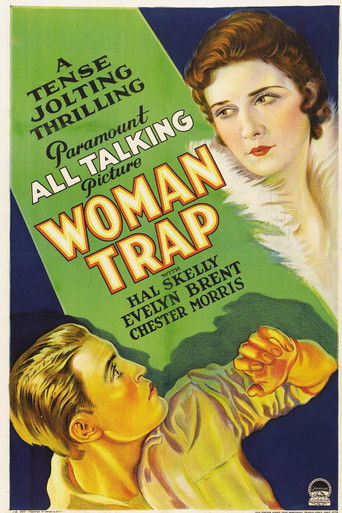
While Mankiewicz appeared in a few minor roles early in his career, including 'Woman Trap' (1929), his acting was limited to brief cameo appearances. His true talent lay behind the camera rather than in front of it.
Milestones
- Won consecutive Academy Awards for Best Director and Best Screenplay (1949-1950)
- Directed the classic film 'All About Eve' which received 14 Oscar nominations
- Wrote and produced over 60 films during his career
- Directed 'Cleopatra' (1963),
- Served as President of the Screen Directors Guild
- Created sophisticated comedies and dramas known for their witty dialogue
Best Known For
Iconic Roles
Must-See Films
Accolades
Won
- Academy Award for Best Director - 'All About Eve' (1950)
- Academy Award for Best Director - 'A Letter to Three Wives' (1949)
- Academy Award for Best Adapted Screenplay - 'All About Eve' (1950)
- Academy Award for Best Adapted Screenplay - 'A Letter to Three Wives' (1949)
- Directors Guild of America Award for Outstanding Directorial Achievement - 'All About Eve' (1950)
- Directors Guild of America Award for Outstanding Directorial Achievement - 'A Letter to Three Wives' (1949)
- Writers Guild of America Laurel Award for Screen Writing Achievement (1969)
- New York Film Critics Circle Award for Best Director - 'All About Eve' (1950)
Nominated
- Academy Award for Best Picture - 'All About Eve' (1950)
- Academy Award for Best Picture - 'A Letter to Three Wives' (1949)
- Academy Award for Best Original Screenplay - 'Sleuth' (1972)
- Directors Guild of America Award - 'The Barefoot Contessa' (1954)
- Directors Guild of America Award - 'Guys and Dolls' (1955)
- Directors Guild of America Award - 'People Will Talk' (1951)
- Palme d'Or at Cannes Film Festival - 'The Barefoot Contessa' (1954)
- Golden Lion at Venice Film Festival - '5 Fingers' (1952)
Special Recognition
- Hollywood Walk of Fame Star (6608 Hollywood Blvd)
- American Film Institute Life Achievement Award (1986)
- National Board of Review Award for Best Director - 'All About Eve' (1950)
- Writers Guild of America Hall of Fame Inductee
Why They Matter
Impact on Culture
Mankiewicz revolutionized Hollywood cinema with his sophisticated approach to dialogue and character development. His films, particularly 'All About Eve,' established the template for backstage dramas and explored themes of female ambition and rivalry that were ahead of their time. His work helped elevate the status of screenwriters in Hollywood and demonstrated that intelligent, dialogue-heavy films could achieve both critical acclaim and commercial success. The film 'All About Eve' introduced the phrase 'fasten your seatbelts, it's going to be a bumpy night' into popular culture, and his films continue to be referenced and studied for their sharp wit and psychological depth.
Lasting Legacy
Joseph L. Mankiewicz left an enduring legacy as one of Hollywood's most literate and sophisticated filmmakers. His back-to-back Academy Award wins for both writing and directing remain a rare achievement in cinema history. His films are frequently cited among the greatest ever made, with 'All About Eve' consistently appearing on lists of top films. Mankiewicz's influence can be seen in the work of directors who prioritize sharp dialogue and character-driven narratives, such as Woody Allen, Aaron Sorkin, and Quentin Tarantino. His contribution to establishing the auteur theory in Hollywood helped pave the way for future writer-directors, and his films continue to be studied in film schools for their masterful construction and thematic complexity.
Who They Inspired
Mankiewicz's influence extends across generations of filmmakers who admire his ability to blend entertainment with intellectual depth. His technique of using dialogue to reveal character psychology has been emulated by countless directors. The way he handled strong female characters in films like 'All About Eve' and 'The Barefoot Contessa' paved the way for more complex female protagonists in cinema. His success as both writer and director inspired future filmmakers to take control of both aspects of their films, and his ability to work across genres—from comedy to drama to musical—demonstrated versatility that many modern directors aspire to achieve.
Off Screen
Mankiewicz was married three times and had three children. His first marriage to Elizabeth Sarah Sibley ended in divorce in 1937. He married actress Rose Stradner in 1939, with whom he had two sons, Christopher and Tom, until her death in 1958. His third marriage was to Rita Webb in 1963, which lasted until his death. He was the younger brother of Herman J. Mankiewicz, the acclaimed screenwriter of 'Citizen Kane.' The Mankiewicz family was deeply involved in Hollywood, with several members becoming successful writers and directors.
Education
Columbia University (graduated 1928), studied journalism and literature
Family
- Elizabeth Sarah Sibley (1934-1937)
- Rose Stradner (1939-1958)
- Rita Webb (1963-1993)
Did You Know?
- Despite being primarily known as a director, he had a brief acting career with his only notable role in 'Woman Trap' (1929)
- His older brother Herman J. Mankiewicz co-wrote 'Citizen Kane' with Orson Welles
- He won four Academy Awards in two consecutive years, a rare achievement
- 'All About Eve' received a record 14 Oscar nominations, tied with 'Titanic' and 'All About Eve' itself
- He was fluent in German and worked as a foreign correspondent in Berlin before entering Hollywood
- He was the first director to win Oscars for both Best Director and Best Screenplay in the same year twice
- His son Tom Mankiewicz wrote the screenplays for 'James Bond' films 'Diamonds Are Forever' and 'Live and Let Die'
- He was fired from directing 'The Godfather' before Francis Ford Coppola took over
- He served in the Army Signal Corps during World War II
- He was known for rewriting scripts extensively, often adding his signature witty dialogue
In Their Own Words
On directing: 'The director is the only person who knows what the picture is about.'
On writing: 'Dialogue is not conversation. It's a construction.'
On 'All About Eve': 'I wanted to make a film about the theater, but really it was about ambition.'
On Hollywood: 'The movies are the only business where you can go out on a limb and still make a fortune.'
On his craft: 'I write to please myself, and if I please myself, I please the audience.'
Frequently Asked Questions
Who was Joseph L. Mankiewicz?
Legendary He is best known for winning consecutive Academy Awards for both writing and directing 'A Letter to Three Wives' (1949) and 'All About Eve' (1950).
What films is Joseph L. Mankiewicz best known for?
Titles linked here include All About Eve (1950), A Letter to Three Wives (1949).
When was Joseph L. Mankiewicz born and when did he die?
Born February 11, 1909; died February 5, 1993.
What awards did Joseph L. Mankiewicz win?
Mankiewicz won four Academy Awards: two for Best Director and two for Best Adapted Screenplay for 'A Letter to Three Wives' (1949) and 'All About Eve' (1950). He also received numerous other honors including Directors Guild of America Awards, Writers Guild of America awards, and the AFI Life Achievement Award in 1986.
What was Joseph L. Mankiewicz's directing style?
Mankiewicz's directing style was characterized by sophisticated, dialogue-driven storytelling with a focus on psychological depth and complex character relationships. He was known for his witty, intelligent scripts, strong female protagonists, and his use of voice-over narration and flashback structures to explore characters' inner lives.
Was Joseph L. Mankiewicz related to Herman Mankiewicz?
Yes, Joseph L. Mankiewicz was the younger brother of Herman J. Mankiewicz, the acclaimed screenwriter who co-wrote 'Citizen Kane' with Orson Welles. The Mankiewicz family was deeply involved in Hollywood, with several members becoming successful writers and directors.
Did Joseph L. Mankiewicz act in films?
While Mankiewicz had a very brief acting career early on, appearing in minor roles including 'Woman Trap' (1929), he was not primarily known as an actor. His true talent and legacy lie in his work behind the camera as a director, writer, and producer.