


Woman Trap
"Brother under pressure"
Keys: Space play/pause · ←/→ 10s · F fullscreen · M mute · </> speed
About this film
The younger brother of a police captain is a wanted fugitive, so when the captain railroads his brother's former criminal partner, the partner's sister devises a plan to get back at the captain where it will hurt the most. Exhibitors circulated the 1929 print in short programs.
Cast & crew
More films like this
More Crime films
View all →


More from William A. Wellman
View all →
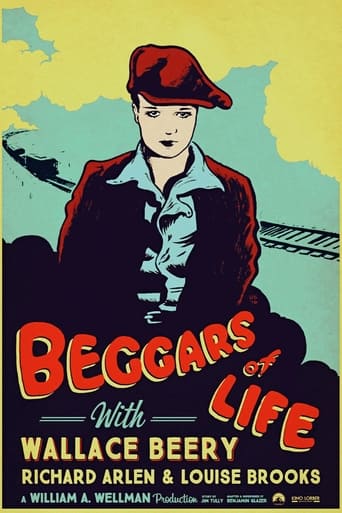

More about this film
About the production
Release dateMarch 16, 1929
Box officeUnknown
ProductionParamount Pictures
Filmed inParamount Studios, Hollywood, California
Woman Trap was one of Paramount's early sound productions, filmed during the challenging transition period from silent films to talkies. The film was produced quickly to capitalize on the growing popularity of crime dramas and the emerging gangster film genre. Director William A. Wellman was known for his efficient shooting style and ability to work within the technical constraints of early sound recording equipment.
Themes
Police corruptionFamily loyalty vs. justiceRevengeMoral ambiguitySexual manipulation
Themes & topics
police captainfugitive brotherframed criminalrevenge plotseductioncorruptioncrime dramaearly sound filmPre-Codegangster film
Historical background
Woman Trap reached screens around 1929, produced in its country of origin. Silent-era houses paired such titles with live music and newsreel bills.
Why this film matters
Researchers cite Woman Trap when tracing screen culture of its decade.
Making of
The production of Woman Trap faced the typical challenges of early sound filmmaking, including bulky microphone equipment that limited camera movement and required actors to project their voices naturally rather than using theatrical techniques. Director William A. Wellman, known for his dynamic visual style in silent films, had to adapt his directing methods to accommodate the new technology. The cast, particularly stage veteran Hal Skelly, had to adjust their acting styles for the intimacy of sound recording. The film was shot relatively quickly, as Paramount was racing to produce enough sound content to meet theater demand. The screenplay was written by J. Walter Ruben and Joseph Jackson, who specialized in crime dramas and understood the need for snappy dialogue that would work well in the new sound format.
What critics said
Reviewers in 1929 weighed Woman Trap on clarity, pacing, and audience response rather than prestige status. No single canonical review dominates later reference works for the title.
Did you know?
- This was one of the earliest sound films directed by William A. Wellman, who had previously made the acclaimed silent film 'Wings' (1927)
- Hal Skelly was primarily known as a Broadway stage actor before transitioning to films in the late 1920s
- The film was released during the height of the transition from silent to sound films, when many actors struggled with the new medium
- Evelyn Brent was a major silent film star who successfully made the transition to talkies, unlike many of her contemporaries
- Chester Morris would later become famous for his role as Boston Blackie in the 1940s film series
- The film's themes of police corruption and family loyalty were quite progressive for its time
- Woman Trap was one of the early films to explore the psychological aspects of crime rather than just the action
- The movie was shot using early sound-on-film technology, which required actors to remain relatively stationary during dialogue scenes
- Paramount Pictures was among the leading aggressive studios in converting to sound production in 1928-1929
- The film's title was considered provocative for 1929, reflecting the more daring content allowed in early Pre-Code Hollywood
Visual style
The cinematography by James Wong Howe reflects the technical constraints of early sound filmmaking, with more static camera setups than were typical in late silent films. Howe, who would become one of Hollywood's most celebrated cinematographers, managed to create visual interest within these limitations through careful lighting and composition. The film uses high-contrast lighting typical of crime dramas, with deep shadows that would later become associated with film noir. The camera work is more restrained than in Wellman's silent films, but Howe still manages to create dynamic visuals through strategic camera placement and movement when dialogue scenes permitted it.
Innovations
Woman Trap was notable for its effective use of early sound-on-film technology, representing a significant advancement over the earlier sound-on-disc systems. The film demonstrated how dialogue could be used to develop complex character relationships and advance the plot in ways impossible in silent cinema. The production team successfully integrated sound recording with visual storytelling, avoiding the static, stage-like quality that plagued many early talkies. The film's sound mix, while primitive by modern standards, was considered sophisticated for its time, with a good balance between dialogue, music, and sound effects.
Music
The film features a synchronized musical score and sound effects, typical of early sound productions. The music was likely composed by Paramount's music department staff, as individual composers were not always credited during this period. The soundtrack includes popular songs of the era as source music, reflecting the practice of incorporating contemporary music to appeal to audiences. The sound design emphasizes dialogue clarity, which was a primary concern in early talkies, with less emphasis on atmospheric sound that would become common in later years. The film's audio quality reflects the limitations of early sound recording technology, with some noticeable background noise and limited dynamic range.
Famous quotes
Justice is blind, but sometimes she needs a little help seeing straight.
A woman's revenge isn't about the pain she causes, it's about the pleasure she takes in causing it.
In this city, the line between cop and criminal is drawn with chalk and can be erased just as easily.
Memorable scenes
- The tense confrontation scene where Mary first confronts Captain Hogan about framing her brother, showcasing the film's Pre-Code boldness in its dialogue and sexual undertones.
What audiences thought
Audiences in 1929 responded positively to Woman Trap, as crime dramas were extremely popular during this period. The film's combination of action, romance, and moral complexity appealed to moviegoers seeking sophisticated entertainment. The presence of established stars like Evelyn Brent and rising talents like Chester Morris helped draw audiences to theaters. The film performed respectably at the box office, though it was not among the biggest hits of its year. Modern audiences who have seen the film through screenings at film festivals or archives generally appreciate it as a well-crafted example of early sound cinema, though some find the pacing deliberate compared to later crime films.
Film connections
Influenced by
- The Lights of New York (1928)
- Underworld (1927)
- The Docks of New York (1928)
This film influenced
- The Doorway to Hell (1930)
- Little Caesar (1931)
- The Public Enemy (1931)
Film restoration
Woman Trap is believed to be a lost film. Like many early sound films from 1928-1930, it was not preserved properly, and no complete copies are known to exist in major film archives. The film's survival status is listed as lost in the American Film Institute catalog and other film preservation databases. Some stills and promotional materials survive, but the complete film has not been located. This loss is particularly unfortunate as it represents an early work by director William A. Wellman during his transition to sound filmmaking.
Where to watch
- Currently unavailable for viewing as the film is considered lost. No known copies exist in commercial or archival collections.