Films
1 film
About Enrique Rosas
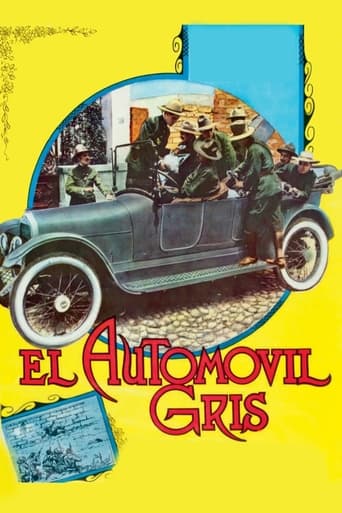
Made his most significant contribution during the early days of Mexican cinema. He is best remembered for directing 'El Automóvil Gris' (The Grey Automobile) in 1919, which became and influential Mexican silent films of its era. Rosas was part of the first generation of Mexican filmmakers who helped establish the country's film industry during the turbulent post-revolutionary period. His work demonstrated remarkable technical sophistication for the time, incorporating innovative narrative techniques and cinematic approaches that were ahead of many contemporary productions. Despite his brief but impactful career, Rosas' influence on Mexican cinema has been enduring, with 'The Grey Automobile' being studied and celebrated by film historians as a masterpiece of early Latin American cinema. His directorial approach combined elements of European cinematic traditions with distinctly Mexican themes and storytelling sensibilities.
The Craft
Behind the Camera
Enrique Rosas demonstrated a sophisticated directing style that incorporated innovative narrative techniques for his time. His approach combined elements of European cinematic influences with distinctly Mexican storytelling traditions. Rosas was known for his use of dynamic camera movements, complex narrative structures, and attention to visual composition. His direction showed remarkable technical proficiency, particularly in his ability to create suspense and maintain narrative momentum across multiple scenes. Rosas' style reflected the social and political climate of post-revolutionary Mexico while embracing international cinematic trends of the silent era.
Milestones
- Directed 'El Automóvil Gris' (1919), considered a masterpiece of Mexican silent cinema
- Pioneered narrative filmmaking techniques in early Mexican cinema
- Contributed to establishing Mexico's film industry during the post-revolutionary period
Best Known For
Must-See Films
Accolades
Special Recognition
- Recognized as one of the pioneers of Mexican cinema
- His film 'El Automóvil Gris' is preserved as part of Mexico's cinematic heritage
Working Relationships
Worked Often With
Studios
Why They Matter
Impact on Culture
Enrique Rosas' cultural impact on Mexican cinema extends far beyond his brief career and single known film. 'El Automóvil Gris' became a foundational text in Mexican film history, influencing generations of Mexican filmmakers and establishing narrative conventions that would be built upon in subsequent decades. The film's success demonstrated that Mexican cinema could compete artistically with international productions, helping to establish national pride in Mexican filmmaking. Rosas' work contributed to the development of a distinctly Mexican cinematic language that incorporated the country's social realities and cultural identity. His film has been studied and analyzed by film scholars as a crucial example of early Latin American cinema, and its preservation has been prioritized as part of Mexico's cultural heritage.
Lasting Legacy
Enrique Rosas' legacy in film history is primarily defined by his masterpiece 'El Automóvil Gris,' which stands as. Despite his brief career, Rosas is remembered as a pioneer who helped establish the artistic and technical standards for Mexican filmmaking. His work has been the subject of extensive scholarly analysis and restoration efforts, ensuring that future generations can study and appreciate his contributions to cinema. The film's enduring popularity and critical acclaim have cemented Rosas' place in the pantheon of important early Mexican directors, alongside contemporaries who shaped the nation's cinematic identity.
Who They Inspired
Rosas influenced subsequent generations of Mexican filmmakers through his innovative narrative techniques and sophisticated visual style. His work demonstrated that Mexican cinema could achieve artistic excellence while addressing national themes and concerns. Later Mexican directors, particularly those working during the Golden Age of Mexican cinema, built upon the foundation that Rosas and his contemporaries established. His approach to storytelling and visual composition influenced the development of a uniquely Mexican cinematic language that would flourish in the following decades. Film scholars and preservationists continue to study his work as a model of early Latin American filmmaking excellence.
Off Screen
Very little detailed information is available about Enrique Rosas' personal life, which was not uncommon for filmmakers of the silent era in Mexico. He worked during a period of significant social and political upheaval in Mexico following the revolution, which undoubtedly influenced his artistic vision and choice of subject matter. His brief but impactful career suggests he may have been involved in other aspects of Mexican cultural life beyond filmmaking, though specific details remain scarce in historical records.
Did You Know?
- 'El Automóvil Gris' was based on real criminal cases that occurred in Mexico City during the 1910s
- The film was originally released in 12 episodes, similar to modern serial television shows
- Rosas' film was one of the first Mexican productions to achieve international recognition
- The complete film was considered lost for decades before being rediscovered and restored
- The Grey Automobile gang was a real criminal organization that terrorized Mexico City
- Rosas worked during a period when Mexico's film industry was just beginning to establish itself
- His film demonstrated technical innovations that were ahead of many contemporary productions
- The film's success helped establish the viability of narrative feature films in Mexico
- Rosas' work is frequently cited in academic studies of early Latin American cinema
- The film has been preserved and restored by Mexican film archives as a national treasure
Frequently Asked Questions
Who was Enrique Rosas?
Mexican on YTB.my. He was one of the first generation of Mexican filmmakers who helped establish the country's film industry during the post-revolutionary period.
What films is Enrique Rosas best known for?
Titles linked here include El Automóvil Gris (The Grey Automobile) (1919).
When was Enrique Rosas born and when did he die?
Born 1890; died 1948.
What awards did Enrique Rosas win?
While Enrique Rosas did not receive formal awards during his lifetime, he has been posthumously recognized as one of the pioneers of Mexican cinema, and his film 'El Automóvil Gris' is preserved as part of Mexico's national cinematic heritage.
What was Enrique Rosas' directing style?
Rosas' directing style incorporated innovative narrative techniques and sophisticated visual composition for his time. He combined European cinematic influences with distinctly Mexican storytelling, using dynamic camera movements and complex narrative structures that were ahead of many contemporary productions.