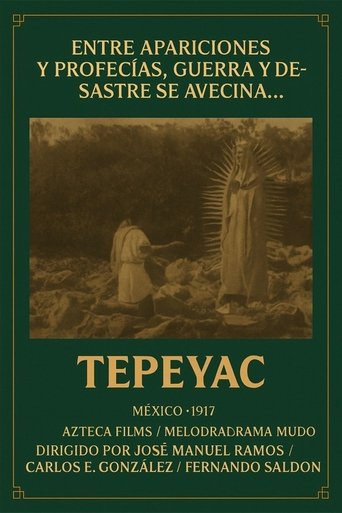
Films
1 film
About José Manuel Ramos
Figure in early Mexican cinema during the silent era, best known for his involvement in the landmark 1917 film 'Tepeyac.' As one of the co-directors of this historically significant production, Ramos contributed to what is considered one of Mexico's earliest surviving feature films. The film depicted the story of the Virgin of Guadalupe's apparition to Juan Diego, a subject of deep cultural and religious importance in Mexico. Ramos worked alongside Carlos González and Federico Gamboa on this ambitious project, which was produced Mexican film history. His career appears to have been concentrated primarily around 1917, with 'Tepeyac' representing his most documented contribution to cinema. The film was notable for its attempt to create a distinctly Mexican national cinema that could compete with foreign productions, particularly those from Hollywood and Europe. While detailed records of his broader career and life are scarce, Ramos's role in 'Tepeyac' places him among the important early filmmakers who helped establish Mexico's cinematic tradition during the revolutionary period.
The Craft
Milestones
- Co-directed 'Tepeyac' (1917), one of Mexico's earliest surviving feature films
- Contributed to early Mexican national cinema during the silent era
- Participated in creating a film about the Virgin of Guadalupe, a culturally significant subject
Best Known For
Must-See Films
Working Relationships
Worked Often With
Why They Matter
Impact on Culture
José Manuel Ramos, through his work on 'Tepeyac,' contributed to the development of Mexican national cinema during its formative years. The film itself was significant for choosing a distinctly Mexican subject—the Virgin of Guadalupe—at a time when Mexican cinema was struggling to establish its identity separate from foreign influences. This early attempt to create cinema rooted in Mexican culture and religion helped pave the way for future generations of Mexican filmmakers who would explore national themes and identity. The preservation of 'Tepeyac' has made it an invaluable document for understanding the origins of Mexican film artistry and the technical capabilities of early Mexican cinema.
Lasting Legacy
Ramos's legacy is primarily tied to his co-direction of 'Tepeyac,' which stands as one of the earliest surviving examples of Mexican feature filmmaking. The film has become an important historical artifact, studied by film historians and scholars interested in the development of cinema in Latin America. While Ramos himself may not be widely remembered today, his contribution to this landmark production places him among the pioneers who helped establish Mexico's film industry during a period of tremendous social and political change in the country. The film's survival has ensured that Ramos's name remains part of the historical record of early Mexican cinema.
Who They Inspired
Due to the limited documentation of his career and the apparent brevity of his film work, specific influences that José Manuel Ramos may have had on other filmmakers are difficult to trace. However, his participation in creating one of Mexico's earliest feature films contributed to the foundation upon which later generations of Mexican directors would build. The choice of subject matter in 'Tepeyac' may have influenced later Mexican filmmakers to explore themes of national identity, religion, and cultural heritage in their work.
Off Screen
Very little is documented about José Manuel Ramos's personal life, which is not uncommon for figures from the earliest days of Mexican cinema. Records from this period are often incomplete or lost, particularly for individuals who had brief film careers.
Did You Know?
- 'Tepeyac' (1917) is considered one of Mexico's earliest surviving feature films
- The film was about the apparition of the Virgin of Guadalupe to Juan Diego
- Ramos co-directed the film with Carlos González and Federico Gamboa
- The film was produced during the Mexican Revolution period
- Very little documentation exists about many early Mexican film figures from this era
- The film represents an early attempt to create a distinctly Mexican national cinema
- Silent films from this period in Mexico are extremely rare due to poor preservation conditions
- The choice of religious subject matter reflected the deep cultural roots of Mexican society
Frequently Asked Questions
Who was José Manuel Ramos?
Mexican filmmaker active during the silent era, best known as one of the co- on YTB.my.
What films is José Manuel Ramos best known for?
Titles linked here include Tepeyac (1917).
When was José Manuel Ramos born and when did he die?
Specific birth and death dates for José Manuel Ramos are not documented in available historical records, which is common for figures from the very early days of Mexican cinema.
What awards did José Manuel Ramos win?
There are no documented awards for José Manuel Ramos, as formal award systems for cinema were not established during the early silent film era in Mexico.
What was José Manuel Ramos's directing style?
While specific details about his directing style are not well-documented, his work on 'Tepeyac' reflected early silent film techniques with a focus on religious and national themes important to Mexican identity.