Marguerite Harrison
Actor
Born: October 23, 1879 in Baltimore, Maryland, United States Died: July 16, 1967 Active: 1918-1927 (filmmaking), 1918-1930s (journalism) Birth Name: Marguerite Elise Harrison
Films
1 film
About Marguerite Harrison
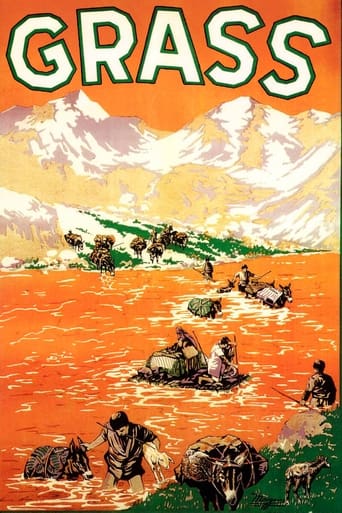
American journalist, spy, and documentary filmmaker who led an extraordinary life of adventure and danger. Born into Baltimore society, she defied conventional expectations by becoming one of America's first female foreign correspondents, working as a spy for the U.S. Army Military Intelligence Division during and after World War I. Her espionage work led to her imprisonment in Soviet Russia in 1920, where she spent ten months in Lubyanka Prison before being released in a prisoner exchange. After her release, she turned to documentary filmmaking, collaborating with Merian C. Cooper and Ernest B. Schoedsack on their ethnographic films. Harrison served as both co-director and participant in their documentary 'Grass: A Nation's Battle for Life' (1925), which documented the perilous migration of the Bakhtiari tribe in Persia. She continued her documentary work with 'Chang: A Drama of the Wilderness' (1927), another collaboration with Cooper and Schoedsack. Later in life, she wrote several books about her experiences, including 'There's Always Tomorrow: The Autobiography of Marguerite Harrison' (1943) and 'Marooned in Moscow: The Story of an American Woman Imprisoned in Russia' (1921). Her journalism, espionage, and filmmaking, making her remarkable and multifaceted women of her era.
The Craft
On Screen
As a documentary participant rather than trained actress, Harrison's screen presence was authentic and naturalistic, appearing as herself in perilous real-world situations. Her performance in 'Grass' was characterized by genuine reactions to the extreme conditions of the Bakhtiari migration, providing an authentic Western perspective on the arduous journey.
Milestones
- Became one of America's first female foreign correspondents
- Worked as spy for U.S. Army Military Intelligence Division
- Imprisoned for 10 months in Soviet Lubyanka Prison (1920-1921)
- Co-directed and appeared in 'Grass: A Nation's Battle for Life' (1925)
- Collaborated on 'Chang: A Drama of the Wilderness' (1927)
- Published autobiography 'There's Always Tomorrow' (1943)
- Founded the Society of Woman Geographers
Best Known For
Iconic Roles
Must-See Films
Accolades
Special Recognition
- Founding member of the Society of Woman Geographers (1925)
- Honored by the Geographic Society of Baltimore for her contributions to exploration and documentary filmmaking
Working Relationships
Worked Often With
Studios
Why They Matter
Impact on Culture
Marguerite Harrison broke significant barriers for women in multiple male-dominated fields, establishing precedents for female journalists, spies, and filmmakers. Her work in documentary filmmaking, particularly 'Grass: A Nation's Battle for Life,' helped establish the ethnographic documentary as a legitimate film genre. The film's success demonstrated that audiences were interested in authentic cultural documentation, paving the way for future documentary filmmakers. Her imprisonment and subsequent writings about Soviet Russia provided valuable early insights into the Soviet system for Western readers. As a founding member of the Society of Woman Geographers, she helped create a professional network that supported and encouraged women in exploration and field research.
Lasting Legacy
Marguerite Harrison's legacy encompasses her groundbreaking contributions to journalism, espionage, and documentary filmmaking. She is remembered as one of the first women to work as a foreign correspondent and intelligence operative, paving the way for future generations of women in these fields. Her documentary films, particularly 'Grass,' remain classics of early documentary cinema, celebrated for their authenticity and technical achievements. The Society of Woman Geographers, which she helped found, continues to support women in exploration and geographical sciences. Her books about her experiences in Russia and her life adventures continue to be studied as important historical documents of the early 20th century.
Who They Inspired
Harrison influenced subsequent generations of documentary filmmakers through her immersive approach to cultural documentation. Her work with Cooper and Schoedsack helped establish techniques that would later be refined in films like 'King Kong.' Her success as a female spy and journalist inspired other women to enter these fields during a time when such careers were considered inappropriate for women. Her writings about Soviet Russia provided a template for later journalists covering closed societies. The Society of Woman Geographers continues to honor her memory by supporting women in exploration and field sciences.
Off Screen
Marguerite Harrison was born into a prominent Baltimore family and received a privileged education. She married Thomas B. Harrison, a postmaster, with whom she had one son. Despite her conventional marriage, she pursued an unconventional career that took her around the world and into dangerous situations. After her husband's death, she devoted herself entirely to her adventurous pursuits. Her personal life was marked by her determination to break gender barriers in fields dominated by men, from espionage to filmmaking. She maintained friendships with other women in exploration and journalism throughout her life.
Education
Attended prestigious girls' schools in Baltimore, studied languages and literature, later received additional training in journalism and foreign languages
Family
- Thomas B. Harrison (1901-1925, until his death)
Did You Know?
- Was one of the first women to work as a spy for the U.S. Government
- Spent 10 months in Lubyanka Prison in Moscow as a suspected spy
- Learned to speak Russian fluently for her intelligence work
- Was the only woman on the expedition to film 'Grass' in Persia
- Crossed freezing rivers and climbed mountains while filming 'Grass' at age 45
- Her prison memoir 'Marooned in Moscow' became a bestseller in 1921
- Co-founded the Society of Woman Geographers with other prominent female explorers
- Was friends with fellow adventurer and journalist Louise Bryant
- Her film 'Grass' was selected for preservation in the National Film Registry in 1997
- Appeared before the U.S. Senate Foreign Relations Committee to testify about conditions in Soviet Russia
In Their Own Words
I have learned that there is always tomorrow, and that tomorrow may bring something entirely new and unexpected.
To be a woman in a man's world is not a handicap but a challenge, and challenges are what make life worth living.
The greatest adventures are not in faraway lands but in overcoming the limitations that others place upon us.
In Russia, I learned that freedom is not something to be taken for granted but something to be fought for every day.
Documentary filmmaking is not about showing what you want people to see, but about revealing what is actually there.
Frequently Asked Questions
Who was Marguerite Harrison?
American journalist, spy, and documentary filmmaker who became one of the first women to work in intelligence and foreign correspondence. She is best known for co-directing the classic documentary 'Grass: A Nation's Battle for Life' (1925) and for her imprisonment in Soviet Russia as a suspected American spy.
What films is Marguerite Harrison best known for?
Titles linked here include Grass: A Nation's Battle for Life (1925), Chang: A Drama of the Wilderness (1927).
When was Marguerite Harrison born and when did she die?
Born October 23, 1879; died July 16, 1967.
What awards did Marguerite Harrison win?
While Harrison did not receive traditional film awards during her lifetime, her film 'Grass: A Nation's Battle for Life' was selected for preservation in the National Film Registry in 1997. She was honored as a founding member of the Society of Woman Geographers and received recognition from geographical societies for her contributions to exploration and documentation.
What was Marguerite Harrison's filmmaking style?
Harrison's filmmaking style was characterized by immersive, on-location shooting and authentic documentation of real events. She believed in capturing cultures and traditions as they naturally occurred, often placing herself in dangerous situations to achieve unprecedented footage. Her approach emphasized realism over staged performances, helping establish the ethnographic documentary genre.