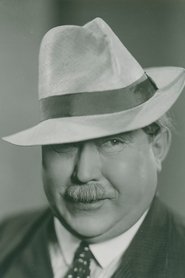
Artur Cederborgh
Actor
- Active
- 1921-1926
Films 2
About Artur Cederborgh
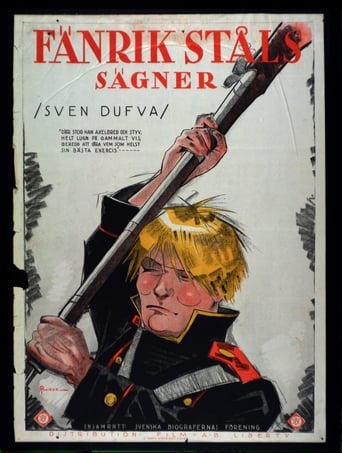
Artur Cederborgh was a Swedish actor active in the silent-film era, with known screen work concentrated in the early 1920s. He appears in surviving filmographies for The Mill (1921) and The Tales of Ensign Stål (1926), two important Swedish productions from the period when national cinema was building a distinct literary and historical identity. Because the historical record on him is sparse, much of his career must be understood through the films that remain associated with his name rather than through extensive press coverage or later retrospective fame. His screen presence belongs to the generation of performers who helped shape Scandinavian silent cinema at a time when film acting relied on expressive physicality, clear characterization, and an ability to translate stage-trained technique into silent narrative. Available evidence suggests he worked during a relatively brief screen period, and no widely documented later screen career has been securely attached to him. As a result, he is remembered primarily as a supporting figure in Swedish silent film history rather than as a major star. His contributions nevertheless form part of the broader ensemble tradition that gave early Swedish cinema its artistic credibility and enduring literary prestige.
More about Artur Cederborgh
On screen
No detailed contemporary acting analysis of Artur Cederborgh is securely documented in surviving mainstream references. Based on the demands of Swedish silent cinema in the 1920s, his work would likely have relied on disciplined physical expression, restrained but legible emotion, and clear narrative readability rather than broad melodramatic excess. Performers in this tradition often balanced theatrical training with the understated realism favored by Swedish directors and literary adaptations. Any specific stylistic claims beyond that general silent-era context would be speculative.
In film history
Artur Cederborgh's cultural impact lies less in celebrity than in participation in the silent-era Swedish film tradition, which was internationally admired for its literary seriousness and visual artistry. By appearing in productions such as The Mill and The Tales of Ensign Stål, he helped populate films drawn from strong national narratives, a key factor in the international reputation of Swedish cinema during the 1910s and 1920s. Performers like Cederborgh were essential to the credibility of these productions, especially in an era when screen acting had to carry emotional and narrative meaning without spoken dialogue. Even when an actor's name does not remain prominent in popular memory, such credited appearances contributed to the ensemble texture that made Scandinavian silent cinema distinctive.
Later reputation
His legacy is primarily archival and historical: he remains part of the documented cast list of early Swedish films that continue to interest scholars of silent cinema and national film culture. While he is not known as a major star with a large body of surviving film credits, his presence in these productions helps map the broader ecosystem of actors who sustained Swedish filmmaking during its silent period. For film historians, names like his are important because they preserve the full cast ecology of early cinema and provide clues for reconstructing production networks, casting practices, and performance conventions. In that sense, his legacy is tied to the preservation and study of Sweden's silent-film heritage rather than to mass recognition.
Influence
There is no securely documented evidence that Artur Cederborgh directly mentored other performers or exerted a named influence on later generations. His influence is best understood indirectly, through participation in the silent-era performance culture that later Scandinavian screen acting continued to refine. By contributing to serious literary and historical films, he was part of the environment that helped establish expectations for naturalistic, restrained, and ensemble-based acting in Nordic cinema. That broader tradition influenced later filmmakers and actors even if his individual name is not frequently cited in discussions of stylistic lineage.
Off screen
Little reliable public information appears to survive about Artur Cederborgh's personal life, family background, or relationships. Unlike major stars of the silent era, he does not seem to have accumulated a substantial public biography in widely indexed sources, and no well-documented marriages, children, or household details can be confirmed from the available evidence. His obscurity in the historical record is typical of many supporting performers from early Scandinavian cinema, whose professional work is known but whose private lives were rarely preserved in accessible archival summaries. Until archival research in Swedish production records or period newspapers yields more, his personal life remains largely undocumented.
Education
No verified information about formal education or acting training is readily available in standard reference sources. If he received stage or conservatory training, it has not been securely documented in the accessible historical record.
Credits
- Appeared in the Swedish silent film The Mill (1921), one of the earliest known screen credits associated with his name
- Featured in The Tales of Ensign Stål (1926), a major literary adaptation rooted in the Finnish-Swedish national tradition
- Worked during a formative period in Swedish silent cinema, when filmmakers were adapting major literary and historical works for the screen
- Contributed to the ensemble performance style characteristic of Scandinavian silent films
- Represents the class of early film actors whose careers are documented mainly through surviving film credits rather than extensive biographical records
Roles
- Role in The Mill (1921)
- Role in The Tales of Ensign Stål (1926)
Films
- The Mill (1921)
- The Tales of Ensign Stål (1926)
Notes
- He is associated with only a small number of identified film credits in commonly available records.
- His known screen career falls entirely within the silent-film era.
- The Tales of Ensign Stål is based on a famous Finnish-Swedish literary work, placing him within an important adaptation tradition.
- His surviving filmography suggests he was active in Swedish cinema during a period of strong artistic prestige for the country's films.
- He is an example of a historically important but lightly documented supporting actor from early Scandinavian cinema.
- No widely known award record is attached to his name in standard reference sources.
- His biographical obscurity is common among silent-era actors whose careers were not heavily preserved by later publicity or memoirs.
Questions
Who was Artur Cederborgh?
Artur Cederborgh was a Swedish actor from the silent-film era whose known screen credits include The Mill (1921) and The Tales of Ensign Stål (1926). He appears to have been a working performer in early Swedish cinema rather than a widely publicized international star. Because the historical record on him is limited, he is best understood through the films in which he appeared.
What films is Artur Cederborgh best known for?
He is best known for The Mill (1921) and The Tales of Ensign Stål (1926). These films place him within the important Swedish silent-film tradition of literary and historical adaptation. No larger filmography is securely documented in the available reference material.
When was Artur Cederborgh born and when did he die?
His birth and death dates are not readily verifiable in the accessible historical record, so they are currently unknown. The same is true for his exact birthplace. More archival research in Swedish records would be needed to confirm those details.
What awards did Artur Cederborgh win?
No awards or major nominations are currently documented for Artur Cederborgh in standard reference sources. This is not unusual for supporting actors from the silent era, especially those whose careers were brief or not extensively publicized. His significance is historical rather than award-based.
What was Artur Cederborgh's acting style?
There is no detailed surviving critical description of his individual acting style. Based on the silent-era Swedish films in which he appeared, his work would likely have depended on clear physical expression, controlled gestures, and the understated emotional realism associated with Scandinavian screen performance. Any more specific judgment would be speculative without contemporary reviews or surviving performance analyses.
What is Artur Cederborgh's legacy in film history?
His legacy lies in his contribution to early Swedish cinema and in the preservation of the cast histories of important silent films. Even when an actor is not a major star, appearing in culturally significant productions helps document the full creative network of the period. For film historians, he is part of the ensemble of performers who gave Swedish silent cinema its depth and credibility.