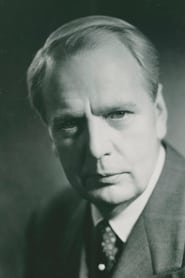
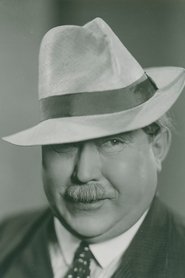
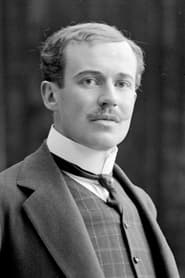
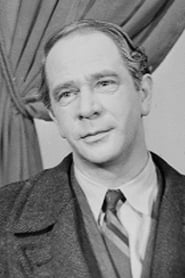
1926 · Approximately 120 minutes

Also available on: Wikimedia
The Tales of Ensign Stål

The Tales of Ensign Stål

1926 Approximately 120 minutes Sweden

Plot

The Tales of Ensign Stål is a historical war drama drawn from Johan Ludvig Runeberg’s celebrated epic poems about the Finnish War of 1808–1809, when Sweden and Russia fought for control of Finland. The film follows a series of linked patriotic episodes rather than a single tightly centered protagonist, presenting a mosaic of courage, sacrifice, military hardship, and national loyalty on both the battlefield and the home front. As Russian forces advance, Swedish and Finnish soldiers endure defeat, hunger, and uncertainty, while figures inspired by Runeberg’s poems embody steadfastness, honor, and tragic heroism. The narrative builds toward the larger sense of a nation under pressure, using famous literary episodes to illustrate the emotional cost of war and the endurance of Finnish identity under foreign occupation. Because the work is based on a poetry cycle, the film emphasizes emblematic moments and heroic imagery as much as conventional plot mechanics, making it feel like a cinematic pageant of national memory.

About the Production

Release Date 1926
Production Svenska Biografteatern, M. Bronsted
Filmed In Sweden, Finland

The film was mounted as a large historical production in the Scandinavian silent era and adapted from the Finnish national epic verse cycle rather than from a prose novel or original screenplay. Its scope reflects the prestige ambitions of early Nordic cinema, which often blended literary adaptation, national history, and outdoor location shooting to create films with cultural as well as commercial significance. The production is associated with John W. Brunius, who was known for staging large-scale historical subjects with attention to pageantry, uniforms, and battlefield spectacle. As with many silent historical dramas of the period, the film likely relied on elaborate costuming, crowd scenes, and carefully composed exterior tableaux to convey the era, but precise surviving production records are limited. No reliably documented budget or contemporary box-office figures are generally cited in standard reference sources.

Historical Background

The film was made in 1926, in the interwar period, when European nations were intensely interested in questions of identity, memory, and historical legitimacy. For Finland, the memory of the Finnish War remained central to national consciousness because it marked the end of Swedish rule and the beginning of the autonomous Grand Duchy under Russia, a key stage on the road to eventual independence in 1917. Runeberg’s poems had long functioned as a cornerstone of Finnish patriotism, and adapting them to the screen in the silent era turned literary nationalism into mass visual culture. In Sweden, the material also resonated because it depicted a shared historical past and the loss of Finland, making the film both a work of remembrance and a cultural bridge. The production sits within the broader Nordic trend of using cinema to monumentalize history, present heroic sacrifice, and strengthen collective identity during a period of political change in Europe.

Why This Film Matters

The film matters as part of the canon of Scandinavian silent historical cinema and as an early example of screen adaptation of a work that is foundational to Finnish cultural memory. By translating Runeberg’s verse cycle into film, it helped demonstrate how cinema could serve not only entertainment but also national pedagogy and patriotic commemoration. Its subject—the Finnish War—remained emotionally resonant because it encapsulated themes of resistance, loss, and endurance that continued to shape Finnish self-understanding. The film also illustrates how Swedish cinema participated in the construction of a shared Nordic historical imagination, using literary prestige and visual spectacle to create a sense of cultural seriousness. Even where the film is not widely seen today, it remains historically important as a representative artifact of silent-era nation-building through cinema.

Making Of

The film was developed as a prestigious literary adaptation at a time when Scandinavian filmmakers were seeking to demonstrate that regional cinema could handle major national themes with grandeur and seriousness. John W. Brunius brought experience in staging large historical subjects, and the production appears to have emphasized authentic period detail, military formations, and landscape imagery to reinforce the wartime setting. Adapting Runeberg posed a special challenge because the source is a sequence of poems, meaning the filmmakers had to transform lyrical, episodic verse into visual scenes that could still communicate patriotic feeling and narrative momentum. Like many silent-era epics, the production likely relied on tableau composition, expressive acting, and intertitles that preserved the elevated tone of the source text. Surviving documentation is limited, but the film’s reputation rests on its ambition as a major national-history project rather than on star-driven entertainment.

Visual Style

The film likely uses the formal strategies common to 1920s Scandinavian historical cinema: carefully arranged compositions, strong use of landscape, and pictorial staging that emphasizes uniforms, movement, and tableau-like groupings. Silent war films of this type often rely on contrast between intimate human suffering and grand exterior scenes, and this production would have used the terrain and period settings to evoke both realism and epic scale. The visual style would have been shaped by the need to translate poetic imagery into legible screen action, making gesture, framing, and blocking especially important. Brunius-era historical films are often noted for their stately pacing and attention to visual clarity, with emphasis on mood and dignity over rapid cutting. Exact cinematographer credit is not consistently documented in widely available references for this title, but the production belongs stylistically to the refined, atmospheric look associated with Scandinavian silent drama.

Innovations

The film’s principal achievement lies in its adaptation of a poem cycle into coherent cinematic form, which required an inventive approach to narration and episode structure. It also represents the technical and logistical ambition of Scandinavian silent epics, which often used location shooting, large groups of extras, and period reconstruction to achieve historical verisimilitude. The film’s command of visual storytelling would have depended on its ability to communicate military movement, emotional stakes, and patriotic symbolism without synchronized sound. While it is not generally associated with a single groundbreaking technical innovation, it exemplifies the high production standards of prestige silent historical drama in the Nordic countries. Its achievement is therefore aesthetic and structural rather than a matter of one specific device or effect.

Music

As a silent film, The Tales of Ensign Stål would originally have been accompanied by live music, likely tailored to venue and screening context rather than fixed as a standardized recorded score. For prestige historical presentations, accompaniment often drew on patriotic, military, and lyrical themes that matched the film’s emotional tone and poetic source. No universally documented original composed score is consistently cited in standard reference material, and surviving musical cue sheets, if any, are not widely circulated. Modern screenings, where they occur, may use reconstructed or newly commissioned accompaniment. Because of its literary basis, music would have been especially important in sustaining the heroic and elegiac atmosphere of the film.

Famous Quotes

No reliably documented famous spoken quotes survive, as the film is silent and original intertitles are not comprehensively preserved in commonly available sources.

Memorable Scenes

  • Battle scenes dramatizing the Finnish War, where military formations and battlefield chaos convey the scale of the conflict.
  • Patriotic tableau scenes inspired by Runeberg’s poetry, in which characters are staged as emblematic figures of loyalty and sacrifice.
  • Sequences of hardship and endurance that emphasize the human cost of war on soldiers and civilians alike.
  • Landscape shots that frame the conflict against the harsh northern environment, reinforcing the film’s historical and national atmosphere.

Did You Know?

  • The film is based on Johan Ludvig Runeberg’s "The Tales of Ensign Stål," one of the most culturally important literary works in Finnish history.
  • It deals with the Finnish War of 1808–1809, a conflict that resulted in Finland’s transfer from Swedish to Russian rule.
  • Although the subject is Finnish national history, the film was produced in Sweden, reflecting the close cultural and linguistic ties between the two countries.
  • John W. Brunius was one of the major directors of Scandinavian prestige cinema in the silent era and specialized in literary and historical adaptations.
  • The film is remembered as part of the tradition of Nordic historical epics that used famous national literature as a source of patriotic imagery.
  • Because the source material is a poem cycle, the film is structured more as a sequence of emblematic episodes than as a single continuous novelistic storyline.
  • Silent-era historical films like this one often depended heavily on intertitles to preserve the poetic and rhetorical flavor of the source text.
  • The film’s original cast and supporting roles are not always consistently documented in surviving summaries, which is common for silent-era productions with incomplete archival records.
  • The work belongs to a lineage of Scandinavian films that helped define how national history could be staged on screen before the arrival of sound cinema.
  • It is frequently cited by historians as an example of how silent cinema adapted prestige literature to bolster cultural identity and historical memory.

What Critics Said

Contemporary reviews are not as widely documented in easily accessible modern summaries as those of some better-preserved silent classics, but the film was generally treated as a serious prestige production rather than a lightweight commercial release. Its value lay in its faithful evocation of Runeberg’s patriotic material, its historical scale, and its earnest treatment of national sacrifice. Later criticism tends to view it through the lens of Nordic silent cinema history, where it is appreciated for its ambition, literary pedigree, and cultural importance. Because the film is relatively obscure outside specialized film-historical circles, modern reception is largely archival and scholarly rather than driven by broad popular criticism. Historians of Swedish and Finnish cinema regard it as a significant adaptation within the tradition of early twentieth-century national epics.

What Audiences Thought

Audience response is not extensively documented in surviving mainstream sources, but the film would have appealed strongly to viewers interested in history, literature, and patriotic subject matter. Silent historical dramas of this kind typically attracted educated audiences and regional viewers with a personal or cultural connection to the material. The use of Runeberg’s beloved poems likely gave the film added prestige and emotional recognition for Finnish audiences, even though it was made in Sweden. As with many silent-era national epics, its reception would have depended heavily on the familiarity of audiences with the source text and their appetite for large-scale historical spectacle. Its continued mention in film histories suggests that it was viewed as an important cultural production even if its mass popularity is harder to measure today.

Film Connections

Influenced By

  • The Tales of Ensign Stål by Johan Ludvig Runeberg
  • Scandinavian national romantic literature
  • Early Swedish historical epics
  • Silent-era literary adaptations

This Film Influenced

  • Later Scandinavian historical dramas inspired by national literature
  • Subsequent Finnish and Swedish screen adaptations of patriotic literary classics

Film Restoration

The film is believed to survive at least in part, but documentation on complete preservation and restoration status is limited in widely accessible sources. Like many silent Scandinavian films, it is better known among archivists and historians than among general audiences, and available material may depend on archive holdings and print condition. It should be regarded as an early film of partial or uncertain accessibility rather than a widely circulating standard restoration, unless a specific archive release is cited. In practical terms, it is not commonly available in mainstream distribution.

Themes & Topics