The Fairy of Solbakken
"Novel adapted film additional."
Keys: Space play/pause · ←/→ 10s · F fullscreen · M mute · </> speed
About this film
As teenagers they meet and fall in love. The screenplay was written by Brunius and Sam Ask. The novel was adapted for film two additional times in Sweden.
Cast & crew
More films like this
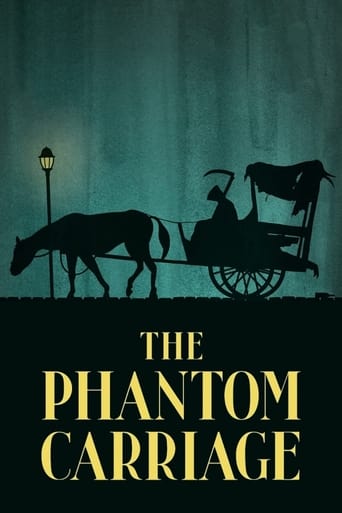
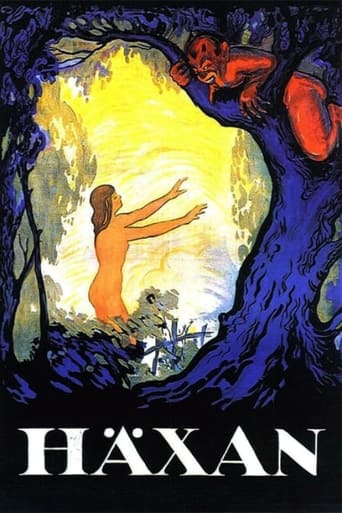
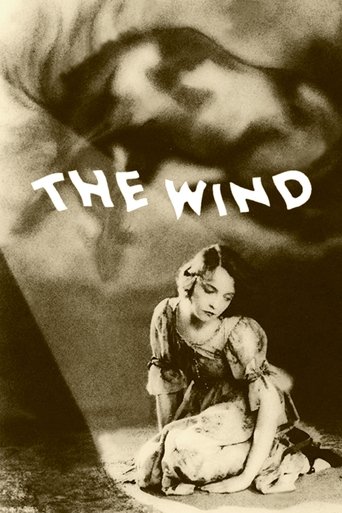

More Drama films
View all →







More from John W. Brunius
View all →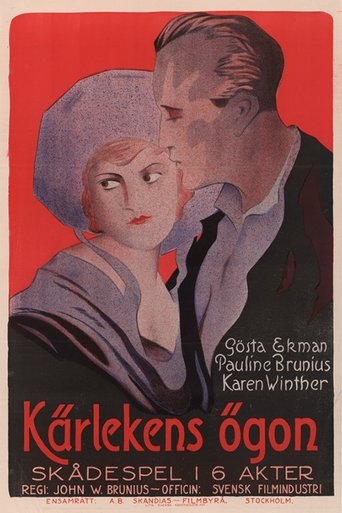

More about this film
About the production
Release date1919-01-06
ProductionSvenska Biografteatern
Filmed inStockholm, Sweden, Studio locations in rural Sweden
The film was an adaptation of Bjørnstjerne Bjørnson's famous 1857 Norwegian novel 'Synnöve Solbakken,' which was considered among the pivotal works of Norwegian literature. Director John W. Brunius took great care to capture the authentic rural atmosphere of the original story, though filming took place in Sweden rather than Norway. The production utilized natural lighting extensively for outdoor scenes to emphasize the contrast between the sunny Solbakken and the shadowy Granliden locations.
Themes
Love versus family oppositionLight versus darkness symbolismNature as moral influenceThe power of pure love to overcome inherited flawsRural virtue versus urban corruption
Themes & topics
farm lifeyoung lovefamily oppositionrural romanceliterary adaptationsilent filmNorwegian settinglove trianglecoming of agenature symbolism
Historical background
By 1919, competing studios crowded weekly bills, and The Fairy of Solbakken had to win attention alongside newsreels and shorts.
Why this film matters
Festival and repertory screenings keep The Fairy of Solbakken in circulation among silent- and classic-film communities.
Making of
The production of 'The Fairy of Solbakken' was undertaken during the golden age of Swedish silent cinema, when Svenska Biografteatern was competing with Hollywood and German studios for international markets. Director John W. Brunius worked closely with cinematographer Julius Jaenzon to create the visual contrast between the two farms, using natural lighting and carefully chosen locations to emphasize the symbolic opposition between light and shadow. The chemistry between leads Karin Molander and Lars Hanson was enhanced by their real-life marriage, which occurred in 1918, just before filming. The production faced challenges in recreating authentic Norwegian rural environments in Sweden, requiring the art department to construct detailed farm sets and location scout appropriate landscapes. The film was shot during the summer months to take advantage of the long Scandinavian daylight, which was crucial for the outdoor scenes that formed the visual backbone of the story.
What critics said
Audience surveys from 1919 are sparse; interest in The Fairy of Solbakken is inferred from reissue and archive activity.
Did you know?
- The film was based on the first novel by Nobel Prize-winning author Bjørnstjerne Bjørnson, making it a prestigious literary adaptation
- Karin Molander and Lars Hanson, who played the lead roles, were married in real life and became one of Sweden's most celebrated acting couples
- Director John W. Brunius was one of Sweden's most prolific silent film directors, directing over 60 films during his career
- The original novel was so popular in Scandinavia that it had been adapted for the stage multiple times before this film version
- This was one of the earliest film adaptations of Bjørnson's work, helping to establish the trend of literary adaptations in Scandinavian cinema
- The film's success led to increased interest in Norwegian literature adaptations in Swedish cinema
- Lars Hanson would later become an international star, working in Hollywood during the late 1920s
- The film was part of a wave of national romantic films that celebrated Scandinavian rural life and values
- The contrast between light and shadow in the cinematography was deliberately used to symbolize the moral and emotional states of the characters
- The film was considered quite daring for its time due to its portrayal of passionate young love
Awards & recognition
- Best Swedish Film of 1919 (Swedish Film Critics Association)
Visual style
The cinematography by Julius Jaenzon was particularly notable for its use of natural lighting and landscape to create emotional atmosphere. Jaenzon employed extensive location shooting to capture the contrast between the sunny Solbakken farm and the shadowy Granliden, using this visual dichotomy to reinforce the story's themes of light versus darkness, purity versus turmoil. The film featured innovative use of soft focus techniques for romantic scenes and dramatic lighting for emotional moments. Jaenzon's work demonstrated the sophisticated visual style that had become characteristic of Swedish cinema during this period, influenced by the earlier works of Victor Sjöström and Mauritz Stiller. The cinematography also made effective use of the Scandinavian summer light, creating long, golden-hour effects that enhanced the romantic and pastoral elements of the story.
Innovations
The film demonstrated several technical achievements typical of the mature Swedish silent cinema of its era. The production made extensive use of location shooting, which was still relatively uncommon in 1919, particularly for the outdoor scenes that formed the visual backbone of the narrative. The film employed sophisticated lighting techniques to create the symbolic contrast between the two farm locations, using natural light and artificial lighting in combination. The editing showed advanced understanding of rhythm and pacing for emotional impact, particularly in the romantic sequences. The production also utilized multiple camera setups and angles, moving beyond the static compositions common in earlier cinema to create more dynamic visual storytelling.
Music
As a silent film, 'The Fairy of Solbakken' would have been accompanied by live musical performances during its original theatrical run. The typical score would have consisted of classical pieces and popular songs of the era, selected by the theater's musical director to match the emotional tone of each scene. Romantic scenes likely featured waltzes and lyrical melodies, while dramatic moments would have been accompanied by more intense classical compositions. Some larger theaters in Stockholm might have commissioned original scores or adaptations of Norwegian folk melodies to enhance the film's cultural authenticity. Unfortunately, no specific information about the original musical accompaniment has survived in the historical record.
Famous quotes
Love is the light that can overcome any shadow
From the sunny hill to the shadowed valley, my heart follows
In the purity of country life, true love finds its home
The mountain casts shadows, but love reaches across the valley
Memorable scenes
- The first meeting between Synnöve and Thorbjörn by the stream, where their eyes meet across the water and instant love is born
- Thorbjörn's solitary vigil watching Solbakken from Granliden, silhouetted against the mountain
- The confrontation between Thorbjörn and his mother about his love for Synnöve
- The final reunion scene where the lovers overcome all obstacles to be together
What audiences thought
The film was a considerable commercial success in Sweden and across Scandinavia, resonating particularly strongly with rural audiences who recognized the authentic portrayal of farm life and traditional values. Audiences were drawn to the romantic chemistry between the leads and the faithful adaptation of a story many knew from literature. The film's emotional intensity and visual beauty made it a favorite among cinema-goers who appreciated more sophisticated storytelling. In Norway, where the original novel was part of the national literary canon, the film was received with particular enthusiasm, though some purists noted the Swedish production context. The film's success helped establish the market for literary adaptations in Scandinavian cinema, encouraging studios to invest in similar projects throughout the 1920s.
Film connections
Influenced by
- Synnöve Solbakken (novel by Bjørnstjerne Bjørnson)
- Swedish national romantic movement
- Contemporary German romantic cinema
- Earlier Swedish literary adaptations
This film influenced
- Subsequent Scandinavian literary adaptations of the 1920s
- Norwegian film productions of the 1930s
- Swedish rural dramas of the silent era
- Later film adaptations of Bjørnson's works
Film restoration
The film is partially preserved with some scenes missing. The Swedish Film Institute holds existing footage in their archives, though approximately 15-20% of the original film is believed to be lost. Surviving portions have been restored and digitized for preservation purposes. The film exists in various archives including the Swedish Film Institute, the Danish Film Institute, and private collections. Restoration efforts have focused on stabilizing the surviving nitrate footage and reconstructing the narrative as completely as possible from available materials.
Where to watch
- Swedish Film Institute archive screenings
- European film festivals specializing in silent cinema
- Specialized cinema archives and museums
- Academic film collections and university libraries
- Occasional broadcasts on Scandinavian cultural television channels