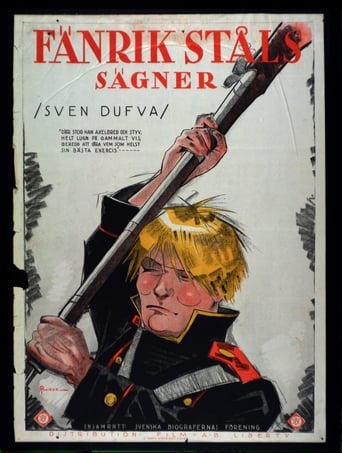
Thor Christiernsson
Actor
- Active
- 1926-1926
Films 1
About Thor Christiernsson
Thor Christiernsson is an obscure Swedish screen actor associated with the silent film era, best known for appearing in the 1926 adaptation of Esaias Tegnér's epic poem The Tales of Ensign Stål (De lyckliga karlarna / Fänrik Ståls sägner in various references). Surviving filmographic records indicate that his documented screen career was extremely brief, with 1926 as the only currently identifiable active year. Because he appears in a small surviving record trail rather than in extensive studio publicity or reference books, many biographical details about his life outside the screen remain undocumented. He is part of the long tail of Scandinavian silent cinema performers whose names survive through cast lists, but whose careers were often limited to a single feature or a small number of productions. There is no reliable evidence in the available historical record that he pursued a longer career in talkies, stage work, or international cinema. As a result, Thor Christiernsson is remembered primarily as a name in Swedish silent-film documentation rather than as a widely profiled star. His value to film history lies in preserving the cast ecology of 1920s Swedish production and the many lesser-known performers who contributed to national literary adaptations.
More about Thor Christiernsson
On screen
No contemporary reviews or detailed performance descriptions of Thor Christiernsson are presently known from accessible historical sources. Because his filmography is extremely limited and his surviving reputation is tied to a single silent-era credit, any precise characterization of his style would be speculative. In the context of 1920s Swedish silent cinema, his performance would likely have relied on the expressive, understated physicalization typical of the period rather than on dialogue-driven characterization. Beyond that broad context, no reliable evidence survives to describe his personal technique, screen persona, or distinctive mannerisms.
In film history
Thor Christiernsson's cultural impact is best understood as indirect and archival rather than celebrity-driven. He was part of the performing ensemble surrounding Swedish silent cinema at a time when the national industry was producing high-quality literary and historical adaptations that contributed to Sweden's international reputation. Even minor cast members in such productions helped create the texture, social realism, and period authenticity that silent-era filmmakers sought. His presence in The Tales of Ensign Stål places him within a culturally important tradition of adapting canonical Nordic literature for the screen, a practice that connected cinema to national identity and literary heritage. While he is not known as a major star, his documented participation helps scholars reconstruct the personnel networks of Scandinavian silent film production. For historians, names like his are valuable because they reveal how many artists participated in the medium beyond the best-known directors and leads.
Later reputation
Thor Christiernsson's legacy is primarily as a documented participant in Swedish silent cinema whose name remains preserved in film history even though the specifics of his life and career are obscure. His surviving credit demonstrates how many performers contributed to classic cinema without leaving behind the kind of publicity materials that later generations associate with stardom. In that sense, his legacy is archival: he is part of the historical record of 1920s Swedish filmmaking and the literary adaptation tradition that defined much of the country's prestige cinema. Researchers and database users encountering his name are seeing evidence of a broader, more complete film culture than one limited to major stars alone. The endurance of his credit in filmographies underscores the importance of preserving cast records for silent-era productions. If further archival material emerges, his place in Swedish cinema history may become clearer, but at present he remains a marginal yet genuine figure in the record.
Influence
There is no evidence that Thor Christiernsson directly influenced later actors or filmmakers in a documented, traceable way. His influence, if any, would have been limited to his immediate production environment and to the collaborative craft of silent ensemble acting in Sweden. More broadly, the historical importance of performers like him lies in sustaining the acting culture that supported the rise of Scandinavian prestige cinema. He contributes to the lineage of anonymous or semi-anonymous screen artists whose work made literary and historical films viable.
Off screen
No dependable biographical information has been located regarding Thor Christiernsson's personal life, including family background, marriage, children, residence, or activities outside film. He does not appear to have left a substantial public record in standard classic-cinema reference sources, which suggests either a very private life or a career too brief to generate extensive archival coverage. Until primary-source archival material is found, such as census entries, studio records, or contemporary press notices, his personal history must be considered largely unknown.
Credits
- Appeared in the 1926 Swedish silent film The Tales of Ensign Stål, the only confirmed screen credit currently associated with his name
- Participated in one of the notable Scandinavian literary adaptations of the silent era, based on a nationally significant Finnish-Swedish poem cycle
- Represents the cohort of lesser-documented performers working in Sweden's mid-1920s silent film industry
- Contributed to a film that helped sustain the prestige of Swedish literary and historical cinema during the silent period
Roles
- Cast member in The Tales of Ensign Stål (1926)
Films
- The Tales of Ensign Stål (1926)
Notes
- He is known from a very small surviving film record, which makes him one of the more obscure names associated with Swedish silent cinema.
- His only currently documented screen credit is The Tales of Ensign Stål (1926).
- He appears to have been active for only one year, at least according to existing filmography data.
- His work belongs to the silent era, before sound film became standard in Sweden.
- The film he appeared in was based on a major Nordic literary work, linking him to an important cultural adaptation tradition.
- Because so little survives about him, he is a useful example of how many silent-era performers remain underdocumented.
- No reliable public record has been found for his birth date, death date, or family background.
- His name survives primarily through cast listings rather than through star biographies or studio publicity.
Questions
Who was Thor Christiernsson?
Thor Christiernsson was a Swedish actor associated with the silent film era, known from a very limited surviving screen record. His best-documented appearance is in The Tales of Ensign Stål (1926), and little else has been reliably preserved about his life or career.
What films is Thor Christiernsson best known for?
He is best known for The Tales of Ensign Stål (1926), which is the only confirmed film credit currently tied to his name. No other widely verifiable film appearances have been identified in accessible classic-cinema references.
When was Thor Christiernsson born and when did he die?
His birth and death dates are not currently documented in reliable accessible sources. Likewise, his place of birth and death, if applicable, remain unknown in the surviving public record.
What awards did Thor Christiernsson win?
No awards or formal honors are currently known for Thor Christiernsson. Given the scarcity of biographical documentation and his very limited screen record, there is no evidence of major industry recognition in the available sources.
What was Thor Christiernsson's acting style?
No contemporary descriptions of his technique have been preserved, so any precise assessment would be speculative. As a silent-era Swedish actor, his work would most likely have depended on expressive physical performance and visual characterization rather than dialogue.
What is Thor Christiernsson's legacy in film history?
His legacy is mainly archival and historical, rather than star-driven. He represents the many lesser-known performers who helped build Swedish silent cinema and who remain important to researchers reconstructing the period's film culture.