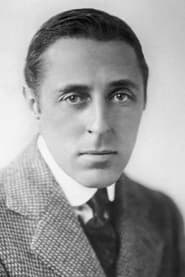

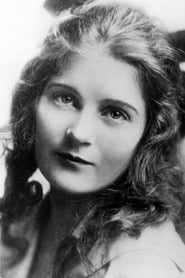
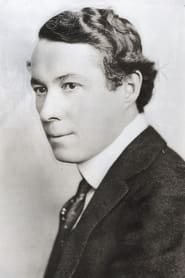
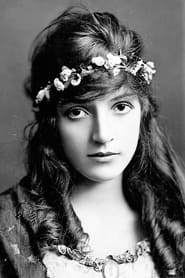
The Birth of a Nation
"Landowners and ruin"
Keys: Space play/pause · ←/→ 10s · F fullscreen · M mute · </> speed
About this film
Two families, abolitionist Northerners the Stonemans and Southern landowners the Camerons, intertwine. When Confederate colonel Ben Cameron is captured in battle, nurse Elsie Stoneman petitions for his pardon. In Reconstruction-era South Carolina, Cameron founds the Ku Klux Klan, battling Elsie's congressman father and his African-American protégé, Silas Lynch.
Cast & crew
More films like this
More Drama films
View all →






More from D.W. Griffith
View all →

More about this film
About the production
Release dateFebruary 8, 1915 (Los Angeles premiere), March 3, 1915 (New York premiere)
Budget$110,000 (equivalent to approximately $3 million in today's currency)
Box office$10-15 million (equivalent to $250-375 million today), making it among the leading profitable films of all time relative to budget
ProductionDavid W. Griffith Corp., Epoch Producing Corp.
Filmed inLos Angeles, California, San Diego, California, San Fernando Valley, California, Whittier, California, Big Bear Lake, California
The film employed over 3,000 extras and featured unprecedented battle sequences with thousands of soldiers. Griffith spent months researching historical details and used innovative techniques including parallel editing, close-ups, and moving camera shots. The production was so massive that it required multiple units shooting simultaneously. The film's original title was 'The Clansman' based on Thomas Dixon's novel, but was changed to 'The Birth of a Nation' to appeal to broader audiences. The production faced numerous challenges including securing financing for its ambitious scope and coordinating complex battle scenes.
Themes
Race relations and white supremacyThe Lost Cause narrative of the Civil WarNorthern versus Southern cultural valuesFamily and romantic love across political dividesReconstruction as a period of chaos and corruption
Themes & topics
Civil WarReconstructionKu Klux KlanInterracial romanceAbolitionismPlantation lifeBattle sequencesPolitical corruptionFamily sagaHistorical dramaPropagandaRacial conflict
Historical background
Made in its country of production around 1915, The Birth of a Nation belongs to the silent era's formative years. Its story of two families, abolitionist northerners the stonemans and southern landowners the camerons, intertwine spoke to audiences of the day through familiar genres and topical settings.
Why this film matters
Archivists and historians still cite The Birth of a Nation when tracing how the silent era's formative years filmmakers staged families and abolitionist on screen.
Making of
The production of The Birth of a Nation was an unprecedented undertaking in early cinema. D.W. Griffith, already established as a pioneering director at Biograph Studios, invested his own money and reputation into the project. He spent months researching Civil War history and consulted with veterans to ensure accuracy in uniforms and battle tactics. The filming took place over several months in 1914, with Griffith employing multiple camera units to capture the massive scale of battle sequences. The cast and crew worked long hours in often dangerous conditions, with real explosives used in battle scenes. Lillian Gish later recalled that Griffith was obsessed with historical accuracy, demanding that actors wear authentic period clothing and that sets be built to exact specifications. The film's controversial content was known during production, with some actors expressing discomfort with the racist portrayals, though most participated due to Griffith's reputation and the promise of groundbreaking work in cinema.
What critics said
Reviews from 1915 weighed The Birth of a Nation on pacing, performance, and novelty. Later criticism reads its emphasis on families, abolitionist, northerners through modern standards of craft and representation.
Did you know?
- The film was the first movie ever screened at the White House, where President Woodrow Wilson reportedly said it was 'like writing history with lightning' (though this quote is disputed).
- The film's success led to the revival of the Ku Klux Klan, which had been dormant since the 1870s, with membership reaching millions by the 1920s.
- Despite its racist content, the film was selected for preservation in the National Film Registry in 1992 for its 'historical, cultural, and aesthetic significance'.
- The film's budget of $110,000 was astronomical for its time, making it the most expensive film ever produced up to that point.
- D.W. Griffith used innovative techniques including color tinting for emotional effect, with blue for night scenes, amber for daylight, and red for battle sequences.
- The film's massive success led to the creation of the 'blockbuster' concept in Hollywood, proving that films could be enormously profitable cultural events.
- The NAACP organized protests against the film in multiple cities, leading to riots in some locations and the film being banned in several major cities.
- Griffith later tried to atone for the film's racist content with his 1916 film 'Intolerance', which promoted human brotherhood and condemned prejudice.
- The film's battle sequences were so realistic that some veterans of the Civil War who attended screenings experienced traumatic flashbacks.
- The original negative of the film was destroyed in a fire, but multiple copies survived, allowing for restoration efforts in the 1990s.
Awards & recognition
- Special Award from the Motion Picture Academy (1930) - 'For his distinguished creative achievements as director and producer and his invaluable initiative and lasting contributions to the progress of international motion pictures'
- National Film Registry selection (1992) - for preservation as a culturally, historically, or aesthetically significant film
Visual style
The film's cinematography, led by Billy Bitzer, was revolutionary for its time. Bitzer employed innovative techniques including panoramic long shots of battlefields, intimate close-ups for emotional moments, and tracking shots that moved with the action. The film used natural lighting whenever possible and pioneered the use of iris shots to focus attention on specific details. Color tinting was used extensively to enhance mood and differentiate time periods - amber for daylight, blue for night scenes, and red for battle sequences. The battle sequences featured extraordinary camera work, including shots taken from balloons for aerial perspectives and cameras placed on moving platforms to follow cavalry charges. The film's visual style established many conventions of classical Hollywood cinema that would become standard practice for decades.
Innovations
The Birth of a Nation introduced numerous technical innovations that would become standard in cinema. Griffith's use of parallel editing to build suspense across multiple storylines was groundbreaking, particularly in the famous 'last minute rescue' sequences that would become a Hollywood staple. The film featured elaborate camera movements including tracking shots, pans, and zooms that were technically difficult in 1915. The battle sequences employed thousands of extras and coordinated multiple camera units to capture action from various angles. The film's use of color tinting for emotional effect was innovative, as was its application of makeup techniques to create consistent character appearances across the long shooting schedule. The film's three-hour length challenged the prevailing assumption that audiences couldn't sit through such long features, helping establish the feature film as the dominant cinematic form. Griffith also pioneered techniques for creating realistic battle effects using explosives and carefully choreographed action sequences.
Music
As a silent film, The Birth of a Nation was accompanied by live musical performances during screenings. The original score was composed by Joseph Carl Breil, one of the first original scores written specifically for a feature film. Breil incorporated popular songs of the Civil War era, classical pieces, and original compositions. The most famous musical element was the use of 'Dixie' for Southern scenes and 'The Battle Hymn of the Republic' for Northern sequences. The score also featured Wagnerian leitmotifs, with specific musical themes associated with different characters and ideas. The musical accompaniment was so important to the film's impact that Griffith insisted on specific orchestral arrangements for all major screenings. The success of the film's musical approach helped establish the practice of commissioning original scores for major motion pictures.
Famous quotes
The former enemies of North and South are united again in common defense of their Aryan birthright. (Intertitle)
The Ku Klux Klan, the organization that saved the South from the anarchy of black rule. (Intertitle)
This is an army of white men, sworn to protect their homes. (Intertitle)
The white men were roused by a mere instinct of self-preservation. (Intertitle)
The littlest soldier, who fought so bravely for the Southern cause. (Intertitle)
War is hell, but it's better than negro rule. (Intertitle)
The white men's burden. (Intertitle)
We must preserve our civilization. (Intertitle)
Memorable scenes
- The assassination of Abraham Lincoln at Ford's Theatre, depicted with historical detail and dramatic tension
- The massive battle sequences with thousands of soldiers, particularly the Siege of Petersburg scenes
- Ben Cameron's inspiration to found the Ku Klux Klan after watching white children playing ghost and being frightened
- The climactic rescue sequence where the Klan rides to save the Cameron family from attack
- The ballroom scenes at the Cameron plantation, showcasing the antebellum Southern aristocracy
- Elsie Stoneman's frantic ride to warn Ben Cameron of danger
- The sequence showing African American legislators eating fried chicken and drinking alcohol in the South Carolina legislature
- The burning of Atlanta scenes, which influenced similar sequences in Gone with the Wind
- The final scenes showing the reunification of North and South through the marriage of Elsie and Ben
What audiences thought
The Birth of a Nation was an unprecedented box office phenomenon, attracting millions of viewers and setting attendance records that stood for decades. White audiences, particularly in the South, responded with enthusiasm, often giving standing ovations during Klan sequences. Ticket prices were set at the unprecedented rate of $2 (equivalent to about $50 today), yet theaters were consistently sold out. The film's success led to roadshow presentations with live orchestras and special programs, treating cinema as a prestigious cultural event for the first time. However, African American audiences and their allies organized protests and boycotts. In several cities, including Boston and Philadelphia, the film was banned due to public pressure and concerns about inciting racial violence. The film's commercial success demonstrated the power of cinema to attract mass audiences and established the economic model for the Hollywood blockbuster system that would follow.
Film connections
Influenced by
- The Clansman by Thomas Dixon Jr. (novel)
- Leone's Italian historical epics
- French historical films of the 1900s
- Edwin Porter's 'The Great Train Robbery' (1903)
- Griffith's earlier Biograph shorts
- Victorian melodrama
- Classical mythology and epic literature
- 19th-century historical paintings
- Contemporary stage productions about the Civil War
This film influenced
- Gone with the Wind (1939)
- Intolerance (1916)
- The General (1926)
- Stagecoach (1939)
- The Big Parade (1925)
- War and Peace (1956)
- Lawrence of Arabia (1962)
- The Godfather (1972)
- Star Wars (1977)
- Saving Private Ryan (1998)
- Glory (1989)
- Lincoln (2012)
Film restoration
The film has been preserved and restored multiple times. The original camera negative was destroyed in a fire at the Museum of Modern Art in the 1930s, but several first-generation copies survived. The most complete restoration was undertaken in the 1990s by the Museum of Modern Art and the Library of Congress, combining elements from various surviving prints. The film is preserved in the National Film Registry and is available through various archives and distributors. However, due to its controversial content, some institutions restrict access or require contextual materials when screening the film.
Where to watch
- The Criterion Collection (Blu-ray/DVD)
- Kino Lorber (DVD/Blu-ray)
- The Library of Congress National Audio-Visual Conservation Center
- Museum of Modern Art Film Collection
- UCLA Film & Television Archive
- Various streaming platforms with historical film collections
- Educational institutions with film studies programs
- Public domain versions available online (though quality varies)