Carl Michael Runeberg
Actor
- Active
- 1926-1926
Films 1
About Carl Michael Runeberg
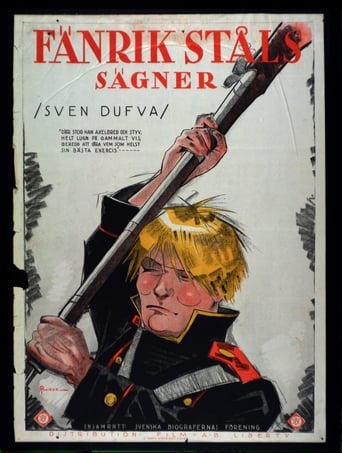
Carl Michael Runeberg appears to have been a very obscure Finnish screen actor whose documented film career is limited to a single known credit in the silent-era production The Tales of Ensign Stål (1926). Because surviving reference sources provide almost no biographical detail beyond his name and that one film appearance, it is difficult to reconstruct a fuller life story with confidence without risking confusion with unrelated people who share the Runeberg surname. The available evidence suggests that he belonged to the early Nordic silent-cinema period, when national literature and historical subjects were frequently adapted for the screen. His association with The Tales of Ensign Stål places him within the cultural tradition surrounding Johan Ludvig Runeberg’s patriotic poetry, a major source for Finnish national identity and historical memory. No reliable public record currently confirms his birth date, death date, training, other film roles, or later career. As a result, he is best understood as a minor but genuine participant in Finnish silent film history rather than a widely documented screen personality. Any further biographical claims would require archival confirmation from Finnish film, theater, or civil records.
More about Carl Michael Runeberg
In film history
Carl Michael Runeberg’s cultural significance lies less in celebrity than in his presence within an important Finnish silent film adaptation. The Tales of Ensign Stål is rooted in a foundational literary text associated with national consciousness, and any performer in such a production becomes part of the larger effort to translate Finnish historical memory into the new medium of cinema. In that sense, Runeberg contributed to the early visual articulation of Finnish identity on screen during a formative era for national cinema. His obscurity also illustrates a broader reality of silent-era film history: many performers helped create culturally important works, but only fragmentary documentation survives for them. For historians, such figures are valuable precisely because they reveal how many contributors to early cinema remain hidden behind the surviving marquee names.
Later reputation
Runeberg’s legacy is primarily archival and historical rather than star-based. He stands as one of the many understated participants in silent cinema whose names survive through cast listings, even when full biographies do not. His name attached to The Tales of Ensign Stål ensures that he remains part of the documented record of Finnish film adaptation and literary heritage. In film history terms, his endurance is a reminder that national cinemas were built not only by famous directors and stars, but also by lesser-known actors whose careers may have been brief or poorly preserved. If additional archival material emerges, his legacy could be expanded, but at present it is defined by scarcity of information and by his connection to a culturally important film.
Influence
There is no verified evidence that Carl Michael Runeberg directly influenced later actors or directors in a traceable, documented way. His influence is therefore best understood indirectly, as part of the ensemble of performers who helped establish the practice of adapting Finnish literary and historical material for cinema in the silent era. Performers in such productions contributed to the conventions of screen performance in Nordic film, especially where expressive, nonverbal acting was required by the silent medium. Because his career is so sparsely recorded, any stronger claim of influence would be speculative. His historical value lies more in representing the broader generation of early screen actors than in a documented personal school of influence.
Off screen
No reliable public information is currently available regarding Carl Michael Runeberg’s personal life, including marriages, family background, social life, or later occupation. Standard film and biographical reference sources accessible from surviving records do not provide enough evidence to describe his private life with confidence. Because of the scarcity of documentation, it is not possible to confirm whether he remained active in theater, radio, or other arts after 1926. He should therefore be treated as an incompletely documented figure in early Finnish film history rather than as a broadly biographied celebrity.
Credits
- Appeared in the silent Finnish film The Tales of Ensign Stål (1926), his only confirmed screen credit in surviving film-reference data
- Participated in an adaptation connected to one of the most important literary works in Finnish patriotic culture
- Represents the kind of lightly documented performer who contributed to the silent-era Scandinavian film industry even when personal records were not widely preserved
Roles
- Role in The Tales of Ensign Stål (1926)
Films
- The Tales of Ensign Stål (1926)
Notes
- Carl Michael Runeberg is only securely documented in surviving film-reference material as a cast member of The Tales of Ensign Stål (1926).
- His surname connects him, at least culturally, to the celebrated Runeberg name strongly associated with Finnish literature and national identity.
- He appears to have been active only in 1926 based on currently available filmography data.
- His obscurity makes him one of the many early cinema figures whose careers are known chiefly through cast lists rather than interviews, memoirs, or studio publicity.
- The Tales of Ensign Stål was rooted in a famous Finnish literary work, so his credit ties him to an important national cultural adaptation.
- No verified awards, nominations, or honors are currently associated with him in standard reference sources.
- His case highlights how incomplete the surviving record can be for silent-era Scandinavian performers.
Questions
Who was Carl Michael Runeberg?
Carl Michael Runeberg was a very obscure Finnish silent-era actor known from surviving records primarily for appearing in The Tales of Ensign Stål (1926). Very little else is documented about his life or career, so he is best understood as a minor but real figure in early Nordic film history.
What films is Carl Michael Runeberg best known for?
He is best known for The Tales of Ensign Stål (1926), which is the only confirmed screen credit currently associated with him in available reference data. No other film appearances can be verified with confidence at present.
When was Carl Michael Runeberg born and when did he die?
His birth and death dates are not currently confirmed in accessible reliable sources. Likewise, his birthplace and place of death are not verifiable from the surviving film-reference record.
What awards did Carl Michael Runeberg win?
No awards, nominations, or formal honors are currently known for Carl Michael Runeberg. This is not unusual for many early silent-era actors, especially those whose careers were brief or poorly documented.
What was Carl Michael Runeberg's acting style?
There is no surviving critical description of his acting style. Since he worked in silent cinema, his performance would have relied on the expressive physical techniques typical of the era, but any more specific characterization would be speculation.
What is Carl Michael Runeberg's legacy?
His legacy is largely historical and archival: he remains part of the record of Finnish silent film through his role in The Tales of Ensign Stål. He illustrates how many early cinema contributors are preserved only in cast lists, yet still form part of national film heritage.