


The Last Command
"culturally, historically, or aesthetically significant"
Keys: Space play/pause · ←/→ 10s · F fullscreen · M mute · </> speed
About this film
In 1928 Hollywood, director Leo Andreyev looks through photographs for actors for his next movie. When he comes to the picture of an aged Sergius Alexander, he pauses, then tells his assistant to cast the man. Sergius shows up at the Eureka Studio with a horde of other extras and is issued a general's uniform.
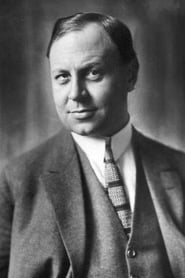
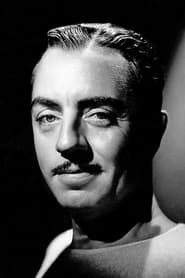
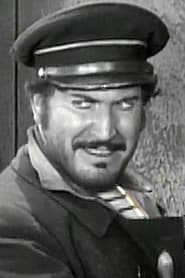
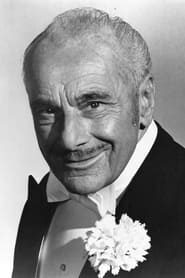
Cast & crew
More films like this

More Drama films
View all →







More from Josef von Sternberg
View all →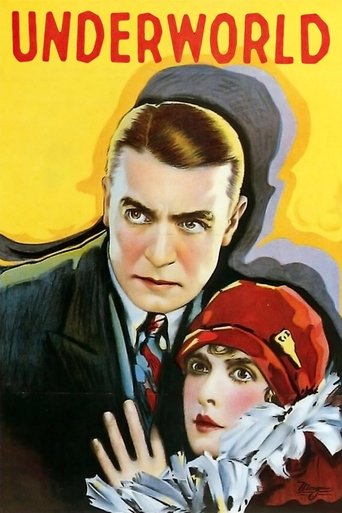

More about this film
About the production
Release dateJanuary 22, 1928 (New York City premiere)
Budget$374,000
Box officeUnknown exact figures, but was commercially successful for Paramount
ProductionParamount Pictures
Filmed inParamount Studios, Hollywood, Los Angeles, California, USA
The film was shot in just 28 days, an incredibly fast schedule even for the silent era. Josef von Sternberg insisted on authentic Russian uniforms and props, many of which were obtained from actual White Russian émigrés living in Los Angeles. The battle sequences were filmed using hundreds of extras and innovative camera techniques to create the illusion of massive scale. Emil Jannings reportedly method-acted his role, refusing to break character even between takes and maintaining his aristocratic demeanor throughout the production.
Themes
Fall from grace and redemptionArt imitating lifeThe irony of fatePolitical upheaval and personal consequenceThe power of memory
Themes & topics
Russian RevolutionHollywoodFormer generalMovie extraFlashbackRevengeRedemptionClass conflictPolitical persecutionFilm within a filmCousin relationshipTortureBattle sceneDeath scene
Historical background
The Last Command (1928) emerged during the silent-film era. In 1928 Hollywood, director Leo Andreyev looks through photographs for actors for his next movie. Archival records and catalog entries help place the work within film-history surveys of the period.
Why this film matters
Preserved under Wikidata ID Q466816, The Last Command is valued as a screen drama within catalog and archive collections. Wikipedia's "The Last Command (1928 film)" entry connect it to broader histories of cinema exhibition and restoration.
Making of
The production faced significant challenges in recreating the Russian Revolution on a Hollywood backlot. Von Sternberg, known for his meticulous visual style, used revolutionary lighting techniques including dramatic shadows and silhouettes to enhance the film's emotional impact. Emil Jannings, a renowned stage actor from Germany, brought method-like intensity to his performance, often staying in character for entire days. The casting of Jannings was particularly significant, as he was already a major international star and his participation gave the film immediate prestige. The battle sequences required coordination of hundreds of extras, horses, and carefully timed explosions. Von Sternberg insisted on multiple takes to achieve the perfect visual composition, often driving his actors to exhaustion. The film's most powerful scene, where Jannings' character relives his downfall during filming, was shot in a single take with the camera pushed in on his face, capturing what many consider one of silent cinema's greatest performances.
What critics said
Survival status shapes reception: The Last Command is discussed mainly in preservation and film-history literature rather than in wide contemporary review columns.
Did you know?
- Emil Jannings won the first Academy Award for Best Actor for this film (shared with 'The Way of All Flesh'), but he couldn't attend the ceremony because he had already returned to Germany.
- The story was partially based on the real experiences of General Theodore Lodigensky, a former Russian aristocrat who worked as an extra in Hollywood.
- This was the first of three collaborations between Josef von Sternberg and Emil Jannings.
- William Powell's character was originally written as a smaller role, but von Sternberg expanded it after being impressed with Powell's screen test.
- The film was completed just as the transition to sound was beginning, making it one of the last major silent dramas.
- Jannings spoke very little English, which contributed to his decision to return to Germany after this film.
- The movie's success helped establish Paramount as a major studio for prestige productions.
- The Russian Revolution scenes were influenced by Eisenstein's 'October', though von Sternberg created his own distinctive visual style.
- Evelyn Brent and William Powell were married in real life during the filming, though they would divorce two years later.
- The film's title was suggested by Paramount executive B.P. Schulberg, who thought it captured the dramatic irony of the story.
Awards & recognition
- Academy Award for Best Actor - Emil Jannings (1929, 1st Academy Awards)
- Academy Award for Best Original Story - Lajos Bíró (1929, 1st Academy Awards)
Visual style
Bert Glennon's cinematography for The Last Command represents some of the most sophisticated visual storytelling of the silent era. Von Sternberg and Glennon employed innovative lighting techniques, using dramatic shadows and chiaroscuro effects to enhance the emotional impact of key scenes. The film features remarkable tracking shots and camera movements that were technically advanced for 1928, particularly during the battle sequences where the camera seemingly moves through the chaos of combat. The visual contrast between the opulent, golden-hued scenes of Imperial Russia and the harsh, stark lighting of Hollywood studios creates a powerful metaphor for the Duke's fall from grace. Glennon used multiple exposure techniques for dream sequences and flashbacks, creating a visual language that would influence film noir decades later. The cinematography emphasizes faces and hands, using close-ups to capture the subtle nuances of Jannings' performance. The film's visual style, with its emphasis on texture and shadow, became a hallmark of von Sternberg's later work with Marlene Dietrich.
Innovations
The Last Command showcased several technical innovations that were groundbreaking for 1928. The film's use of superimposition and multiple exposure techniques for the flashback sequences was particularly sophisticated, creating seamless transitions between past and present. Von Sternberg employed innovative camera movement, including tracking shots that followed characters through elaborate sets, creating a sense of immersion that was rare in silent cinema. The battle sequences utilized pioneering techniques for creating the illusion of massive scale, including forced perspective and carefully choreographed extras. The film's makeup effects, particularly the aging of Jannings' character, were remarkably subtle and realistic for the period. The production design featured some of the most elaborate recreations of Imperial Russia ever seen in Hollywood, with sets that could be transformed to show the passage of time and the effects of revolution. The film's editing, particularly in the climactic sequence where past and present merge, was unusually complex for its time, using cross-cutting to create psychological depth rather than merely advancing the plot.
Music
As a silent film, The Last Command originally featured live musical accompaniment that varied by theater. The score was typically compiled from classical pieces and popular music of the era, with theaters often using Tchaikovsky's compositions for the Russian scenes. Paramount provided cue sheets suggesting appropriate music for different scenes, emphasizing dramatic Russian themes for the flashback sequences and more contemporary American music for the Hollywood portions. The film's most famous scene, the final battle sequence, was typically accompanied by thunderous percussion and brass to enhance its emotional impact. Modern restorations have featured newly composed scores by silent film specialists, including a notable 2015 version by the Mont Alto Motion Picture Orchestra. These modern scores attempt to capture the film's emotional journey through a combination of Russian folk melodies, classical pieces, and original compositions that bridge the cultural divide between the two worlds depicted in the film.
Famous quotes
I am Sergius Alexander, Grand Duke and cousin to the Czar! I command you to kneel!" - Grand Duke Sergius Alexander
In Hollywood, even a general can become an extra." - Leo Andreyev
The past... it comes back... always it comes back." - Grand Duke Sergius Alexander
You were a tyrant then, and you are a beggar now. The wheel has turned." - Leo Andreyev
I die... but I die as a commander!" - Grand Duke Sergius Alexander's final words
Memorable scenes
- The opening sequence showing the opulent splendor of the Imperial Russian court, with von Sternberg's camera gliding through golden halls filled with aristocrats in elaborate costumes, establishing the world that will be destroyed.
- The revolutionary confrontation where Jannings' character faces the Bolsheviks, using only his imposing presence and cold stare to convey his defiance despite being outnumbered and defeated.
- The Hollywood casting call where the once-mighty Duke stands in line with other desperate extras, the camera emphasizing his humiliation through careful composition and lighting.
- The climactic battle scene where the Duke, playing himself, relives his traumatic memories, with von Sternberg using superimposition to merge past and present in a dizzying emotional climax.
- The final death scene where the Duke finds redemption through performance, dying with the dignity he lost in life, captured in an extended close-up that showcases Jannings' mastery of silent acting.
What audiences thought
The Last Command was a commercial success upon its release, drawing audiences who were fascinated by its Russian setting and the star power of Emil Jannings. Contemporary audience reports indicate that viewers were particularly moved by the film's emotional climax, with many theaters reporting audible reactions from the audience during the final scenes. The film's themes of redemption and the irony of fate resonated strongly with 1920s audiences, who were themselves living through a period of rapid social change. Moviegoers appreciated the film's visual spectacle, especially the battle sequences and the contrast between the opulent Russian court and the gritty reality of Hollywood studios. The film's success helped establish Jannings as a major star in America, though his return to Germany limited his Hollywood career. Modern audiences who discover the film through revival screenings and home video continue to praise its emotional power and technical excellence, with many expressing surprise at how effectively the silent medium conveys its complex story.
Film connections
Influenced by
- The works of Fyodor Dostoevsky, particularly themes of fallen aristocrats
- Sergei Eisenstein's 'October' for revolutionary imagery
- German Expressionist cinema for visual style
- European stage acting traditions
- Contemporary newspaper accounts of Russian émigrés in Hollywood
This film influenced
- Sunset Boulevard (1950) - themes of faded glory in Hollywood
- The Great Dictator (1940) - political satire with dramatic elements
- Singin' in the Rain (1952) - film within a film structure
- The Last Tycoon (1976) - Hollywood power dynamics
- The Artist (2011) - silent film homage and Hollywood transition
Film restoration
The Last Command is well-preserved and has undergone several restorations. The original negative is held in the Paramount Pictures archives, and the film was selected for preservation in the United States National Film Registry by the Library of Congress in 2006 for being 'culturally, historically, or aesthetically significant.' A major restoration was completed by the UCLA Film and Television Archive in 2006, which included the reconstruction of missing footage from various sources. The film exists in its complete form and is available on DVD and Blu-ray through The Criterion Collection, which released a digitally restored version in 2013. The preservation status is excellent compared to many films of its era, with multiple 35mm prints preserved in archives around the world including the Museum of Modern Art and the British Film Institute.
Where to watch
- The Criterion Collection (Blu-ray/DVD with restored version and special features)
- The Criterion Channel (streaming)
- Kino Classics (DVD release)
- Various classic film streaming services including Fandor and Mubi
- Public domain versions available on YouTube and Internet Archive (though quality varies)
- Occasional screenings at film museums and revival cinemas
- Available through some university film libraries and archives