Films
1 film
About Alexander Ikonnikov
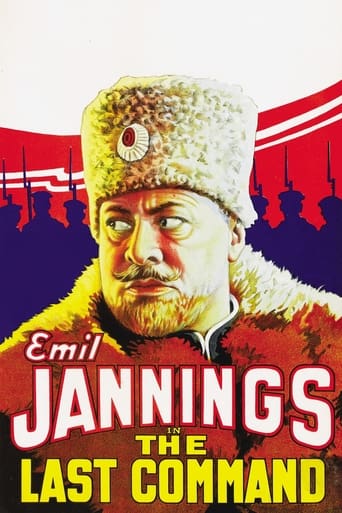
Alexander Ikonnikov is credited on a single production — The Last Command (1928). ' directed by Josef von Sternberg. Given the timing and his Russian name, he was likely part of the wave of Russian emigrants who fled to America following the Russian Revolution of 1917. In 'The Last Command,' which starred Emil Jannings as a former Russian Grand Duke working as a Hollywood extra, Ikonnikov was presumably cast in one of the numerous Russian roles that populated the film's flashback sequences. His brief film career appears to have been limited to this single production, which was common for many character actors and extras of the era who found work in films reflecting their cultural backgrounds. Like many supporting players from the silent era, detailed biographical information about Ikonnikov's life before and after his brief film appearance has been largely lost to history.
The Craft
Milestones
- Appeared in the Academy Award-winning film 'The Last Command' (1928)
Best Known For
Iconic Roles
Must-See Films
Working Relationships
Worked Often With
Studios
Why They Matter
Impact on Culture
Alexander Ikonnikov represents the often-overlooked contributions of ethnic character actors who brought authenticity to early Hollywood films. As a Russian actor appearing in 'The Last Command,' he was part of a tradition of casting actors who could bring genuine cultural understanding to roles depicting their native lands. His appearance in this critically acclaimed film, which won the first Academy Award for Best Actor for Emil Jannings, places him within an important moment in cinema history, even if his individual contribution was minimal. The practice of casting Russian emigrants in Russian roles was common in 1920s Hollywood and added a layer of authenticity to productions dealing with the aftermath of the Russian Revolution.
Lasting Legacy
Alexander Ikonnikov's legacy is primarily preserved through his participation in 'The Last Command,'. While he may not have achieved lasting fame, his contribution to this Academy Award-winning film represents the collective work of countless character actors who helped build the foundation of American cinema. His story illustrates the transient nature of early Hollywood careers, particularly for supporting players who may have appeared in only one or two films before disappearing from the historical record. The preservation of 'The Last Command' ensures that his contribution, however small, remains part of cinema history.
Who They Inspired
As a minor character actor with only one known film credit, Alexander Ikonnikov's direct influence on subsequent performers is difficult to trace. However, he represents the broader pattern of ethnic actors who found opportunities in early Hollywood by bringing cultural authenticity to specific roles. His participation in a film directed by Josef von Sternberg places him within the orbit of one of cinema's most influential early directors, potentially exposing him to innovative filmmaking techniques that were shaping the future of the medium.
Off Screen
Very little is known about Alexander Ikonnikov's personal life. As a Russian actor who appeared in American films during the silent era, he was likely part of the Russian emigrant community that settled in Hollywood following the Bolshevik Revolution. Like many character actors of his era, he may have found work through cultural community connections rather than traditional casting channels.
Did You Know?
- His only known film appearance was in 'The Last Command' (1928), which won the first Academy Award for Best Actor
- The film was directed by Josef von Sternberg,
- 'The Last Command' was partially based on the real-life story of Russian General Theodore Lodijensky
- The film's Russian Revolution scenes likely featured many actual Russian emigrants like Ikonnikov
- Emil Jannings won the first-ever Academy Award for Best Actor for his performance in this film
- The film has been preserved by the National Film Registry for its cultural and historical significance
- Like many silent era character actors, Ikonnikov's career appears to have ended with the transition to sound films
Frequently Asked Questions
Who was Alexander Ikonnikov?
Screen credits include Hollywood during the silent film era, with his only known credit being in the 1928 film 'The Last Command.' Like many character actors of his time, he was likely cast due to his authentic Russian background in a film dealing with Russian themes.
What films is Alexander Ikonnikov best known for?
Titles linked here include The Last Command (1928).
When was Alexander Ikonnikov born and when did he die?
Specific birth and death dates for Alexander Ikonnikov are not documented in historical records. He was known to be of Russian nationality and was active in Hollywood in 1928, but like many supporting actors from the silent era, detailed biographical information has been lost to time.
What awards did Alexander Ikonnikov win?
Alexander Ikonnikov did not receive any personal awards or nominations. However, the film he appeared in, 'The Last Command' (1928), won the Academy Award for Best Actor for Emil Jannings and has been recognized as.
What was Alexander Ikonnikov's acting style?
There is insufficient documentation to determine Alexander Ikonnikov's specific acting style, as he appeared in only one film and likely in a supporting or extra role. As a Russian actor in a silent film about Russian themes, he would have used the exaggerated physical acting style typical of the silent era.
Why is so little known about Alexander Ikonnikov?
The scarcity of information about Alexander Ikonnikov is typical for many character actors and extras from the silent era. Supporting players often received minimal documentation, and their careers were frequently brief, especially during the transition from silent films to talkies when many actors found themselves unable to adapt to the new medium.