
The Gyurkovics Boys
"When graduation day has come Géza refuses to set up but taken by force by the principal's."
Keys: Space play/pause · ←/→ 10s · F fullscreen · M mute · </> speed
About this film
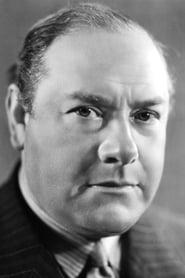
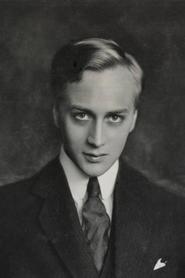
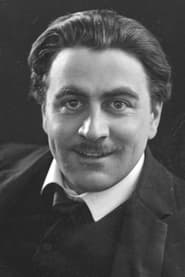
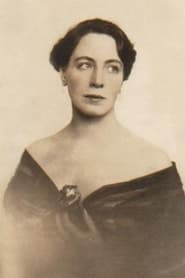
Gyurkovics have a dozen children the oldest of which, the twins Géza and Bandi, just preparing for their matriculation examination. When graduation day has come Géza refuses to set up but taken by force by the principal's henchmen. When dad Gyurkovics later dies, tak Brunius and starring Gösta Ekman, Nils Asther, Violet Molitor, Emile Stiebel and john's then spouse Pauline Brunius.
Cast & crew
More films like this

More Drama films
View all →







More from John W. Brunius
View all →

More about this film
About the production
Release dateOctober 4, 1920
ProductionSvenska Biografteatern
Filmed inStockholm, Sweden
Based on the Hungarian play 'A Gyurkovics lányok' by Ferenc Herczeg, adapted for the screen with the focus shifted to the male twins. Production took place during the transition period in Swedish cinema when the industry was moving from short films to feature-length productions. The film was shot during the winter months of 1919-1920, presenting challenges for outdoor scenes in the Swedish climate.
Themes
Family dynamicsEducation and social mobilityMilitary service and dutyBrotherhood and fraternal bondsLife choices and consequences
Themes & topics
twinsexaminationmilitary academyfamily businessmatriculationbrotherseducationcoming of ageSwedish societysilent era
Historical background
Made in 1920, in Sweden, under John W. Brunius, The Gyurkovics Boys belongs to silent filmmaking amid the silent era's rapid stylistic experiments. Gyurkovicsarna is a Swedish 1920 silent comedy film directed by John W.
Why this film matters
Within silent history, John W. Brunius's name attaches to the work; surviving prints help researchers study silent-era craft; 1920 film by John W. Brunius.
Making of
The production of 'The Gyurkovics Boys' took place during a pivotal moment in Swedish cinema history, when the industry was establishing its identity on the international stage. Director John W. Brunius, known for his meticulous attention to detail, insisted on authentic period costumes and props for the examination and military scenes. The casting of real-life friends Gösta Ekman and Nils Asther as the twin brothers added genuine chemistry to their performances. The film's production coincided with the transition from short films to feature-length productions in Sweden, requiring more complex narrative structures and character development. The studio invested significantly in set construction, building detailed replicas of examination halls and military barracks. The winter shooting schedule presented unique challenges, with the crew having to work with limited daylight hours and cold temperatures, sometimes requiring artificial lighting for outdoor scenes.
What critics said
Contemporary reviews of The Gyurkovics Boys are sparse in open sources; later catalog entries chiefly summarize plot and credits.
Did you know?
- An adaptation of Hungarian playwright Ferenc Herczeg's work, showing the international influence on Swedish cinema in the silent era.
- Director John W. Brunius was one of Sweden's most prolific silent film directors, helming over 60 films during his career.
- Gösta Ekman, who played one of the twins, would become one of Sweden's most celebrated actors, spanning both silent and sound eras.
- Nils Asther, who played the other twin, would later move to Hollywood and work in American films during the 1920s and 1930s.
- Released during the golden age of Swedish cinema, when Swedish films were gaining international recognition.
- The original Hungarian play focused on sisters, but the Swedish adaptation changed the protagonists to twin brothers.
- Shot at the Svenska Biografteatern studios in Lidingö, which was advanced film studios in Europe at the time.
- The matriculation examination scenes were filmed using actual Swedish school uniforms and examination protocols of the era.
- The military sequences were filmed with cooperation from the Swedish armed forces, providing authentic uniforms and equipment.
- The film's intertitles were written by acclaimed Swedish author Hjalmar Bergman, who was known for his literary contributions to cinema.
Visual style
The cinematography, handled by Julius Jaenzon, one of Sweden's cinematographers, employed natural lighting techniques that were innovative for the period. The film utilized the soft, diffused light characteristic of Swedish cinema's golden age, particularly in interior scenes. The examination sequences were shot with careful attention to composition, using the architectural elements of the school to create visual metaphors for order and discipline. The military scenes employed wider shots to convey the scale and formality of military life. Jaenzon's use of depth of field and selective focus helped distinguish between the two brothers' different worlds, with Bandi's business environment appearing more grounded and Géza's military setting more expansive and formal.
Innovations
Several technical achievements for Swedish cinema in 1920. The production utilized the latest camera equipment available in Sweden, allowing for more mobile camera work than earlier films. The lighting techniques employed in the examination scenes were particularly advanced, using multiple light sources to create realistic indoor illumination. The film's editing, while following the continuity style common in the period, included some innovative cross-cutting between the brothers' different experiences, enhancing the narrative's emotional impact. The set construction for the military sequences was notably detailed, representing ambitious productions of its type in Swedish cinema up to that point.
Music
As a silent film, 'The Gyurkovics Boys' would have been accompanied by live musical performance during its theatrical run. The original score was likely composed by Swedish musicians specializing in film accompaniment, incorporating popular Swedish folk melodies and classical pieces. The music would have varied to match the emotional tone of different scenes, with lighter compositions for the family sequences and more formal, martial music for the military scenes. The examination scenes would have been accompanied by tense, rhythmic music to build suspense, while the fraternal moments would have featured warmer, more melodic themes. Specific information about the original musical accompaniment has not been preserved in the historical record.
Famous quotes
As a silent film, quotes were conveyed through intertitles, but specific intertitle texts have not been preserved in available historical records.
Memorable scenes
- The forced removal of Géza from the graduation ceremony by the principal's henchmen, creating a dramatic conflict between institutional authority and individual will
- The contrasting scenes showing Bandi managing the family business while Géza undergoes military training, visually emphasizing their divergent paths
- The emotional reunion scene between the brothers after their father's death, highlighting their shared grief despite different life choices
What audiences thought
Well-received by Swedish audiences upon its release, particularly resonating with middle-class viewers who could relate to the themes of education, family responsibility, and social advancement. The examination scenes struck a chord with viewers who had experienced similar educational pressures, while the military sequences appealed to the national pride prevalent in post-war Sweden. The contrasting paths of the twin brothers provided audiences with a relatable exploration of life choices and their consequences. Box office records from the period indicate that the film performed solidly in Swedish theaters, particularly in Stockholm and other major cities. The popularity of the lead actors, especially Gösta Ekman, likely contributed to the film's commercial success.
Film connections
Influenced by
- Hungarian literature (Ferenc Herczeg's play)
- Swedish literary tradition
- European silent film conventions
- Swedish social realist tradition
This film influenced
- Later Swedish films about education and military service
- Twin brother narratives in Scandinavian cinema
- Swedish coming-of-age films of the 1920s
Film restoration
Considered partially preserved with some scenes missing. The Swedish Film Institute holds incomplete copies of the film, with some deterioration due to the age of the nitrate film stock. Restoration efforts have been ongoing, but the complete original version may not exist in its entirety.
Where to watch
- Extremely rare and not widely available. Some segments may be viewable at the Swedish Film Institute's archive in Stockholm, or through specialized film archives and silent film festivals. No commercial home video or streaming releases are currently known to be available.