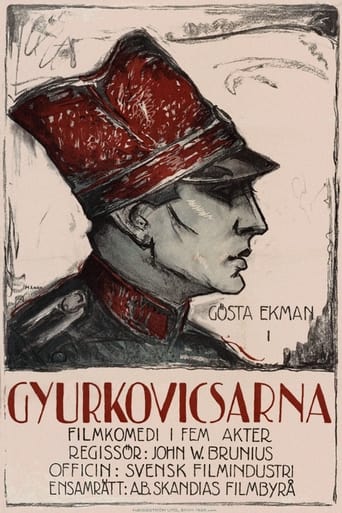
Films
1 film
About Tage Almqvist
This archive lists one role for Tage Almqvist: The Gyurkovics Boys (1920). With his entire known film career condensed into a single year of activity. His most notable and perhaps only screen credit was in the 1920 Swedish silent film 'The Gyurkovics Boys' (Gyurkovicsarna), directed by John W. Brunius. This film was an adaptation of a popular Hungarian novel and was part of the burgeoning Swedish film industry of the early 20th century, which was gaining international recognition for its artistic quality. Almqvist's role, like those of many supporting actors of the period, contributed to the ensemble that brought these literary adaptations to life for cinema audiences. His career appears to have been exceptionally brief, a common occurrence for many actors in the early days of film who may have pursued acting as a temporary engagement or been part of the stage community transitioning to the new medium. Details about his life outside of this single film credit are scarce, making him a somewhat enigmatic figure from silent cinema. He represents the countless performers who participated in the formative years of filmmaking but whose names have largely faded from mainstream historical records, their contributions preserved only in film archives and specialist databases.
The Craft
Milestones
- Appeared in the Swedish silent film 'The Gyurkovics Boys' (1920)
Best Known For
Must-See Films
Working Relationships
Worked Often With
Why They Matter
Impact on Culture
Tage Almqvist's cultural impact is minimal and indirect, tied solely to his participation in 'The Gyurkovics Boys'. As a supporting actor in a single Swedish silent film, his contribution is a small but integral part of the tapestry of early 20th-century European cinema. The film itself is a product of its time, reflecting the popularity of literary adaptations and the growing international reach of Swedish filmmaking. Almqvist, like many of his contemporaries, served as a building block in the foundation of the film industry, helping to establish the conventions of silent screen acting and narrative storytelling. His legacy is not one of individual stardom but as a representative of the anonymous workforce that made the golden age of silent cinema possible.
Lasting Legacy
The legacy of Tage Almqvist is that of a historical footnote, preserved primarily through film archives and cinema databases. He exemplifies the transient nature of fame for many early film actors, whose careers were often brief and undocumented. His name survives almost exclusively because of its association with a single, extant film, making him a subject of interest for silent film enthusiasts and historians rather than the general public. His story highlights the vast number of artists who contributed to cinema's early development without achieving lasting personal recognition. For film scholars, Almqvist is a reminder of the incomplete nature of film history and the thousands of stories that remain untold.
Who They Inspired
Due to the extremely limited scope of his known career, there is no documented evidence that Tage Almqvist directly influenced other actors, directors, or filmmakers. His influence, if any, would be confined to the immediate cast and crew of 'The Gyurkovics Boys'. He does not appear to have mentored any protégés or developed a recognizable style that could be emulated by others. His primary influence is historical, serving as an example of the journeyman actor who populated the films of the silent era.
Off Screen
Very little is known about the personal life of Tage Almqvist. His existence is primarily documented through his sole film credit, and biographical details such as family life, relationships, or other occupations have not been preserved in the historical record. This lack of information is typical for many minor players from the silent era, whose lives were not considered newsworthy enough to be documented beyond their professional contributions.
Did You Know?
- Tage Almqvist's entire known film career consists of a single film, 'The Gyurkovics Boys' from 1920.
- The film he appeared in, 'The Gyurkovics Boys', was an adaptation of a popular Hungarian novel by Ferenc Herczeg.
- The director of his only film, John W. Brunius, was a prominent figure in early Swedish cinema.
- His name is often found in film databases but is largely absent from biographical texts, underscoring his minor status.
- He represents a common phenomenon of the silent era: actors whose careers were incredibly brief, sometimes lasting for only one or two films.
- The survival status of 'The Gyurkovics Boys' helps preserve his legacy, as many films from this period have been lost.
Frequently Asked Questions
Who was Tage Almqvist?
Swedish with credits in this catalog. His career was exceptionally brief, with no other known film credits to his name, making him a minor but documented figure in early Swedish cinema.
What films is Tage Almqvist best known for?
Titles linked here include The Gyurkovics Boys (1920).
When was Tage Almqvist born and when did he die?
The exact birth and death dates of Tage Almqvist are not publicly known or documented in major film archives. His nationality is recorded as Swedish, but specific biographical details about his life outside of his single film role remain unavailable.
What awards did Tage Almqvist win?
There are no records of Tage Almqvist receiving any major awards or nominations for his work. Given his brief and minor role in the film industry, he was not a recipient of the formal recognitions that were emerging for cinema during that period.
What was Tage Almqvist's acting style?
Due to the lack of extensive filmography and detailed documentation, it is difficult to define Tage Almqvist's specific acting style. As a performer in a 1920 silent film, he would have employed the typical theatrical and exaggerated gestures common to screen acting of that era to convey emotion without dialogue.