

Groucho Marx
Actor
Born: October 2, 1890 in New York City, New York, USA Died: August 19, 1977 Active: 1905-1976 Birth Name: Julius Henry Marx
Films
3 films
About Groucho Marx
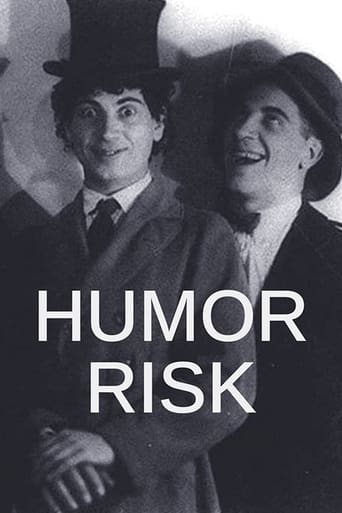
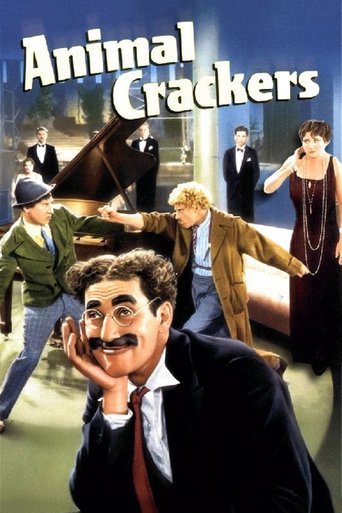
Julius Henry Marx, better known as Groucho Marx, began his entertainment career in vaudeville with his brothers in the early 1900s, developing their signature comedy act that would revolutionize American humor. The Marx Brothers transitioned from stage to Broadway in the 1920s with hits like 'I'll Say She Is' and 'The Cocoanuts' before making their film debut with 'Humor Risk' in 1921. Their breakthrough came with Paramount Pictures in the late 1920s and early 1930s, where they created classics like 'Animal Crackers' (1930), 'Duck Soup' (1933), and 'A Night at the Opera' (1935). After their film career declined in the 1940s, Groucho found renewed success as the host of the radio and television quiz show 'You Bet Your Life' (1947-1961), where his improvisational wit and quick insults charmed a new generation. In his later years, he became a beloved cultural icon, writing books, making guest appearances, and receiving numerous honors for his contributions to comedy. Groucho's legacy as one of America's greatest comedians performers decades after his death, with his anarchic style and wordplay remaining timeless.
The Craft
On Screen
Groucho Marx developed a unique comedic persona characterized by rapid-fire wordplay, sarcastic insults, and absurd logic. His signature appearance included greasepaint mustache, thick glasses, and a ever-present cigar, which he used as props in his physical comedy. His delivery style combined musical timing with verbal acrobatics, often breaking the fourth wall and subverting audience expectations. Groucho specialized in playing fast-talking con artists and authority figures who undermined their own power through sheer ridiculousness, using double entendres and puns that pushed the boundaries of censorship.
Milestones
- Stage debut with brothers in vaudeville (1905)
- Broadway success with 'I'll Say She Is' (1924)
- Film debut in 'Humor Risk' (1921)
- Paramount Pictures contract and classic films (1929-1933)
- MGM films including 'A Night at the Opera' (1935)
- Host of 'You Bet Your Life' radio show (1947-1956)
- Host of 'You Bet Your Life' TV show (1950-1961)
- Published autobiography 'Groucho and Me' (1958)
- Honorary Academy Award (1974)
Best Known For
Iconic Roles
Must-See Films
Accolades
Won
- Honorary Academy Award (1974)
- Golden Globe Cecil B. DeMille Award (1974)
- Emmy Award for Outstanding Achievement in Comedy Programming (1974)
- Grammy Award for Best Comedy Recording (1974) for 'An Evening with Groucho Marx'
Nominated
- Primetime Emmy Award for Outstanding Continued Performance by an Actor in a Leading Role in a Comedy Series (1957, 1958, 1959)
- Writers Guild of America Award for Best Comedy/Variety Show (1957)
Special Recognition
- Hollywood Walk of Fame star (1972)
- Inducted into the National Radio Hall of Fame (1988)
- American Film Institute's Greatest Male Stars of Classic Hollywood cinema (ranked #33)
- Inducted into the Television Hall of Fame (1990)
Working Relationships
Worked Often With
Studios
Why They Matter
Impact on Culture
Groucho Marx fundamentally transformed American comedy by introducing a sophisticated, irreverent style that challenged social conventions and authority. His rapid-fire wordplay and subversive humor pushed the boundaries of acceptable content in film and radio, influencing the development of satire in American entertainment. The Marx Brothers' films, particularly those featuring Groucho's anarchic characters, provided a sharp critique of high society and institutional power during the Great Depression, resonating with audiences who felt disillusioned with traditional institutions. His television success with 'You Bet Your Life' demonstrated how intelligent, improvisational comedy could thrive in the new medium, setting a template for future talk and game shows.
Lasting Legacy
Groucho Marx's legacy endures through his lasting influence on comedy, from stand-up to sitcoms to satirical writing. His technique of combining intellectual wordplay with physical comedy created a template that countless comedians have followed for decades. The Marx Brothers' films remain classics of cinema, regularly screened and studied for their innovative approach to comedy and their commentary on American society. Groucho's persona as the witty, cigar-chomping intellectual has become an archetypal figure in popular culture, referenced and parodied in everything from 'The Simpsons' to modern stand-up routines. His books and recordings continue to find new audiences, proving that his humor transcends its time period.
Who They Inspired
Groucho Marx influenced generations of comedians who adopted elements of his style, from his insult comedy to his intellectual approach to humor. His improvisational skills on 'You Bet Your Life' pioneered techniques later used by talk show hosts and reality TV personalities. The way he broke the fourth wall and acknowledged the artificiality of performance influenced postmodern comedy and meta-humor. His political satire and anti-authoritarian stance paved the way for later comedians like George Carlin and Jon Stewart. Even beyond comedy, his literary works and intellectual pursuits demonstrated that entertainers could be cultural commentators and serious thinkers.
Off Screen
Groucho Marx was married three times and had three children. His first marriage to Ruth Johnson ended in divorce after 21 years, during which they had two children, Arthur and Miriam. His second marriage to Kay Marvis (formerly Kay Gorcev) also ended in divorce after 10 years, and they had one daughter, Melinda. His third and longest marriage to actress Erin Fleming lasted from 1954 until his death in 1977, though it was marked by controversy in later years. Groucho was known for his intellectual pursuits and friendships with writers and artists, including T.S. Eliot and Carl Sandburg.
Education
Left school at age 12 to work odd jobs and help support his family; largely self-educated through extensive reading
Family
- Ruth Johnson (1920-1942)
- Kay Marvis (1945-1951)
- Erin Fleming (1954-1977)
Did You Know?
- The greasepaint mustache was originally created because he felt fake mustaches were too obvious and would fall off during performances
- He never actually graduated from high school but was an avid reader with an estimated personal library of over 7,000 books
- His famous 'Hooray for Captain Spaulding' song from 'Animal Crackers' became his unofficial theme song
- He was a lifelong friend of writer T.S. Eliot, with whom he corresponded regularly
- The famous 'secret word' duck on 'You Bet Your Life' would drop down with a $100 prize when contestants said it
- He turned down an opportunity to run for President of the United States in 1972 as a joke candidate
- His real first name Julius was changed to Groucho because of his grouchy-like demeanor during a poker game
- He was an accomplished amateur painter whose works were exhibited in galleries
- He once hosted a dinner party where both Alice Cooper and Salvador Dalí were guests
- The phrase 'I wouldn't want to belong to any club that would accept me as a member' is often attributed to him but was actually written by his scriptwriters
In Their Own Words
Outside of a dog, a book is a man's best friend. Inside of a dog, it's too dark to read.
I refuse to join any club that would accept me as one of its members.
Time flies like an arrow. Fruit flies like a banana.
I've had a perfectly wonderful evening, but this wasn't it.
One morning I shot an elephant in my pajamas. How he got into my pajamas, I'll never know.
Politics is the art of looking for trouble, finding it everywhere, diagnosing it incorrectly and applying the wrong remedies.
Marriage is a wonderful institution, but who wants to live in an institution?
Why a four-year-old child could understand this report. Run out and find me a four-year-old child, I can't make head or tail of it.
Frequently Asked Questions
Who was Groucho Marx?
Groucho Marx, born Julius Henry Marx, was an American comedian, actor, and writer who was the most famous member of the Marx Brothers comedy team. He was known for his rapid-fire wit, greasepaint mustache, glasses, and ever-present cigar, becoming.
What films is Groucho Marx best known for?
Titles linked here include Duck Soup (1933), A Night at the Opera (1935).
When was Groucho Marx born and when did he die?
Born October 2, 1890; died August 19, 1977.
What awards did Groucho Marx win?
Groucho Marx received an Honorary Academy Award in 1974 for his brilliant career and contributions to film comedy. He also won a Golden Globe Cecil B. DeMille Award in 1974, a Grammy Award for Best Comedy Recording in 1974, and has a star on the Hollywood Walk of Fame.
What was Groucho Marx's acting style?
Groucho Marx's acting style combined rapid-fire wordplay, sarcastic insults, and absurd logic with physical comedy. He specialized in playing fast-talking con artists who undermined authority through sheer ridiculousness, using double entendres and breaking the fourth wall to create an anarchic, subversive form of comedy that pushed the boundaries of censorship.
Did Groucho Marx have a television career?
Yes, Groucho Marx found tremendous success as the host of the quiz show 'You Bet Your Life,' which ran on radio from 1947-1956 and television from 1950-1961. The show showcased his improvisational wit and ability to interact with contestants, making him a household name to a new generation of Americans.
What was Groucho Marx's relationship with his brothers?
Groucho was the eldest and most famous of the Marx Brothers comedy team, which included Harpo, Chico, and sometimes Zeppo. While they had professional rivalries and occasional tensions, they maintained a close working relationship throughout their careers, with Groucho typically serving as the verbal anchor to his brothers' physical comedy.