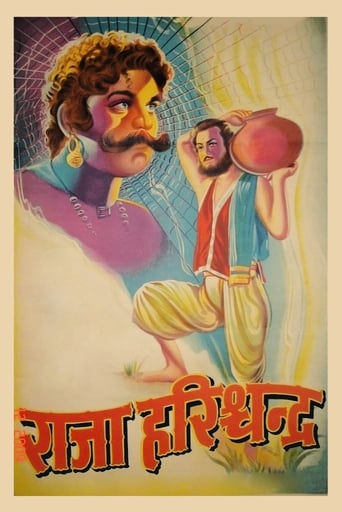
Films
1 film
About P.G. Sane
Made history by appearing in India's first full-length feature film, Raja Harishchandra (1913). He portrayed the role of Taramati, the queen consort of King Harishchandra, in this landmark silent film directed by the Dadasaheb Phalke. His performance as the queen was particularly significant as it represented one of the earliest female character portrayals in Indian cinema, despite being played by a male actor, which was common practice during the early film era due to social restrictions on women in performing arts. Sane's participation in this film placed him among the very first actors in Indian cinema history. Although his film career appears to have been limited to this single production, his contribution to Indian cinema's foundation remains historically important. The film itself was a mythological drama that established many conventions of Indian filmmaking that would continue for decades.
The Craft
On Screen
As an actor in India's first feature film, P.G. Sane's acting style would have been influenced by traditional Indian theatrical forms, particularly the Parsi theatre tradition which emphasized dramatic gestures and exaggerated expressions suitable for silent film. His portrayal of Queen Taramati would have required the broad, theatrical movements necessary to convey emotion without dialogue, typical of early silent cinema performances.
Milestones
- Appeared in India's first full-length feature film Raja Harishchandra (1913)
- Played the role of Taramati, the queen, in this historic production
- Part of Dadasaheb Phalke's cast that established Indian cinema
Best Known For
Iconic Roles
Must-See Films
Accolades
Special Recognition
- Recognized as one of the actors in Indian cinema history
Working Relationships
Worked Often With
Studios
Why They Matter
Impact on Culture
P.G. Sane's contribution to Indian cinema, though limited to a single film, carries immense cultural significance as part of the foundation of Indian filmmaking. His portrayal of Queen Taramati in India's first feature film helped establish the tradition of mythological storytelling that would become a cornerstone of Indian cinema. The fact that he played a female role also reflects the social conditions of early 20th century India, where women's participation in cinema was restricted, leading to male actors playing female characters in early films.
Lasting Legacy
P.G. Sane's legacy is permanently etched in Indian cinema history as one of the very first actors to appear in an Indian feature film. His role in Raja Harishchandra ensures his place in film history books, even though detailed information about his life and career remains scarce. He represents the generation of Indian actors who helped establish the country's film industry against considerable social and technical challenges.
Who They Inspired
As one of India's first film actors, P.G. Sane influenced subsequent generations by demonstrating that Indian stories could be successfully adapted to the cinematic medium. His performance, along with his fellow cast members, showed that Indian actors could effectively convey complex emotions and narratives through the medium of silent film, paving the way for the development of Indian acting techniques and styles.
Off Screen
Very little documented information is available about P.G. Sane's personal life, which was common for actors from the very early period of Indian cinema. Given the social stigma associated with acting in India during the early 1900s, many performers from this era maintained private lives away from public scrutiny.
Did You Know?
- P.G. Sane played a female role (Queen Taramati) in Raja Harishchandra, which was common in early Indian cinema as women were discouraged from acting in films
- Raja Harishchandra was filmed over 7 months at various locations including Mumbai and Pune
- The film was a commercial success despite being made on a very limited budget
- P.G. Sane was one of only three principal actors in India's first feature film
- The role of Taramati required extensive makeup and costume work to create a convincing female appearance
- Raja Harishchandra premiered at the Coronation Cinema in Mumbai on May 3, 1913
- The film was so successful that it ran for 23 days in Mumbai theaters, an unprecedented run for that time
- P.G. Sane's performance helped establish the archetype of the virtuous Indian queen in cinema
Frequently Asked Questions
Who was P.G. Sane?
Indian with credits in this catalog. His performance made him one of the very first actors in Indian cinema history.
What film is P.G. Sane best known for?
P.G. Sane is exclusively known for his role in Raja Harishchandra (1913), which holds the distinction of being India's first full-length feature film. This was his only known film appearance.
What role did P.G. Sane play in Raja Harishchandra?
P.G. Sane portrayed Taramati, the queen consort of King Harishchandra. This was a significant female role that required him to perform in drag, which was common practice in early Indian cinema due to social restrictions on women actors.
When was P.G. Sane active in cinema?
P.G. Sane's known film career was limited to 1913, the year Raja Harishchandra was produced and released. There are no records of him appearing in other films.
Why is P.G. Sane significant in Indian cinema history?
P.G. Sane is historically significant as one of the founding actors of Indian cinema, participating in the very first feature film made in India. His contribution, along with the rest of the cast and crew, helped establish the foundation for what would become the world's largest film industry.