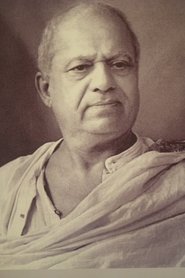

Raja Harishchandra
"King Harishchandra sacrifices everything to keep a sacred promise."
Keys: Space play/pause · ←/→ 10s · F fullscreen · M mute · </> speed
About this film
Righteous king Harishchandra the noble and righteous king, Harishchandra, who first sacrifices his kingdom, followed by his wife and eventually his children to honor his promise to the sage Vishwamitra.
Cast & crew
More History films
View all →


More from Dhundiraj Govind Phalke
View all →
More about this film
About the production
Release dateMay 3, 1913
BudgetApproximately 25,000 rupees (mortgaged by Phalke using his wife's jewelry)
Box officeCommercially successful, though exact figures are not documented from that era
ProductionPhalke Films
Filmed inMumbai (Bombay), Nashik, Pune, Various locations around Maharashtra
Dadasaheb Phalke traveled to London in 1910 to learn filmmaking techniques and purchased equipment from Williamson Camera. He built his own camera and processing facilities in India. The film was shot over 7 months with a small crew and minimal resources. Many scenes were filmed outdoors due to lack of studio space. Special effects were created using in-camera techniques and manual manipulation.
Themes
Truth and righteousnessSacrifice and dutyDivine justiceMoral integrityFaith and devotion
Themes & topics
Historical background
By 1913, distribution networks were widening, and Raja Harishchandra reached viewers through the same short-program bills that mixed comedy, news, and spectacle.
Why this film matters
Later homages and restorations keep Raja Harishchandra circulating among silent- and classic-film communities long after its first run.
Making of
The making of Raja Harishchandra was fraught with challenges. Dadasaheb Phalke, initially a photographer and printing press owner, was inspired to make films after watching 'The Life of Christ' in 1910. He traveled to London to study filmmaking but returned to India to create something rooted in Indian culture. The production faced numerous obstacles including lack of trained actors, technical equipment, and studio facilities. Phalke had to train his actors from scratch, many of whom had never seen a film before. The film was shot in natural light using a hand-cranked camera. Special effects were achieved through primitive techniques including matte paintings and stop-motion. The processing of the film was done in makeshift darkrooms, often in the bathroom of Phalke's residence. Despite these challenges, Phalke's determination and innovative approach resulted in a technically impressive film for its time.
What critics said
Modern retrospectives screen Raja Harishchandra for craft context: performances, pacing, and camera choices that illustrate 1913 norms more than revolutionary leaps.
Did you know?
- This is considered India's first full-length feature film and the beginning of Indian cinema
- Director Dadasaheb Phalke is often called the 'Father of Indian Cinema'
- Female roles were played by male actors as no women were willing to act in films at that time
- Phalke mortgaged his wife Saraswati's jewelry and sold his printing press to finance the film
- The film was inspired by Phalke watching a silent film about the life of Christ
- Only about 1,500 feet of the original 3,700 feet of film survives today
- The premiere was held at Coronation Cinema in Girgaon, Mumbai
- Phalke made his wife develop the film in the bathroom of their house
- The film's success led to the establishment of India's first film industry in Bombay
- A special screening was arranged for the British Viceroy Lord Hardinge
Awards & recognition
- Dadasaheb Phalke Award (posthumously named after the director)
Visual style
The cinematography was primitive for its time but innovative within the Indian context. Shot on a hand-cranked camera using natural light, the film employed basic techniques like long takes and static camera positions typical of early cinema. However, Phalke demonstrated creativity in composition and staging, using theatrical blocking adapted for the camera. The film included special effects techniques such as dissolves, superimpositions, and stop-motion animation, which were advanced for the time. The visual style was influenced by traditional Indian art forms, including painting and temple sculpture, with careful attention to costume and set design reflecting Indian aesthetics.
Innovations
Raja Harishchandra pioneered several technical achievements in Indian cinema. Phalke built his own camera and developed film processing techniques in India, which were previously unavailable. The film featured special effects including the appearance of gods and supernatural elements using double exposure and other in-camera tricks. Phalke developed techniques for creating elaborate costumes and sets with limited resources. The film demonstrated sophisticated editing techniques for its time, including cross-cutting between parallel action sequences. Phalke also experimented with color tinting in some prints, hand-coloring certain scenes to enhance their dramatic impact.
Music
As a silent film, Raja Harishchandra had no recorded soundtrack. However, during screenings, live music was typically provided by musicians using traditional Indian instruments. The musical accompaniment often included harmonium, tabla, and sitar, playing classical Indian ragas appropriate to the mood of different scenes. Some theaters employed narrators who would explain the story and read out intertitles for illiterate audiences. The absence of recorded sound made visual storytelling particularly important, which Phalke accomplished through expressive acting and clear visual narrative.
Famous quotes
'I must keep my word even if it costs me my kingdom' (King Harishchandra)
'Truth is the highest dharma' (repeated theme throughout the film)
Memorable scenes
- The coronation scene where King Harishchandra takes his oath of truth
- The transformation scene where Vishwamitra tests the king's resolve
- The emotional scene where the king sells his wife into servitude
- The climax at the cremation ground where divine intervention occurs
What audiences thought
The film was an immediate commercial success, drawing large crowds in Bombay and other cities where it was screened. Audiences were fascinated by seeing Indian stories and characters on screen for the first time. The film ran for extended periods in theaters, an unusual achievement for that era. Many viewers reportedly performed puja (worship) before the film screenings, treating the cinema hall as a temple. The success of Raja Harishchandra encouraged other entrepreneurs to invest in film production, leading to the rapid growth of the Indian film industry in the following years.
Film connections
Influenced by
- The Life of Christ (1903)
- Georges Méliès' fantasy films
- Traditional Indian theater forms
- Hindu mythology and epics
- Classical Indian painting
This film influenced
- Lanka Dahan (1917)
- Kaliya Mardan (1919)
- Satyavan Savitri (1923)
- Shirin Farhad (1931)
- Jai Santoshi Maa (1975)
Film restoration
The film is partially preserved with only fragments surviving. Approximately 1,500 feet of the original 3,700 feet of film exists today. The National Film Archive of India (NFAI) in Pune holds the surviving fragments. Some portions have been restored and digitized for preservation. The incomplete nature of the surviving print makes it difficult to view the film as originally intended, but efforts continue to preserve what remains of this landmark film.
Where to watch
- National Film Archive of India (Pune) - occasional screenings
- YouTube - uploaded versions of surviving fragments
- Film festivals specializing in classic cinema
- National Film Development Corporation archives
- Academic film libraries and institutions