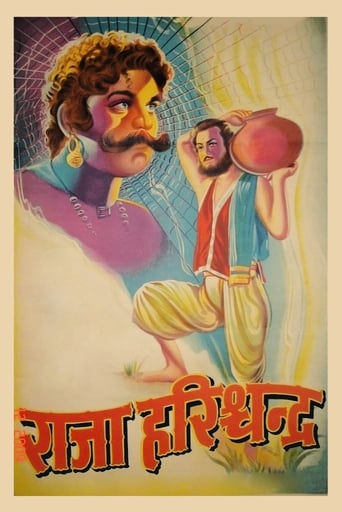
Films
1 film
About Vishnu Hari Aundhkar
Vishnu Hari Aundhkar performed in Dadasaheb Phalke's 1913 film 'Raja Harishchandra', which is widely recognized as India's first full-length feature film. Aundhkar played the significant role of Sage Vishwamitra, a central character in the mythological story who tests King Harishchandra's truthfulness and righteousness. His participation in this historic production places him among the very first actors in Indian cinema history, working during a time when filmmaking was still an experimental art form in the country. The film was a silent production that required actors to convey emotions and story through exaggerated gestures and facial expressions, typical of early cinema acting techniques. Unfortunately, detailed records about Aundhkar's life beyond this single film are scarce, as was common for many early Indian cinema pioneers whose contributions were not thoroughly documented. His role in this foundational film helped establish the mythological genre that would dominate Indian cinema for decades and demonstrated the potential of cinema as a storytelling medium in India.
The Craft
On Screen
As a silent film actor in 1913, Aundhkar would have used exaggerated gestures and facial expressions to convey emotions and character traits, following the theatrical traditions adapted for early cinema. His portrayal of Sage Vishwamitra required conveying wisdom, authority, and spiritual power through physical performance alone.
Milestones
- Appeared in India's first full-length feature film Raja Harishchandra (1913)
- Played the role of Sage Vishwamitra in this landmark production
- Part of the cast that helped establish Indian cinema
Best Known For
Iconic Roles
Must-See Films
Working Relationships
Worked Often With
Studios
Why They Matter
Impact on Culture
Vishnu Hari Aundhkar's contribution to Indian cinema, though limited to a single film, is historically significant as he was part of the cast of India's first feature film. His portrayal of Sage Vishwamitra helped establish the mythological genre that would become a cornerstone of Indian cinema for decades. The success of Raja Harishchandra demonstrated that Indian audiences would embrace cinematic storytelling, paving the way for the growth of one of the world's largest film industries. His work represents the birth of Indian cinema and the beginning of a cultural revolution in how stories were told and consumed in the subcontinent.
Lasting Legacy
Vishnu Hari Aundhkar's legacy is preserved through his role in the foundational film of Indian cinema. While his name may not be widely recognized today, he holds a place in history as one of the first actors to appear in an Indian feature film. His performance as Sage Vishwamitra contributed to the success of Raja Harishchandra, which proved that cinema could be a viable art form and industry in India. This legacy lives on through the continued importance of mythological storytelling in Indian cinema and the annual Dadasaheb Phalke Award, India's highest award in cinema, named after the director of the film that launched Aundhkar's brief but historically significant career.
Who They Inspired
As one of the earliest actors in Indian cinema, Vishnu Hari Aundhkar's work influenced the development of acting techniques in silent films and helped establish the conventions of mythological storytelling in Indian cinema. His portrayal of a sage character set precedents for how spiritual and authoritative figures would be depicted in subsequent Indian films. The success of the film he participated in inspired countless filmmakers and actors in the decades that followed, contributing to the rich tradition of cinema in India.
Off Screen
Very little is known about Vishnu Hari Aundhkar's personal life, as detailed records of early Indian cinema actors from the silent era are extremely limited. Like many actors of his time, his contribution to cinema was significant but not extensively documented in historical records.
Did You Know?
- Appeared in India's first full-length feature film 'Raja Harishchandra' (1913)
- Played the role of Sage Vishwamitra, a powerful sage who tests the protagonist's truthfulness
- The film was entirely silent with intertitles in Hindi and English
- Director Dadasaheb Phalke had to cast men in all roles as no women were willing to act in films at the time
- The film was shot over 7 months with a budget of approximately ₹25,000
- Only fragments of the original film survive today
- The film premiered at the Coronation Cinematograph in Mumbai
- Aundhkar was one of only four credited actors in the production
- The film's success led to the growth of the Indian film industry
- Raja Harishchandra was inspired by a play Phalke had seen after watching the film 'The Life of Christ'
Frequently Asked Questions
Who was Vishnu Hari Aundhkar?
Screen credits include the 1913 film Raja Harishchandra, playing the role of Sage Vishwamitra. He was one of the first actors in Indian cinema history, working in what is considered India's first full-length feature film directed by Dadasaheb Phalke.
What films is Vishnu Hari Aundhkar best known for?
Titles linked here include Raja Harishchandra (1913).
When was Vishnu Hari Aundhkar born and when did he die?
Unfortunately, specific birth and death dates for Vishnu Hari Aundhkar are not available in historical records, which is common for many early Indian cinema actors. He was active in 1913 when he appeared in Raja Harishchandra.
What role did Vishnu Hari Aundhkar play in Raja Harishchandra?
Vishnu Hari Aundhkar played the role of Sage Vishwamitra, a powerful sage who tests King Harishchandra's commitment to truth and righteousness. This was a pivotal character in the mythological story that forms the basis of the film.
What was the significance of Raja Harishchandra in Indian cinema?
Raja Harishchandra (1913) is widely recognized as India's first full-length feature film and marked the birth of Indian cinema. Its success proved that cinema could be a viable industry in India and established the mythological genre that would dominate Indian filmmaking for decades.