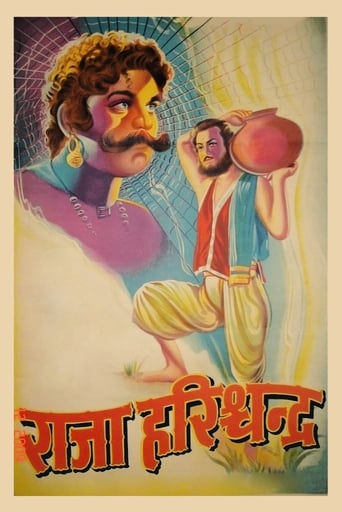
Films
1 film
About G.V. Sane
Made his mark in cinema history by portraying the titular role in Dadasaheb Phalke's 'Raja Harishchandra' (1913), widely recognized as India's first full-length feature film. As the lead actor in this production, Sane helped establish the foundation of Indian cinema's narrative tradition. His performance as the virtuous king who sacrifices his kingdom and family for truth set early standards for mythological storytelling in Indian films. Working in the silent era, Sane had to rely entirely on physical expression and gesture to convey complex emotions, a skill that was crucial for early cinema actors. His collaboration with Dadasaheb Phalke placed him at the very beginning of India's film industry, making him one of the first professional actors in the country. Unfortunately, like many early cinema pioneers, detailed records of his life and career are scarce, with 'Raja Harishchandra' remaining his only documented film credit. His contribution, however singular, represents a crucial chapter in the birth of Indian cinema.
The Craft
On Screen
As a silent era actor, G.V. Sane employed exaggerated physical gestures and facial expressions typical of early cinema to convey emotions and narrative. His performance in 'Raja Harishchandra' required the dramatic portrayal of a noble king facing moral dilemmas, establishing the template for mythological character acting in Indian films.
Milestones
- Starred in India's first full-length feature film 'Raja Harishchandra' (1913)
- Worked with director Dadasaheb Phalke
- Helped establish the tradition of mythological films in Indian cinema
- One of the first professional actors in Indian cinema
Best Known For
Iconic Roles
Must-See Films
Accolades
Special Recognition
- Recognized as one of India's first film actors in cinema history
Working Relationships
Worked Often With
Studios
Why They Matter
Impact on Culture
G.V. Sane's performance in 'Raja Harishchandra' helped establish the mythological genre as a cornerstone of Indian cinema, influencing countless films that followed. His portrayal set early standards for how kings and mythological figures would be depicted on screen for decades. As one of the first actors in Indian cinema, he contributed to the gradual acceptance of film acting as a legitimate art form in Indian society.
Lasting Legacy
G.V. Sane's legacy is tied directly to the birth of Indian cinema. While his filmography consists of only one known film, that film is arguably the most important in Indian film history. He is remembered as the actor who brought to life India's first cinematic hero, paving the way for generations of actors who would follow.
Who They Inspired
Though direct influence is difficult to trace due to limited documentation, Sane's performance style likely influenced early Indian actors in the mythological genre. His work with Dadasaheb Phalke helped establish the dramatic conventions that would become standard in Indian cinema's treatment of religious and mythological stories.
Off Screen
Very little is documented about G.V. Sane's personal life, which was common for actors in the earliest days of Indian cinema when film acting was not considered a respectable profession and detailed records were not maintained.
Did You Know?
- G.V. Sane was one of the first male actors to play a lead role in Indian cinema
- His film 'Raja Harishchandra' was 40 minutes long and shot over 7 months
- The role of Taramati, the queen, was played by a male actor (Anna Salunke) as no women were willing to act in films at the time
- The film was inspired by an actual stage performance of the play that Phalke had attended
- G.V. Sane's name appears in the film's credits as 'G.V. Sane', though his full name is not documented
- The film was a commercial success and ran for 23 days in Bombay's Coronation Cinematograph
- Only fragments of the original film survive today
- G.V. Sane was paid a small amount for his role, as the film was made on a very limited budget
- His performance helped establish the template for the 'noble king' archetype in Indian cinema
- The film's success led to the establishment of a film industry in Bombay
Frequently Asked Questions
Who was G.V. Sane?
Indian with credits in this catalog. He is remembered as one of the first professional actors in Indian cinema history.
What films is G.V. Sane best known for?
Titles linked here include Raja Harishchandra (1913).
When was G.V. Sane born and when did he die?
Unfortunately, the birth and death dates of G.V. Sane are not documented in historical records, which was common for early cinema actors in India. Only his nationality as Indian and his work in 1913 are confirmed.
What awards did G.V. Sane win?
G.V. Sane did not receive any formal awards during his lifetime, as the Indian film industry and its award systems were not yet established in 1913. His recognition comes from his historical significance as one of India's first film actors.
What was G.V. Sane's acting style?
As a silent era actor, G.V. Sane employed dramatic physical gestures and exaggerated facial expressions typical of early cinema to convey emotions. His portrayal of King Harishchandra set early standards for mythological acting in Indian films.