
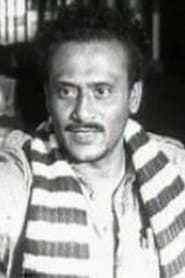
Kali Bannerjee
Actor
Born: November 20, 1921 in Calcutta, Bengal Presidency, British India Died: July 5, 1992 Active: 1949-1975 Birth Name: Kali Banerjee
Films
2 films
About Kali Bannerjee
Kali Bannerjee (also spelled Kali Banerjee) was an Indian Bengali actor who became an integral figure in the parallel cinema movement of India during the 1950s and 1960s. Born in Calcutta (now Kolkata), he began his career in theater before transitioning to films, where he quickly established himself as a versatile character actor capable of portraying complex, nuanced roles. His breakthrough came through his collaboration with Satyajit Ray, where he delivered memorable performances that captured the essence of middle-class Bengali life with remarkable authenticity. Bannerjee's naturalistic acting style and ability to embody ordinary characters with extraordinary depth made him a favorite among art house filmmakers. Throughout his career, he worked with other prominent directors like Tapan Sinha and Ajoy Kar, consistently delivering performances that were both subtle and powerful. Despite not being a conventional leading man, his contribution to Indian cinema, particularly Bengali cinema, was significant in establishing the realistic acting style that became synonymous with Indian art cinema. His career, though relatively brief, on the landscape of Indian parallel cinema.
The Craft
On Screen
Naturalistic and methodical approach with deep psychological insight into characters. Bannerjee was known for his ability to portray middle-class Bengali characters with remarkable authenticity, using subtle facial expressions and body language rather than dramatic gestures. His performances were characterized by their understated emotional depth and the way he could convey complex internal conflicts through minimal external expression.
Milestones
- Breakthrough role in Satyajit Ray's 'Aparajito' (1956)
- Memorable performance as Nityaranta in 'Parash Pathar' (1958)
- Critical acclaim for 'Satyajit Ray's 'Teen Kanya' (1961)
- Award-winning performance in 'Saptapadi' (1961)
- Collaboration with director Tapan Sinha in multiple films
Best Known For
Iconic Roles
Must-See Films
Accolades
Won
- BFJA Award for Best Actor for 'Saptapadi' (1961)
- National Film Award for Best Feature Film for 'Parash Pathar' as part of cast (1958)
Nominated
- Filmfare Award nomination for Best Supporting Actor for 'Saptapadi' (1961)
Special Recognition
- Recognized as one of the actors of Indian parallel cinema
- Honored at various Bengali film retrospectives and festivals
Working Relationships
Worked Often With
Studios
Why They Matter
Impact on Culture
Kali Bannerjee played a crucial role in establishing the realistic acting style that became synonymous with Indian parallel cinema, particularly in Bengali films. His work helped legitimize character actors as central figures in art cinema, challenging the conventional star system prevalent in Indian commercial cinema. Through his collaborations with Satyajit Ray and other visionary directors, he contributed to creating a new cinematic language that was distinctly Indian yet universal in its appeal. His portrayal of ordinary middle-class characters with dignity and depth helped democratize cinema, making it accessible and relatable to common audiences. Bannerjee's work became a benchmark for naturalistic acting in Indian cinema, influencing generations of actors who followed.
Lasting Legacy
Kali Bannerjee's legacy endures through his body of work that continues to be studied in film schools and appreciated by cinema enthusiasts worldwide. He is remembered as one of the finest character actors in Indian cinema, whose performances transcended regional boundaries and achieved international recognition. His collaboration with Satyajit Ray resulted in some of the most well-known films of Indian cinema, which are now considered classics of world cinema. Bannerjee's approach to acting, emphasizing authenticity over theatricality, helped establish a new paradigm in Indian film performance. Today, he is celebrated as a pioneer of parallel cinema who proved that meaningful cinema could be both artistically significant and emotionally resonant.
Who They Inspired
Bannerjee's naturalistic acting style significantly influenced subsequent generations of Indian actors, particularly those working in parallel and art cinema. His ability to disappear into his characters became a model for method acting in Indian cinema. Directors like Mrinal Sen and Ritwik Ghatak were influenced by the kind of realistic performances he delivered. Contemporary actors who work in independent and art cinema often cite his work as inspiration for their own approach to character development. His success proved that character actors could carry films and achieve critical acclaim, opening doors for many non-conventional looking actors in Indian cinema.
Off Screen
Kali Bannerjee was known to be a private individual who maintained a low profile despite his success in films. He was deeply connected to his Bengali cultural roots and often spoke about the importance of preserving regional cinema. His personal life was marked by his dedication to his craft and his commitment to meaningful cinema rather than commercial success. He was respected by colleagues for his professionalism and his willingness to take on challenging roles that others might avoid.
Education
Graduated from University of Calcutta, initially trained in theater
Family
- Not publicly documented
Did You Know?
- Originally spelled his name as 'Kali Banerjee', though some international sources use 'Bannerjee'
- Was a trained theater actor before entering films
- Worked as a clerk in a government office before pursuing acting full-time
- His performance in 'Parash Pathar' was particularly praised by international critics
- Often played characters that represented the struggling middle class of Bengal
- Was part of the golden era of Bengali cinema in the 1950s-60s
- Never received formal training in film acting, learned through experience
- Was known for his humility and refused to adopt star-like behavior
- His films with Satyajit Ray won numerous international awards
- Continued to act in theater even after achieving success in films
In Their Own Words
I don't act, I try to become the character - that's the difference between acting and living the role
Cinema should reflect society, not escape from it
The best performances come when the actor forgets the camera exists
In parallel cinema, the character is the star, not the actor
Frequently Asked Questions
Who was Kali Bannerjee?
Renowned Bengali with credits in this catalog. He was particularly known for his collaborations with Satyajit Ray and his naturalistic acting style that portrayed middle-class Bengali characters with remarkable authenticity.
What films is Kali Bannerjee best known for?
Titles linked here include Aparajito (1956), Parash Pathar (1958).
When was Kali Bannerjee born and when did he die?
Born November 20, 1921; died July 5, 1992.
What awards did Kali Bannerjee win?
Kali Bannerjee won the BFJA Award for Best Actor for his performance in 'Saptapadi' (1961). He was also part of the cast of 'Parash Pathar' which won the National Film Award for Best Feature Film in 1958. He received a Filmfare nomination for Best Supporting Actor for 'Saptapadi'.
What was Kali Bannerjee's acting style?
Kali Bannerjee was known for his naturalistic and subtle acting style, characterized by deep psychological insight into his characters. He favored understated performances using minimal gestures and facial expressions, focusing on conveying complex emotions through subtle means rather than dramatic acting.
How did Kali Bannerjee influence Indian cinema?
Kali Bannerjee helped establish the realistic acting style that became synonymous with Indian parallel cinema. He proved that character actors could carry films and achieve critical success, influencing generations of actors and contributing to the legitimacy of art cinema in India.
What was Kali Bannerjee's relationship with Satyajit Ray?
Kali Bannerjee had a significant professional relationship with Satyajit Ray, collaborating on several of Ray's most acclaimed films including 'Aparajito', 'Parash Pathar', and 'Teen Kanya'. Their partnership resulted in some of the most iconic performances in Indian cinema history.