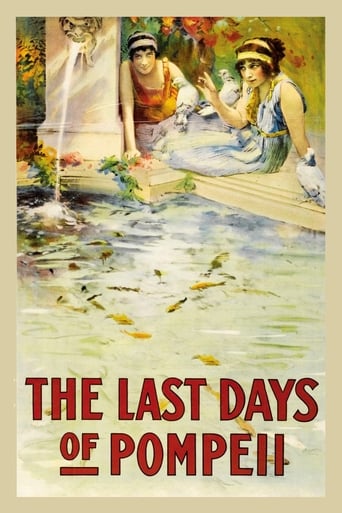
Films
1 film
About Ubaldo Stefani
Italian actor active during the early silent film era, appearing in the landmark 1913 production 'The Last Days of Pompeii.' His career appears to have been extremely brief, with film records indicating activity only during the year 1913. Like many actors of this period in Italian cinema, Stefani likely came from a theatrical background and was drawn to the emerging medium of film during its golden age in Italy. The 1913 film in which he appeared was part of Italy's dominance in international cinema during the early 1910s, when Italian epics were renowned worldwide for their spectacular scale and artistic ambition. Unfortunately, like many supporting actors from this era, detailed records of Stefani's life and career have been lost to time, with only his name and single film credit surviving in historical archives. His contribution represents the countless anonymous performers who helped establish the foundations of cinema during its formative years.
The Craft
Milestones
- Appeared in 'The Last Days of Pompeii' (1913),
Best Known For
Iconic Roles
Must-See Films
Why They Matter
Impact on Culture
While Ubaldo Stefani's individual contribution to cinema may seem minimal with only one known film credit, his participation in 'The Last Days of Pompeii' (1913) connects him to a significant moment in film history. This 1913 Italian epic was among the many spectacular productions that established Italian cinema as a global force in the early 1910s, influencing filmmaking techniques and narrative approaches worldwide. Stefani represents the countless anonymous actors who formed the backbone of early cinema, contributing to the development of the medium even if their individual names were not preserved in film history. His work in this important early adaptation of Bulwer-Lytton's classic novel places him within the tradition of Italian historical epics that would later influence Hollywood productions.
Lasting Legacy
Ubaldo Stefani's legacy is primarily as a representative figure of the early Italian silent film era, a time when Italian cinema dominated international markets with its spectacular historical epics. His appearance in 'The Last Days of Pompeii' (1913) ensures his place in film history, however minor, as one of the performers who helped bring. While little else is known about his career or life, Stefani's name survives in film archives as evidence of the vast network of actors who contributed to early cinema's development, many of whom remain largely undocumented.
Who They Inspired
Given the extremely limited documentation of Ubaldo Stefani's career, there is no available information about his influence on other actors or filmmakers. His brief appearance in early cinema makes it unlikely that he had a significant mentorship role or artistic influence, though his work in the Italian film industry of 1913 would have been part of the broader cultural movement that established many cinematic conventions still in use today.
Off Screen
Very little is known about Ubaldo Stefani's personal life, as was common for many supporting actors in the early silent film era who did not achieve star status. Historical records from this period, particularly for Italian cinema, are often incomplete, with many biographical details lost over time.
Did You Know?
- Appeared in the 1913 Italian version of 'The Last Days of Pompeii,' one of at least three film adaptations of the novel released that year
- His entire known film active years covered only the single year of 1913
- The 1913 'Last Days of Pompeii' was part of Italy's golden age of cinema, when Italian epics were the most expensive and prestigious films in the world
- Like many early film actors, Stefani likely had a background in stage theater before transitioning to the new medium of cinema
- The film he appeared in was produced during the peak of Italian cinema's international dominance, before the industry was devastated by World War I
Frequently Asked Questions
Who was Ubaldo Stefani?
Screen credits include the 1913 production 'The Last Days of Pompeii.' His known film career was extremely brief, spanning only the single year of 1913, making him one of the many anonymous performers from cinema's period.
What films is Ubaldo Stefani best known for?
Titles linked here include The Last Days of Pompeii (1913).
When was Ubaldo Stefani born and when did he die?
Unfortunately, specific birth and death dates for Ubaldo Stefani are not available in historical records. Like many supporting actors from the early silent era, biographical information about him has been lost over time, with only his name and single film credit surviving.
What awards did Ubaldo Stefani win?
There are no records of Ubaldo Stefani receiving any awards or nominations. During the early 1910s, the formal award systems for cinema that exist today had not yet been established, and most actors from this period, particularly those in supporting roles, did not receive formal recognition.
What was Ubaldo Stefani's acting style?
No specific information about Ubaldo Stefani's acting style is available. However, actors in Italian films of 1913 typically employed the theatrical, exaggerated gestures common to silent film performance, as actors were still transitioning from stage techniques to the more subtle requirements of cinema.