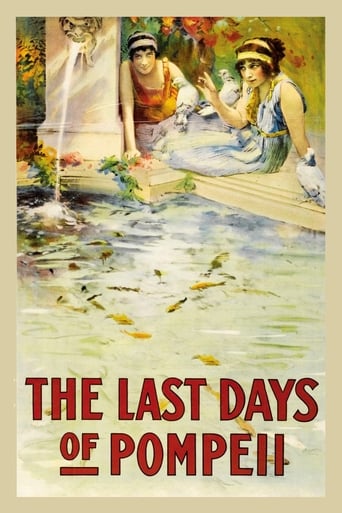
Films
1 film
About Cesare Gani-Carini
Cesare Gani-Carini appears once in this catalog: The Last Days of Pompeii (1913). With his entire known film career consisting of a single role in the 1913 historical epic 'The Last Days of Pompeii.' His participation in this ambitious Italian production places him among the early performers who helped establish the foundation of cinema as an art form during its nascent years. The film, directed by Mario Caserini, was one of several lavish Italian historical epics produced in the early 1910s that showcased the country's cinematic ambitions on an international scale. Gani-Carini's career appears to have been extremely brief, typical of many early film actors who either returned to stage work, pursued other professions, or simply had limited opportunities in the rapidly evolving film industry. His contribution, while small in scope, represents the collective effort of countless early performers who participated in cinema's first decades. The lack of extensive biographical information about him is unfortunately common for actors from this period, as systematic record-keeping for film personnel was not yet established.
The Craft
Milestones
- Appeared in the Italian historical epic 'The Last Days of Pompeii' (1913)
Best Known For
Iconic Roles
Must-See Films
Working Relationships
Worked Often With
Why They Matter
Impact on Culture
Cesare Gani-Carini's contribution to cinema, while limited to a single film, is part of the broader foundation of early Italian cinema during its golden age of historical epics. 'The Last Days of Pompeii' (1913) was among the ambitious productions that established Italy as a leading force in global filmmaking before World War I. His participation, however minor, represents the collective effort of countless early performers who helped establish the acting conventions and techniques that would evolve throughout cinema's development. The film itself was significant for its time, featuring impressive special effects for the volcanic eruption sequences that influenced subsequent disaster films.
Lasting Legacy
The legacy of Cesare Gani-Carini is primarily that of an early cinema pioneer, representing the countless actors who participated in cinema's formative years. While his individual contribution may seem minimal, his work in 'The Last Days of Pompeii' places him within the context of early Italian cinema's influence on global film development. The film he appeared in was part of a wave of Italian historical epics that demonstrated cinema's potential for spectacular storytelling and influenced filmmakers worldwide. His name survives in film archives and historical records, serving as proof of the many anonymous performers who built the foundation of the film industry.
Who They Inspired
Due to the extremely limited nature of Cesare Gani-Carini's known film work, there is no documented evidence of his influence on other actors or directors. His brief appearance in early cinema represents the type of contribution made by many performers of the era whose individual influences may have been significant within their immediate circles but were not recorded for posterity.
Off Screen
Very little is known about Cesare Gani-Carini's personal life, which is unfortunately typical for many early silent film actors whose biographical details have been lost to time. His extremely brief film career suggests he may have been a stage actor who briefly ventured into cinema, or possibly someone who had only this one opportunity in the film industry.
Did You Know?
- Appeared in only one known film throughout his entire career
- Participated in one of the earliest film adaptations of 'The Last Days of Pompeii'
- His film was directed by Mario Caserini, a prominent early Italian director
- The 1913 version of 'The Last Days of Pompeii' was one of several Italian adaptations of the novel
- His active years covered the entire known period of his activity in just one year
- He was part of the early wave of Italian cinema that produced lavish historical epics
- His film was made during what is considered the golden age of Italian silent cinema
- The film he appeared in featured special effects for its volcanic eruption scenes
Frequently Asked Questions
Who was Cesare Gani-Carini?
Italian silent film with credits in this catalog.' His entire known film career consisted of this single role, making him one of many early cinema pioneers who had brief but historically significant contributions to the development of film.
What films is Cesare Gani-Carini best known for?
Titles linked here include The Last Days of Pompeii (1913).
When was Cesare Gani-Carini born and when did he die?
Unfortunately, specific birth and death dates for Cesare Gani-Carini are not available in historical records, which is common for many early film actors. He was active in 1913 and was of Italian nationality, but further biographical details have been lost to time.
What awards did Cesare Gani-Carini win?
There are no recorded awards or nominations for Cesare Gani-Carini, which is typical for actors from the very early silent film period when formal award systems for cinema had not yet been established.
What was Cesare Gani-Carini's acting style?
Due to the limited documentation of his work and the fact that only one film is known from his career, specific details about Cesare Gani-Carini's acting style are not available. His performance would have been typical of the theatrical style common in early silent films before more naturalistic acting techniques developed.