
Agnes Moorehead
Actor
Born: December 6, 1900 in Clinton, Massachusetts, USA Died: April 30, 1974 Active: 1930s-1974 Birth Name: Agnes Robertson Moorehead
Films
1 film
About Agnes Moorehead
Agnes Robertson Moorehead — highly accomplished American actress whose radio, stage, film, and television over four decades. She began her career in radio in the 1930s, becoming one of Orson Welles's Mercury Theatre players, which led to her memorable film debut as Mary Kane in 'Citizen Kane' (1941). Throughout her career, she demonstrated remarkable versatility, playing everything from sympathetic mothers to villainous characters, earning four Academy Award nominations for Best Supporting Actress. Her distinctive voice and commanding presence made her one of Hollywood's most sought-after character actresses during the Golden Age. She successfully transitioned to television in the 1950s and 1960s, most famously portraying the witch Endora in the beloved sitcom 'Bewitched' from 1964 to 1972. Despite battling uterine cancer in her later years, she continued working until shortly before her death in 1974, leaving behind a legacy as one of Hollywood's most versatile and respected character actresses.
The Craft
On Screen
Moorehead was known for her commanding presence and distinctive voice, which she honed through years of radio work. Her acting style combined precise diction with emotional intensity, allowing her to convey complex feelings through vocal inflection alone. She had a remarkable ability to transform herself completely for each role, whether playing vulnerable, sympathetic characters or menacing villains. Her technique emphasized psychological depth and authenticity, often bringing unexpected nuance to seemingly straightforward roles. Moorehead's background in radio made her particularly adept at using her voice as an instrument, creating memorable characters through tone, pacing, and articulation.
Milestones
- Film debut in Citizen Kane (1941)
- Four Academy Award nominations for Best Supporting Actress
- Starred in The Magnificent Ambersons (1942)
- Emmy Award for The Wild Wild West (1967)
- Iconic role as Endora in Bewitched (1964-1972)
- Golden Globe Award for Hush. Hush, Sweet Charlotte (1964)
- Extensive radio career with Mercury Theatre
- Broadway performances in the 1930s
Best Known For
Iconic Roles
Must-See Films
Accolades
Won
- Golden Globe Award for Best Supporting Actress - Hush. Hush, Sweet Charlotte (1964)
- Primetime Emmy Award for Outstanding Single Performance by an Actress in a Leading Role - The Wild Wild Wild West (1967)
- Primetime Emmy Award for Outstanding Continuing Performance by an Actress in a Supporting Role in a Series - Bewitched (1970)
Nominated
- Academy Award nomination for Best Supporting Actress - The Magnificent Ambersons (1942)
- Academy Award nomination for Best Supporting Actress - Mrs. Parkington (1944)
- Academy Award nomination for Best Supporting Actress - Johnny Belinda (1948)
- Academy Award nomination for Best Supporting Actress - Hush. Hush, Sweet Charlotte (1964)
- Emmy Award nomination for Outstanding Single Performance - The United States Steel Hour (1959)
- Emmy Award nomination for Outstanding Continuing Performance - Bewitched (1966)
- Emmy Award nomination for Outstanding Single Performance - The Wonderful World of Disney (1969)
Special Recognition
- Hollywood Walk of Fame star (Radio category)
- Hollywood Walk of Fame star (Television category)
- Inducted into the Radio Hall of Fame (1994)
- Muskingum College Hall of Fame inductee
Working Relationships
Worked Often With
Studios
Why They Matter
Impact on Culture
Agnes Moorehead significantly influenced American entertainment across multiple media, helping establish the viability of radio drama as an art form through her work with the Mercury Theatre. Her portrayal of Endora in 'Bewitched' challenged traditional television stereotypes of older women, presenting a character who was powerful, independent, and unapologetically herself. Moorehead's success as a character actress demonstrated the importance of supporting roles in creating memorable cinema, influencing how Hollywood valued character actors. Her ability to transition seamlessly from radio to film to television set a precedent for multi-platform entertainment careers. The character of Endora became a cultural icon, representing a new kind of maternal figure who was both nurturing and challenging, subverting traditional family dynamics on television.
Lasting Legacy
Moorehead's legacy endures through her extensive body of work that continues to be celebrated by film scholars and classic cinema enthusiasts. Her four Academy Award nominations without a win has made her one of Hollywood's most notable 'also-rans,' often discussed in conversations about Oscar snubs. The character of Endora remains one of television's most well-known maternal figures, frequently referenced in popular culture and cited as an influence on subsequent supernatural comedies. Her radio work, particularly with the Mercury Theatre, is studied by drama students and historians as exemplary of the medium's golden age. Moorehead's career shows the importance of character actors in creating memorable cinema, and her versatility across entertainment platforms has inspired generations of performers to seek diverse opportunities.
Who They Inspired
Moorehead influenced countless actors through her demonstration of the power of voice work and character transformation. Her success in both dramatic and comedic roles showed future performers the value of versatility. Many character actresses, including Cloris Leachman and Betty White, have cited Moorehead as an inspiration for their careers in television comedy. Her radio techniques influenced voice actors in animation and audiobook narration. The character of Endora paved the way for more complex, powerful older female characters on television, influencing shows like 'The Golden Girls' and 'Grace & Frankie.' Her dedication to her craft despite personal health challenges has inspired actors facing similar circumstances.
Off Screen
Moorehead was known for her professionalism and dedication to her craft, often working grueling schedules across multiple media. She was deeply religious and attributed her success to her faith, regularly attending church services throughout her life. Despite her fame, she maintained a relatively private personal life, focusing on her work and close friendships rather than seeking publicity. In her later years, she became an outspoken critic of what she considered declining moral standards in entertainment. Her battle with cancer in her final years was kept largely private, and she continued working almost until her death.
Education
Muskingum College (Bachelor of Arts in Biology), University of Wisconsin (Master's degree in English), American Academy of Dramatic Arts (graduated 1929)
Family
- John Goff (1930-1952)
- Robert Gist (1954-1958)
Did You Know?
- Was one of the founding members of Orson Welles's Mercury Theatre
- Appeared in the famous 'War of the Worlds' radio broadcast (1938)
- Her distinctive voice earned her the nickname 'The Voice'
- She was a licensed pilot and enjoyed flying
- Often played characters much older than her actual age
- Was a devout Presbyterian who taught Sunday school
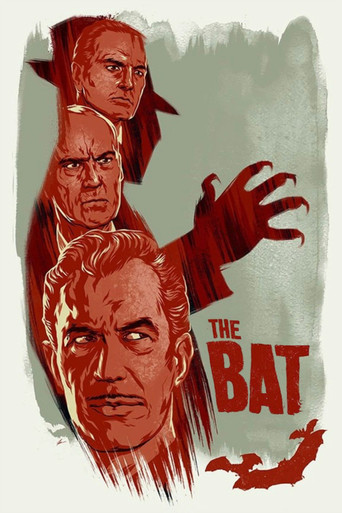
- Her role in 'The Bat' (1959) was one of her later horror film appearances
- She was nominated for an Emmy for her work on 'The Wild Wild West' before 'Bewitched'
- Her final film appearance was in 'What's the Matter with Helen?' (1971)
- She was a close friend of Bette Davis, with whom she co-starred in 'Hush. Hush, Sweet Charlotte'
In Their Own Words
I don't really care what people say about me. I'm not in this business to be a personality. I'm an actress.
I've always believed that if you're given a talent, you have an obligation to use it.
The secret to longevity in this business is to never stop working and never stop learning.
Playing Endora was the most fun I've ever had in my career. She was everything I wasn't in real life.
Radio was the greatest training ground an actor could have. You had to create entire worlds with just your voice.
Frequently Asked Questions
Who was Agnes Moorehead?
Highly accomplished American actress known for her work in radio, film, and television over four decades. She was particularly famous for her roles in 'Citizen Kane' and as Endora in the TV series 'Bewitched', earning four Academy Award nominations during her career.
What films is Agnes Moorehead best known for?
Titles linked here include Citizen Kane (1941), The Magnificent Ambersons (1942).
When was Agnes Moorehead born and when did she die?
Born December 6, 1900; died April 30, 1974.
What awards did Agnes Moorehead win?
Moorehead won a Golden Globe Award for 'Hush. Hush, Sweet Charlotte' and two Emmy Awards for her television work. She received four Academy Award nominations for Best Supporting Actress but never won an Oscar.
What was Agnes Moorehead's acting style?
Moorehead was known for her commanding presence, distinctive voice, and remarkable versatility. Her style combined precise diction with emotional intensity, honed through extensive radio work. She could transform completely for each role, playing both sympathetic and villainous characters with equal skill.