
The Bat
"Later adapted play Mystery."
Keys: Space play/pause · ←/→ 10s · F fullscreen · M mute · </> speed
About this film
The first film version of the play was the 1926 American silent film The Bat. It is the fourth film adaptation of the story, which began as a 1908 novel, The Circular Staircase, by Mary Roberts Rinehart, which she later adapted into the 1920 play The Bat. Mystery writer Cornelia Van Gorder has rented a country house called "The Oaks", which not long ago was the scene of some murders committed by a strange and violent criminal known as "The Bat".
Cast & crew
More films like this
More Horror films
View all →

More from Crane Wilbur
View all →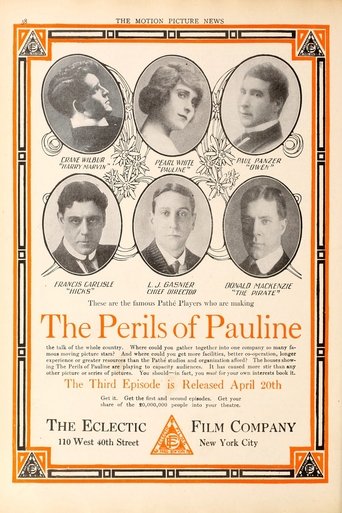
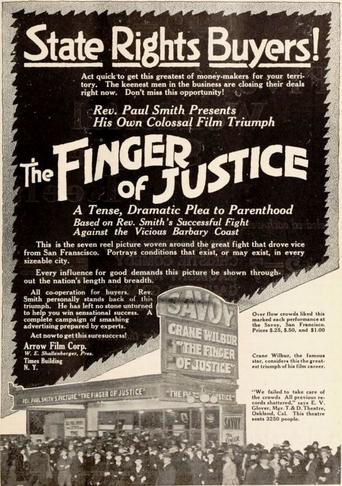
More about this film
About the production
Release dateAugust 9, 1959
Budget$300,000
Box officeNot publicly documented, but considered modestly successful for Allied Artists
ProductionAllied Artists Pictures Corporation
Filmed inAllied Artists Studio lot, Hollywood, California
The film was shot in just 18 days on a tight budget, utilizing primarily interior sets to create the claustrophobic atmosphere. Director Crane Wilbur, known for his efficient shooting style, reused some set pieces from previous productions. The film was one of the last black and white horror films produced by a major studio before the color horror boom of the 1960s. The production deliberately emphasized shadows and low-key lighting to enhance the Gothic atmosphere while minimizing the need for elaborate set construction.
Themes
Paranoia and suspicionThe nature of evilDeception and hidden identitiesGreed as a corrupting forceThe conflict between rationality and superstition
Themes & topics
masked killerold dark househidden treasureembezzlementmystery writersecret passagesgothic atmospherewhodunitpsychological suspensecat and mousestormy nightisolated mansion
Historical background
The 1959 premiere of The Bat belongs to the broader shift toward narrative features and recognizable genres.
Why this film matters
For historians, The Bat documents what typical program fare looked like in 1959, not only marquee blockbusters.
Making of
The production faced several challenges during its brief shooting schedule. Vincent Price and Agnes Moorehead reportedly had creative differences over their characters' motivations, with Price wanting to make Dr. Wells more sympathetic while Moorehead insisted on maintaining ambiguity. Director Crane Wilbur, who had extensive experience with low-budget productions, implemented a shooting schedule that maximized efficiency by grouping scenes by location rather than chronological order. The film's most complex sequence involving the Bat's appearance through a secret passage required multiple takes due to mechanical failures with the hidden door mechanism. Despite the budget constraints, the production managed to create an effective atmosphere through Stanley Cortez's cinematography, utilizing deep shadows and strategic lighting to compensate for the limited set design. The cast and crew often worked 12-hour days to complete the film within its tight 18-day schedule, with Price and Moorehead often staying late to rehearse their scenes together.
What critics said
Specialist writers today emphasize preservation and access when a viewable copy of The Bat survives.
Did you know?
- This was the third film adaptation of Mary Roberts Rinehart and Avery Hopwood's 1920 Broadway play, following silent versions in 1926 and 1930
- Vincent Price was paid $25,000 for his role, a relatively modest sum even for 1959
- Agnes Moorehead, famous for her role as Endora on 'Bewitched,' was initially reluctant to take the role but was convinced by the opportunity to work with Price
- The bat-like claw weapon used by the killer was created by prop designer Jack Martin Smith, who would later win an Oscar for 'Cleopatra'
- Director Crane Wilbur was also a successful screenwriter who had written the screenplay for the 1930 version of 'The Bat'
- The film's release was delayed several months to avoid competition with Alfred Hitchcock's 'Psycho'
- The mansion set was so elaborate that it remained standing for years and was reused in several other Allied Artists productions
- Gavin Gordon, who plays John Fleming, had previously played Lord Byron in the 1935 film 'The Bride of Frankenstein'
- The film's success led to a brief resurgence of interest in 'old dark house' mysteries in the early 1960s
- The original Broadway play ran for 867 performances and was especially successful mystery plays of its era
Visual style
Stanley Cortez's cinematography is a standout element of the film, employing dramatic chiaroscuro lighting to create an atmosphere of menace and uncertainty. The camera work emphasizes shadows and silhouettes, with many scenes lit only by practical sources like lamps and flashlights to enhance the claustrophobic feel. Cortez utilized Dutch angles and low-angle shots to create a sense of disorientation and unease, particularly effective during the Bat's appearances. The cinematography deliberately evokes the visual style of earlier film noir and German Expressionist cinema, creating a timeless Gothic atmosphere that transcends its 1950s production date. The limited color palette of black and white photography is used to maximum effect, with deep blacks and bright whites creating stark contrasts that heighten the film's suspenseful moments.
Innovations
While not groundbreaking in its technical aspects, 'The Bat' demonstrated considerable ingenuity in creating effective horror within budget constraints. The film's special effects, though minimal, were cleverly executed, particularly the mechanical effects for the Bat's appearances and secret passages. The production made innovative use of matte paintings and forced perspective photography to create the illusion of a larger mansion than the actual sets allowed. The sound design team developed creative techniques for generating the Bat's distinctive sounds without modern digital technology, using combinations of real bat sounds and manipulated audio recordings. The film's editing, particularly in the suspense sequences, effectively builds tension through pacing and shot selection, demonstrating that skilled editing could compensate for limited production resources.
Music
The film's score was composed by Louis Forbes, who created a suspenseful musical landscape that blends traditional horror motifs with elements of jazz and contemporary 1950s music. Forbes employed a limited orchestra due to budget constraints, using strings and woodwinds to create eerie atmospheric effects while punctuating tense moments with brass stingers. The soundtrack makes effective use of silence, with many of the film's most suspenseful scenes featuring minimal musical accompaniment to heighten the sense of isolation and vulnerability. The main theme, which recurs throughout the film, uses a minor key melody that becomes associated with the Bat's appearances, creating an audio cue for the audience that builds anticipation. Sound design was particularly important in creating the film's atmosphere, with exaggerated diegetic sounds like creaking doors, howling wind, and the distinctive flapping sounds associated with the Bat's movements.
Famous quotes
The Bat is a man, you know. He's not a ghost or a vampire or whatever people think he is. He's a man, and he's got to be stopped.
I've written 32 mystery novels, and I've never encountered a plot as complicated as this one.
There are certain things in life that are not meant to be understood, only feared.
In this house, everyone is a suspect until proven innocent.
The Bat doesn't leave witnesses. He doesn't leave clues. He doesn't leave anything but bodies.
Memorable scenes
- The tense sequence where the Bat appears through the secret bookcase passage, with only his clawed hand visible at first, creating maximum suspense through minimal reveal
- The climactic confrontation in the attic where Cornelia uses her mystery-writing knowledge to deduce the Bat's identity, leading to a desperate struggle for survival
- The storm sequence where lightning flashes reveal the Bat's silhouette outside the windows, creating a classic Gothic horror moment
- The scene where Lizzie the maid investigates strange noises in the darkened mansion, her flashlight beam cutting through the shadows as she approaches danger
What audiences thought
The film performed modestly at the box office, appealing primarily to fans of classic mystery and horror. Audiences of the time responded positively to Vincent Price's performance, which was becoming increasingly associated with quality horror entertainment. The film found a second life on television in the 1960s and 1970s, where it developed a loyal following among late-night horror movie fans. Modern audiences discovered the film through home video releases and streaming services, with many praising its old-fashioned approach to suspense and mystery. The film's relatively short runtime and straightforward plot have made it a popular choice for horror film festivals and classic movie revival screenings.
Film connections
Influenced by
- The Cat and the Canary (1927 play)
- The Old Dark House (1932 film)
- And Then There Were None (1939 novel)
- The Spiral Staircase (1946 film)
- Dial M for Murder (1954 film)
This film influenced
- Hush... Hush, Sweet Charlotte (1964)
- The Haunting (1963)
- Black Christmas (1974)
- Halloween (1978)
- Scream (1996)
Film restoration
The film has been preserved by the Museum of Modern Art and the UCLA Film and Television Archive. The original camera negative is stored in the Allied Artists collection, though some elements have shown signs of vinegar syndrome. The film was restored for DVD release in 2005 by MGM Home Entertainment, with significant improvements to image and sound quality. Several public domain versions exist with varying degrees of quality, but the official restored version remains the definitive presentation. The film's survival is notable given that many Allied Artists productions from this period have been lost or exist only in poor-quality copies.
Where to watch
- Available on DVD through MGM Home Entertainment
- Streaming on Amazon Prime Video
- Available on Tubi (free with ads)
- Available for digital rental/purchase on iTunes and Google Play
- Occasionally airs on Turner Classic Movies
- Available on The Film Detective streaming service