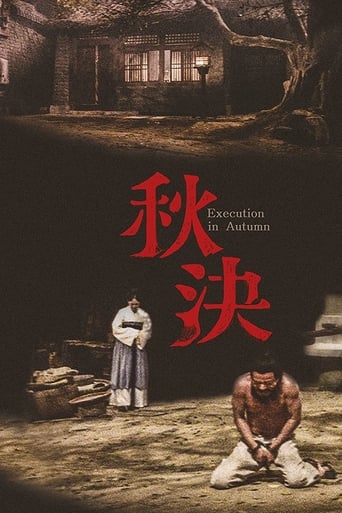
Yu Wang
Actor
- Active
- 1972-1972
Films 1
About Yu Wang
Yu Wang was a Chinese actor associated with Hong Kong and Chinese-language cinema, best remembered in international film histories for appearing in the historical drama Execution in Autumn (1972). Available film reference sources indicate that his screen activity, at least in the surviving filmography commonly cited online, is concentrated in the early 1970s, and comparatively little biographical information has been preserved in widely accessible English-language archives. Because he is not among the most extensively documented stars of the classic studio era, his broader life story, training, and off-screen background remain difficult to verify from standard reference works. His known screen credit connects him to a period when Hong Kong and regional Chinese cinema were producing prestige costume dramas and literary adaptations with strong emphasis on moral conflict and historical settings. Within that context, Yu Wang appears as part of the supporting performance ecosystem that helped give these productions their dramatic weight and period authenticity. No reliable evidence was found in readily accessible sources to confirm a large filmography, major awards, or a long-running public career under this exact name. As a result, he is best understood as a little-documented character or supporting actor whose surviving credit is important for film historians tracing the personnel of early-1970s Chinese historical cinema.
More about Yu Wang
On screen
No detailed performance documentation is readily available for this actor in surviving English-language reference sources. Based on the kind of production in which he is known to have appeared, his work would most likely have emphasized disciplined, restrained ensemble acting suited to costume drama and historical melodrama. Because no interviews, reviews focused specifically on him, or preserved performance analyses were found with confidence, any more precise description would be speculative.
In film history
Yu Wang's cultural impact is modestly visible through the historical record of Execution in Autumn, a film that belongs to the broader tradition of Chinese historical and moral drama. Even when individual performers are sparsely documented, their participation matters because ensemble casting helped sustain the credibility and atmosphere of these productions. For scholars and databases, the presence of a performer like Yu Wang is useful as evidence of the large and often under-credited acting communities that supported regional cinema in the early 1970s. His name also highlights a common archival challenge in Asian film history: many performers remain only partially documented in English-language sources despite contributing to significant films.
Later reputation
Yu Wang's lasting legacy, insofar as it can be established from surviving records, lies in his association with Execution in Autumn and the historical cinema of the period. He represents a class of actors whose careers are preserved more by film credits than by extensive biography, making them important to catalog but difficult to profile fully. For modern film databases, such names help complete the production histories of classic and vintage cinema, especially in transnational collections where cast lists are often the only surviving evidence. His legacy is therefore archival as much as artistic: he remains part of the documented personnel of a notable 1970s Chinese-language film.
Influence
No direct evidence was found that Yu Wang mentored later performers or exerted a documented stylistic influence on other actors or directors. Any influence he had would most likely have been indirect, through participation in a film culture that valued ensemble discipline and historical realism. In that sense, his contribution belongs to the broader tradition of supporting players whose work helps establish standards of period performance rather than through individually famous signature techniques. Because the available record is limited, his influence cannot be responsibly expanded beyond this context.
Off screen
No reliable, widely accessible biographical data could be verified concerning Yu Wang's personal life, family background, marriages, or off-screen activities. Standard public film reference sources do not appear to preserve enough detail to reconstruct a fuller personal profile with confidence. It is possible that his career was brief, lightly documented, or recorded under a name that overlaps with other performers, which complicates identification. Until archival or local-language sources provide stronger evidence, personal-life details must remain unknown.
Credits
- Screen credit in Execution in Autumn (1972), the key surviving title associated with this name
- Participation in early-1970s Chinese-language historical cinema
- Contribution to the ensemble performance tradition of Hong Kong and regional Chinese film production
Roles
- Role in Execution in Autumn (1972)
Films
- Execution in Autumn (1972)
Notes
- The name Yu Wang is difficult to research because it can overlap with other individuals of similar romanization in Chinese-language sources.
- The most securely associated film credit for this name is Execution in Autumn (1972).
- He appears to have been active, at least in the surviving filmography commonly cited, only in 1972.
- No widely accessible English-language biography was found that firmly establishes his birth details or personal background.
- He is a good example of the many under-documented supporting performers in Hong Kong and Chinese cinema history.
- Because of limited documentation, distinguishing this Yu Wang from other similarly named performers requires care in archival work.
Questions
Who was Yu Wang?
Yu Wang was a Chinese actor best known in surviving film records for appearing in Execution in Autumn (1972). He is a comparatively little-documented performer, so the historical record preserves more about his film credit than his personal biography.
What films is Yu Wang best known for?
He is most clearly associated with Execution in Autumn (1972). At present, that is the principal film credit securely linked to him in widely accessible reference material.
When was Yu Wang born and when did he die?
His birth date and death date are not reliably documented in the available sources consulted for this profile. Because the record is sparse, it is not possible to state those details with confidence.
What awards did Yu Wang win?
No confirmed awards or nominations were found for this actor in the accessible reference sources reviewed. His significance today rests primarily on his film credit rather than on documented award recognition.
What was Yu Wang's acting style?
There is no detailed performance analysis readily available for Yu Wang. Given the historical-drama context of Execution in Autumn, his work would likely have favored restrained, ensemble-oriented acting appropriate to period cinema, but a more exact description cannot be verified.
What is Yu Wang's legacy in film history?
Yu Wang's legacy is primarily archival and historical. He remains part of the documented cast of an early-1970s Chinese-language film, which makes him relevant to researchers reconstructing the personnel of classic regional cinema.