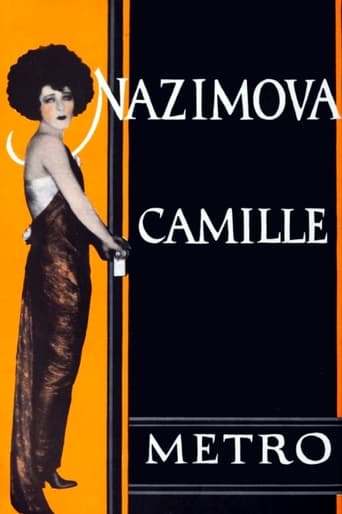
Films
1 film
About Ray C. Smallwood
Director active during the silent film era, best known for his 1921 adaptation of 'Camille.' His career appears to have been brief, with his known directorial work concentrated in the early 1920s when the film industry was still establishing itself as a major cultural force. Smallwood worked during a transitional period in cinema, as filmmakers were experimenting with narrative techniques and visual storytelling methods that would define Hollywood's golden age. His version of 'Camille' was one of several adaptations of the Alexandre Dumas novel during the silent era, demonstrating the popularity of literary adaptations among early filmmakers. Despite the limited documentation of his career, Smallwood represents the many directors who contributed to cinema's development during its formative years, even if their names were not preserved in mainstream film history. His work reflects the ambitious scope of early filmmakers who tackled classic literature for the new medium of motion pictures.
The Craft
Behind the Camera
Silent era director specializing in literary adaptations, likely employing the visual storytelling techniques common to early 1920s cinema including expressive acting, intertitles, and theatrical composition
Milestones
- Directed 'Camille' (1921), an adaptation of Alexandre Dumas' classic novel
Best Known For
Must-See Films
Why They Matter
Impact on Culture
Ray C. Smallwood's contribution to cinema history, while limited in scope, represents the broader phenomenon of early filmmakers who adapted classic literature for the new medium of motion pictures. His 1921 'Camille' was part of a trend of bringing theatrical and literary classics to silent film, helping establish cinema as a legitimate art form capable of handling sophisticated narratives. Though his individual impact may have been modest, directors like Smallwood collectively contributed to the development of film language and techniques during cinema's formative years. The existence of multiple 'Camille' adaptations during this period demonstrates how filmmakers recognized the potential of classic stories to appeal to audiences and elevate the cultural status of motion pictures.
Lasting Legacy
Ray C. Smallwood's legacy is primarily preserved through his 1921 adaptation of 'Camille,' which stands as proof of the ambitious literary adaptations produced during Hollywood's early years. While his name may not be widely recognized today, his work represents the countless filmmakers who contributed to cinema's evolution during its silent era. His brief career exemplifies how many early directors worked during a period of rapid technological and artistic change in film, with some leaving only a single work as their contribution to cinema history. The preservation of his 'Camille' adaptation ensures that his contribution to early Hollywood's literary adaptation tradition remains part of film history.
Who They Inspired
Due to the brevity of Ray C. Smallwood's documented career and limited information about his work beyond 'Camille' (1921), his specific influence on other filmmakers is difficult to trace. However, directors who adapted literary classics during the silent era collectively influenced how future filmmakers approached bringing literature to the screen, establishing precedents for visual storytelling of complex narratives. His work, like that of his contemporaries, contributed to the growing recognition that cinema could handle sophisticated source material with artistic merit.
Off Screen
Very little is documented about Ray C. Smallwood's personal life, which is not uncommon for directors from the early silent era whose careers were brief and whose contributions were not widely preserved in film historical records.
Did You Know?
- Ray C. Smallwood's 1921 'Camille' was one of several adaptations of the Alexandre Dumas novel during the silent era
- His entire known directorial career appears to have been concentrated in a single year, 1921
- The 1921 version of 'Camille' that he directed was part of a popular trend of literary adaptations in early Hollywood
- Information about Smallwood is scarce, which is common for many directors who had brief careers in the silent era
- His work represents the hundreds of lesser-known directors who contributed to early cinema's development
- The fact that only one film is attributed to him suggests he may have been one of many directors who worked briefly during Hollywood's rapid expansion
- Silent era directors like Smallwood often worked without the extensive documentation and preservation that later filmmakers enjoyed
Frequently Asked Questions
Who was Ray C. Smallwood?
on YTB.my.' His career appears to have been brief, with his known directorial work concentrated in a single year during Hollywood's formative period.
What films is Ray C. Smallwood best known for?
Titles linked here include Camille (1921).
When was Ray C. Smallwood born and when did he die?
Unfortunately, specific birth and death dates for Ray C. Smallwood are not documented in available historical records, which is not uncommon for directors who had brief careers during the early silent era.
What awards did Ray C. Smallwood win?
There are no documented awards or nominations for Ray C. Smallwood, which reflects both the limited scope of his known work and the fact that many major film awards were not established during his brief period of activity in 1921.
What was Ray C. Smallwood's directing style?
While specific details about Smallwood's directing style are not well-documented, as a silent era director he likely employed the visual storytelling techniques common to early 1920s cinema, including expressive acting, intertitles, and theatrical composition typical of literary adaptations of the period.