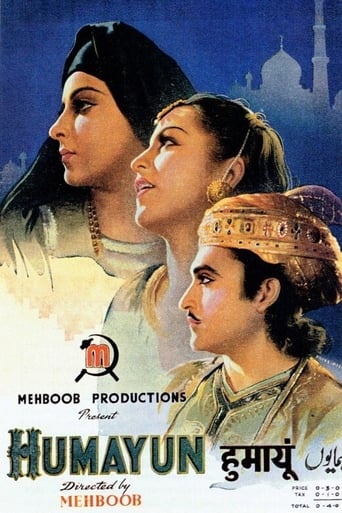
Films
1 film
About Mohammad Afzal
Indian actor who worked primarily in the Hindi/Urdu film industry during the 1940s. His career, though brief, coincided with a significant period in Indian cinema's transition from the studio system to more independent productions. Afzal appeared in the historical drama 'Humayun' (1945), which was notable for its lavish production values and attempt to recreate Mughal-era grandeur on screen. The film was directed by Mehboob Khan, who would later become one of Indian cinema's most celebrated directors. Afzal's role in this production, while not the lead, was part of an ensemble cast that brought to life the court intrigues and political drama of the Mughal Empire. His performance style reflected the theatrical traditions prevalent in Indian cinema of that era, with dramatic gestures and emotive delivery characteristic of the period. Unfortunately, like many supporting actors from this era, detailed records of his complete career and personal life remain scarce, making 'Humayun' his most documented and possibly only surviving film credit.
The Craft
On Screen
Theatrical and dramatic, typical of Indian cinema in the 1940s, with emphasis on expressive gestures and emotive delivery suited to the historical drama genre
Milestones
- Appeared in 'Humayun' (1945), a significant historical drama of early Indian cinema
- Worked under director Mehboob Khan during his formative years
- Participated in one of the early attempts at large-scale historical filmmaking in India
Best Known For
Iconic Roles
Must-See Films
Working Relationships
Worked Often With
Studios
Why They Matter
Impact on Culture
Mohammad Afzal's contribution to Indian cinema, while limited in scope, represents the collective effort of countless supporting actors who helped build the foundation of the Indian film industry. His participation in 'Humayun' (1945) placed him within an important historical context, as this film was among the early attempts to create grand historical epics in Indian cinema. The film itself was part of a movement that sought to elevate Indian cinema beyond simple entertainment to a medium capable of portraying the nation's rich historical heritage. Actors like Afzal, though not remembered individually, were essential to creating the authentic period atmosphere that such films required, helping to establish the visual and dramatic language of historical filmmaking in India.
Lasting Legacy
The legacy of Mohammad Afzal is representative of many early Indian cinema actors whose contributions have been largely undocumented but remain significant to film history. His appearance in 'Humayun' places him within the lineage of actors who participated in the development of the historical drama genre in Indian cinema. While individual records may be scarce, his work contributes to our understanding of the collaborative nature of early Indian filmmaking, where even supporting roles were crucial to creating the grand spectacles that audiences of the 1940s demanded. His story highlights the need for greater preservation and documentation of early cinema personnel beyond just the major stars.
Who They Inspired
As a supporting actor from the early era of Indian cinema, Mohammad Afzal's direct influence on subsequent generations of actors is difficult to trace. However, his participation in historical dramas like 'Humayun' contributed to establishing acting conventions for period films that would influence later generations. The theatrical style he employed was characteristic of the period and would evolve over time, but these early performances helped create a foundation upon which more naturalistic acting styles would later develop in Indian cinema.
Off Screen
Very limited information is available about Mohammad Afzal's personal life, which was common for many supporting actors in early Indian cinema. Detailed records of actors from this period, particularly those who were not major stars, were often not systematically preserved.
Did You Know?
- 'Humayun' (1945) was directed by Mehboob Khan, who would later direct the iconic film 'Mother India' (1957)
- The film 'Humayun' was one of the early attempts at large-scale historical filmmaking in Bombay cinema
- Historical films of the 1940s often required actors to wear elaborate costumes and heavy makeup, with filming taking place in extreme conditions
- Many actors from this period, including Afzal, often came from theatrical backgrounds
- The 1940s was a transitional period in Indian cinema, with the industry moving from the studio system toward more independent productions
- Film documentation and preservation in the 1940s was limited, making it difficult to trace complete careers of many actors
- Supporting actors in early Indian cinema often played multiple roles in the same film due to budget constraints
Frequently Asked Questions
Who was Mohammad Afzal?
Screen credits include early Hindi/Urdu cinema during the 1940s. He is primarily known for his role in the historical drama 'Humayun' (1945), directed by Mehboob Khan.
What films is Mohammad Afzal best known for?
Titles linked here include Humayun (1945).
When was Mohammad Afzal born and when did he die?
Specific birth and death dates for Mohammad Afzal are not available in documented records, which is common for many supporting actors from early Indian cinema. His known career spans only the year 1945.
What awards did Mohammad Afzal win?
There are no documented awards or nominations for Mohammad Afzal, which was typical for many supporting actors in early Indian cinema when formal award systems were not yet established.
What was Mohammad Afzal's acting style?
Mohammad Afzal's acting style was theatrical and dramatic, characteristic of Indian cinema in the 1940s. His performance featured the expressive gestures and emotive delivery typical of the period, particularly suited to historical dramas.
Did Mohammad Afzal work with any famous directors?
Yes, Mohammad Afzal worked with Mehboob Khan in 'Humayun' (1945). Mehboob Khan would later become one of Indian cinema's most celebrated directors, known for classics like 'Mother India' (1957).