



Humayun
"Mughal crown in exile"
Keys: Space play/pause · ←/→ 10s · F fullscreen · M mute · </> speed
About this film
Humayun’s rise to the throne, his struggles to maintain the empire, and his conflicts with rivals—especially Sher Shah Suri, who defeats him and forces him into exile. Amid political upheaval and personal loss, the story also explores Humayun’s relationships, par.
Cast & crew
More films like this

More War films
View all →





More from Mehboob Khan
View all →


More about this film
About the production
Release date1945
BudgetNot documented in available records
Box officeBox office figures from 1945 are not available in documented records
ProductionMehboob Productions
Filmed inBombay (now Mumbai), India
Mehboob Khan invested significant personal resources into creating authentic period costumes and sets, despite wartime limitations. The film was made during the final years of British colonial rule in India, which presented challenges in obtaining materials and resources. The battle sequences were particularly ambitious for their time, requiring extensive choreography and coordination of hundreds of extras.
Themes
Loss and restorationThe burden of kingshipLove and loyalty in times of crisisThe conflict between scholarly pursuits and political necessityExile and return
Themes & topics
Mughal EmpireHistorical dramaExileBattleRoyal successionPolitical intrigueLove storyRestorationTragedy16th century India
Historical background
Humayun reached screens around 1945, produced in its country of origin. Postwar distribution and sound standards shaped how it was marketed.
Why this film matters
Researchers cite Humayun when tracing screen culture of its decade.
Making of
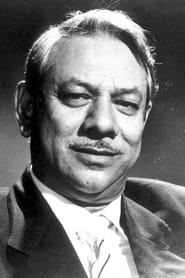
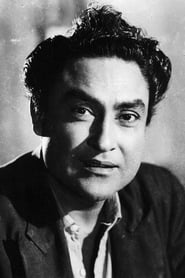
Mehboob Khan was deeply passionate about bringing Indian historical stories to the screen and saw 'Humayun' as his magnum opus. The director spent months researching Mughal history and consulted with historians to ensure accuracy. The casting process was particularly challenging - Ashok Kumar was initially hesitant to play a historical role as he was primarily known for contemporary dramas. Nargis was relatively new to films but Mehboob Khan saw in her the perfect blend of beauty and gravitas needed for Hamida Banu. The production faced numerous challenges including wartime rationing, which affected everything from film stock to costume materials. The elaborate palace sets were constructed in Bombay's studios and took months to complete. Mehboob Khan insisted on authenticity, even importing special fabrics from traditional weavers for the royal costumes.
What critics said
Reviewers in 1945 weighed Humayun on clarity, pacing, and audience response rather than prestige status. No single canonical review dominates later reference works for the title.
Did you know?
- This was among the costliest Indian films of its time, with lavish sets and costumes that attempted to recreate Mughal grandeur
- Ashok Kumar played the title role of Humayun, marking one of his earliest historical epic performances
- Nargis, who played Hamida Banu, was discovered by Mehboob Khan and this film helped establish her as a major star
- The film's production coincided with World War II, making it difficult to secure film stock and other resources
- Mehboob Khan's meticulous attention to historical detail was noted in contemporary reviews
- The battle sequences were filmed using innovative camera techniques for the time, including low-angle shots to create dramatic impact
- The film's music was composed by Rafiq Ghaznavi, who incorporated traditional Mughal-era musical elements
- Despite its historical setting, the film subtly incorporated themes relevant to India's independence movement
- The original negatives of the film were reportedly damaged in a studio fire in the 1950s, though some copies survived
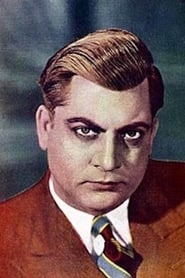
- Chandramohan, who played Sher Shah Suri, was known for his powerful screen presence and was considered perfect for the antagonist role
Awards & recognition
- No documented awards from 1945 - formal Indian film awards had not yet been established
Visual style
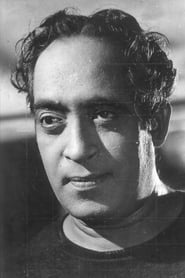
The cinematography by Faredoon Irani was noted for its innovative techniques and visual grandeur. Irani employed deep focus photography to capture the scale of the palace sets and battle sequences. The film used dramatic lighting techniques, particularly in the exile scenes, to convey Humayun's emotional state. Low-angle shots were used extensively to enhance the majesty of the imperial scenes. The battle sequences featured dynamic camera movement, unusual for Indian cinema of the period. The color palette, though in black and white, was carefully composed through lighting and set design to create visual contrast between the opulent palace scenes and the stark exile sequences.
Innovations
For its time, 'Humayun' featured several technical innovations in Indian cinema. The battle sequences used multiple cameras to capture different angles simultaneously, allowing for more dynamic editing. The film employed sophisticated matte painting techniques to extend the visual scope of the palace sets. Sound recording techniques were advanced for the period, with particular attention paid to capturing the ambient sounds of large crowd scenes. The production also pioneered the use of detailed storyboards for complex sequences, a practice that was not common in Indian cinema at the time. The film's editing, particularly in the battle scenes, was more sophisticated than typical for the period, using rapid cutting to create tension and excitement.
Music
The music was composed by Rafiq Ghaznavi, with lyrics by Shams Lakhnavi. The soundtrack incorporated elements of traditional Mughal-era music, using instruments like the sitar, tabla, and sarangi. The film featured several classical-style songs that reflected the cultural sophistication of the Mughal court. Notable songs included 'Mere Humdum Mere Dost' and 'Dil Ke Jharokhe Mein'. The background score was particularly praised for its ability to enhance the emotional impact of key scenes without overwhelming the drama. The music helped establish the historical atmosphere and became popular in its own right, with records of the soundtrack selling well.
Famous quotes
A throne is not inherited, it is earned through sacrifice and wisdom
In exile, one discovers the true meaning of home
Love is the only kingdom that cannot be conquered
Even emperors must bow to fate
A crown is heavy, but duty is heavier
Memorable scenes
- The coronation sequence where Humayun ascends the throne with elaborate Mughal court rituals
- The Battle of Kannauj with its大规模 choreography and dramatic cinematography
- Humayun's exile scenes showing his transformation from emperor to wanderer
- The romantic interlude between Humayun and Hamida Banu in the Persian desert
- The final triumphant return to Delhi and the tragic accident that follows
What audiences thought
The film was well-received by audiences in 1945, particularly in urban centers like Bombay and Calcutta. Its historical theme resonated with educated Indian audiences who were increasingly interested in their cultural heritage during the independence movement. The film ran for several weeks in major theaters, which was considered a successful run for the period. Audience letters published in film magazines of the time praised the film's patriotic undertones and its respectful portrayal of Indian history. The performances of Ashok Kumar and Nargis were particularly appreciated by viewers, helping to establish both stars' reputations for serious dramatic roles.
Film connections
Influenced by
- Mughal historical chronicles
- Earlier Indian mythological films
- Hollywood historical epics of the 1930s
- Persian miniature painting traditions for visual style
This film influenced
- Mughal-e-Azam (1960)
- Jhansi Ki Rani (1953)
- Anarkali (1953)
- Taj Mahal (1963)
- Sikandar-e-Azam (1965)
Film restoration
The film is partially preserved with some sections missing or damaged. The National Film Archive of India holds incomplete copies of the film. Some restoration work has been attempted, but the complete original version is not available in pristine condition. Several private collectors hold varying quality prints, but a comprehensive restoration has not been undertaken due to the extensive damage to original elements.
Where to watch
- The film is not currently available on major streaming platforms
- Occasionally screened at classic film festivals and retrospectives
- Some segments may be available through film archives and specialized classic film distributors
- Not commercially available on home video formats