
Marie Epstein
Actor
Born: August 14, 1899 in Warsaw, Poland (Russian Empire) Died: April 24, 1995 Active: 1923-1970s Birth Name: Marie Rose Augustine Epstein
Films
1 film
About Marie Epstein
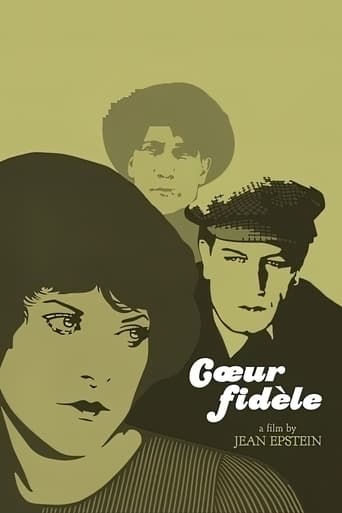
Figure in French cinema who began her career as an actress in the silent era before transitioning to become a respected director, screenwriter, and film preservationist. Born in Warsaw to a French-Jewish family, she moved to France where she made her acting debut in her brother Jean Epstein's acclaimed 1923 film 'Cœur fidèle.' After her brief acting career, she co-directed several films with director Jean Benoît-Lévy, including 'La Maternelle' (1933), which won critical acclaim and established her as one of France's early female directors. During World War II, she worked to preserve French cinematic heritage, saving numerous films from destruction. Post-war, she became instrumental in film preservation efforts at the Cinémathèque Française, where she worked alongside Henri Langlois. Her over five decades, making significant contributions to both French film production and preservation. Epstein's legacy lies not only in her creative work but also in her dedication to safeguarding cinema's cultural heritage for future generations.
The Craft
On Screen
Naturalistic and emotionally expressive, typical of French impressionist cinema of the 1920s, with a focus on conveying deep emotion through subtle gestures and facial expressions rather than melodramatic pantomime
Milestones
- Acting debut in 'Cœur fidèle' (1923)
- Co-directed 'La Maternelle' (1933)
- Film preservation work during WWII
- Long tenure at Cinémathèque Française
- female director in French cinema
Best Known For
Iconic Roles
Must-See Films
Accolades
Won
- Prix Louis-Delluc for 'La Maternelle' (1933)
- Légion d'honneur (for film preservation work)
Nominated
- Venice Film Festival - Best Film for 'La Maternelle' (1933)
Special Recognition
- Commandeur de l'Ordre des Arts et des Lettres
- Recognition from Cinémathèque Française for preservation efforts
Working Relationships
Worked Often With
Studios
Why They Matter
Impact on Culture
Marie Epstein played a crucial role in preserving French cinematic heritage during one of its most vulnerable periods. Her work during World War II saved countless films from destruction, ensuring that France's rich film history survived for future generations. As one of the first female directors in France, she paved the way for women in French cinema, both behind and in front of the camera. Her films, particularly 'La Maternelle,' contributed to the poetic realist movement that would define French cinema in the 1930s. Her preservation efforts at the Cinémathèque Française helped establish film as a legitimate art form worthy of serious academic and cultural consideration.
Lasting Legacy
Marie Epstein's legacy is twofold: as a female filmmaker and as a guardian of cinema's past. Her directorial work, though not extensive, demonstrated a unique humanistic vision that influenced French social realist cinema. More significantly, her decades-long dedication to film preservation ensured that the works of early French masters survived into the digital age. The Cinémathèque Française's collection, one of the world's most important film archives, bears her indelible mark. Today, she is remembered not only as Jean Epstein's sister but as an important figure in her own right who helped shape how we understand and preserve film history.
Who They Inspired
Epstein influenced generations of film archivists and preservationists through her meticulous work at the Cinémathèque Française. Her collaborative directing style with Jean Benoît-Lévy demonstrated how partnerships could create meaningful cinema. As one of the few women working in French cinema during the 1920s-1930s, she inspired future female directors like Agnès Varda and Claire Denis. Her emphasis on social themes and working-class subjects prefigured the French New Wave's interest in everyday life. Her preservation work influenced how archives worldwide approach the conservation of cinematic heritage.
Off Screen
Marie Epstein never married and dedicated her life to cinema. She came from a family of intellectuals - her father was a watchmaker and her mother came from a family of musicians. She maintained a close professional and personal relationship with her brother Jean Epstein throughout his life. After his death in 1953, she became the guardian of his artistic legacy. She lived modestly in Paris and was known for her scholarly dedication to film history and preservation. Her later years were spent largely working at the Cinémathèque Française, where she was respected as a living archive of French cinema history.
Education
Studied literature and art in Paris, informal film education through her brother Jean Epstein and early French cinema circles
Did You Know?
- She was the sister of renowned French director Jean Epstein
- Her birth name was Marie Rose Augustine Epstein
- She was born in Warsaw but her family moved to France when she was young
- She saved many films during WWII by hiding them from the Nazis
- She worked at the Cinémathèque Française for over 30 years
- She never married and dedicated her entire life to cinema
- She was fluent in Polish, French, and Russian
- Her film 'La Maternelle' was remade in Hollywood as 'Little Man What Now?'
- She was one of the first women to direct sound films in France
- She helped establish the first film studies programs in French universities
In Their Own Words
Cinema is not just entertainment; it is the memory of our civilization.
Every film we save is a piece of our collective soul preserved for eternity.
To direct is to understand the poetry hidden in ordinary lives.
The camera is not just a machine; it is the eye of our conscience.
Preserving films is preserving dreams, and dreams are what make us human.
Frequently Asked Questions
Who was Marie Epstein?
French filmmaker, actress, and film preservationist who began her career in the silent era. She was the sister of director Jean Epstein and became one of France's first female directors, later dedicating her life to preserving French cinematic heritage at the Cinémathèque Française.
What films is Marie Epstein best known for?
Titles linked here include Cœur fidèle (1923), La Maternelle (1933).
When was Marie Epstein born and when did she die?
Born August 14, 1899; died April 24, 1995.
What awards did Marie Epstein win?
She won the prestigious Prix Louis-Delluc for 'La Maternelle' in 1933 and was later awarded the Légion d'honneur for her contributions to film preservation. She also received the Commandeur de l'Ordre des Arts et des Lettres for her cultural contributions.
What was Marie Epstein's directing style?
Her directing style emphasized social realism and humanistic themes, often focusing on the lives of working-class people and children. She combined documentary-like authenticity with poetic sensibility, creating films that were both socially conscious and artistically expressive.
How did Marie Epstein contribute to film preservation?
During World War II, she saved countless French films from destruction by hiding them from Nazi authorities. She later worked for over 30 years at the Cinémathèque Française, where she was instrumental in establishing modern film preservation techniques and curating one of the world's most important film archives.
Was Marie Epstein related to Jean Epstein?
Yes, Marie Epstein was the younger sister of Jean Epstein,. They collaborated professionally and maintained a close relationship throughout their lives.