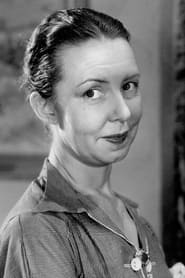
Gertrude Sutton
Actor
- Active
- 1930-1930
Films 1
About Gertrude Sutton
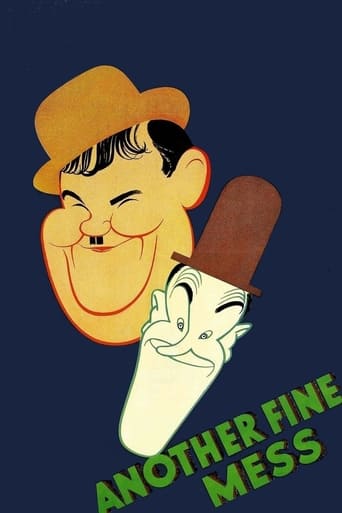
Gertrude Sutton was a small-role character actress active in the early sound era, best documented for her appearance in the Laurel and Hardy feature "Another Fine Mess" (1930). Available film records suggest that her screen career was brief and largely confined to the studio system’s short-subjects and supporting-player ecosystem, where many performers worked steadily without receiving prominent billing. Because she appears in surviving documentation mainly through film credits rather than extensive publicity, little is known with certainty about her private life, training, or broader career outside this narrow period. Her surviving screen presence belongs to the transitional moment when Hollywood was moving from silent comedy traditions into synchronized sound, and her work is part of the fabric of early talkie-era ensemble casting. She is an example of the many reliable, lesser-documented performers whose contributions helped anchor classic films even when they were not major stars. Beyond the credit in "Another Fine Mess," readily verifiable information about her later career, birth details, and personal biography is scarce in standard reference sources. As a result, her historical importance lies less in stardom than in representing the working actors who populated early Hollywood productions and sustained studio filmmaking.
More about Gertrude Sutton
On screen
No detailed critical descriptions of Gertrude Sutton's acting style survive in readily accessible reference sources. Based on her placement in an early talkie comedy feature, her work would likely have depended on concise character expression, timing, and the straightforward realism typical of supporting performers in studio comedies. Because her credited screen output is extremely limited in surviving records, any stronger characterization would be speculative.
In film history
Gertrude Sutton’s cultural impact is primarily indirect, arising from her participation in an enduring classic comedy rather than from celebrity or star status. Supporting performers like Sutton were essential to the texture of early Hollywood films, especially comedies that relied on a believable social world around the central stars. Her credit in "Another Fine Mess" places her within the Laurel and Hardy legacy, one of the most influential bodies of comedic work in film history. Even when individual biographical details are lost, such performers remain part of the historical record that illustrates how studio-era film production depended on a large, skilled labor force of actors who could appear briefly yet leave an imprint on the finished film. For historians, Sutton is representative of the many contributors whose names are preserved by filmographies even when newspaper coverage and studio publicity did not make them widely known.
Later reputation
Gertrude Sutton’s legacy is that of a documented early sound-era film performer whose surviving record keeps her connected to one of the foundational comedy teams of classic cinema. Her name endures mainly through film credit databases and reference listings, which is common for minor players of the period. This kind of archival survival is important because it preserves the broader cast of personalities who shaped Hollywood films beyond the marquee names. In that sense, her legacy is archival and historical: she serves as evidence of the many working actors who made classic cinema possible while remaining largely anonymous to the public.
Influence
There is no evidence that Gertrude Sutton directly influenced later actors or filmmakers in a documented, personal sense. Her significance is instead cumulative, as part of the supporting cast tradition that enabled studio comedies to function smoothly. Performers in her position helped establish the everyday realism, timing, and ensemble rhythm that later generations of character actors continued to refine. Her presence in an early Laurel and Hardy film also places her within a comedic tradition that influenced decades of screen humor.
Off screen
No reliable public biographical record has been found in standard classic-cinema reference materials that details Gertrude Sutton's family background, marriages, children, or later life. She appears to have been one of many early Hollywood working actors whose careers were documented more thoroughly in trade credits than in personal publicity. Without verifiable evidence, it is not possible to reconstruct her personal life responsibly.
Education
Unknown; no verifiable educational background is documented in readily available classic-cinema reference sources.
Credits
- Appeared in the Laurel and Hardy comedy feature "Another Fine Mess" (1930), the main surviving credit associated with her name
- Worked during the early sound era, a period when many supporting actors transitioned from silent film performance styles to talkies
- Represents the large body of unheralded studio-era performers whose names sometimes survive in credits even when biographical records are incomplete
- Connected to one of the most enduring comedy franchises in classic cinema through her credited participation in a Laurel and Hardy film
- Her filmography places her within the professional ecosystem of early 1930s Hollywood supporting players and ensemble casting
Roles
- Supporting role in "Another Fine Mess" (1930)
Films
- "Another Fine Mess" (1930)
Collaborators
- Stan Laurel
- Oliver Hardy
- Hal Roach Studios production teams
Notes
- Her best-known surviving credit is in "Another Fine Mess" (1930), a Laurel and Hardy feature.
- Her active period in available filmography is extremely narrow, with 1930 listed as her only known working year.
- She is one of many early Hollywood performers whose screen work is better preserved in credits than in biographical archives.
- Because she appears in an early sound film, her career belongs to the transitional period between silent cinema and talkies.
- No widely documented awards, nominations, or honors are associated with her name in standard references.
- Her rarity in historical records makes her a useful example of how many supporting actors from classic Hollywood remain little-known despite appearing in notable films.
- Her surviving identity is largely filmography-based, which is common for minor credited players in studio-era productions.
- Being linked to Laurel and Hardy places her indirectly within one of the most studied comedy partnerships in film history.
Questions
Who was Gertrude Sutton?
Gertrude Sutton was a little-documented film actor from the early sound era, best known for appearing in "Another Fine Mess" (1930). She does not appear to have had a major star career, but she was part of the working ensemble of classic Hollywood productions.
What films is Gertrude Sutton best known for?
Her primary and most verifiable screen credit is "Another Fine Mess" (1930), the Laurel and Hardy comedy feature. That film is the key title associated with her name in surviving film records.
When was Gertrude Sutton born and when did she die?
At present, reliable publicly accessible sources do not provide confirmed birth or death dates for Gertrude Sutton. Her biographical record is very sparse, and those details remain unverified.
What awards did Gertrude Sutton win?
No awards or nominations are documented for Gertrude Sutton in the available classic-cinema reference record. She appears to have been a supporting performer whose career was not tracked through major industry honors.
What was Gertrude Sutton's acting style?
There is no surviving critical profile that describes her style in detail. Given her work in an early 1930 comedy, her performance likely relied on concise supporting-character work, timing, and naturalistic presence rather than star-centered showmanship.
What is Gertrude Sutton's legacy in film history?
Her legacy is primarily archival and historical: she is one of the many working actors whose names survive through film credits, helping document the full cast of classic Hollywood productions. Her appearance in a Laurel and Hardy film also links her to one of cinema’s most enduring comedy traditions.