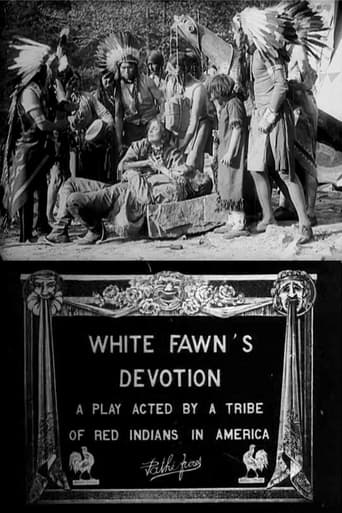
James Young Deer
Director
Born: 1870s (exact date unknown, various sources cite 1876 or 1877) in Nebraska, United States Died: April 1946 Active: 1909-1913 Birth Name: James Young Deer Johnson
Films
1 film
About James Young Deer
James Young Deer (also known as J. Younger Johnson) was a Native American filmmaker who broke significant barriers in early Hollywood cinema. Born in the 1870s to the Winnebago (Ho-Chunk) Nation, he became one of the first Native American directors in the film industry, working primarily during the silent era. His most notable work, 'White Fawn's Devotion' (1910), is recognized as one of the earliest films directed by a Native American and depicts Native American life with unprecedented authenticity for its time. Young Deer worked extensively with the French company Pathé, where he directed, wrote, and acted in numerous films focusing on Native American themes, bringing genuine cultural representation to an industry that typically relied on stereotypes. His career moved from approximately 1909 to 1913, during which he produced over 100 short films, many of which are now lost. Young Deer was married to actress Lillian St. Cyr (Red Wing), a member of the Winnebago Nation, and together they formed one of early cinema's first Native American power couples. Despite his significant contributions to early cinema, his legacy was largely overlooked for decades, though modern film historians now recognize him as a crucial figure in the history of Native American representation in film.
The Craft
Behind the Camera
Young Deer's directing style emphasized authenticity and respect for Native American culture, a revolutionary approach in an era when indigenous peoples were typically portrayed through stereotypes. He incorporated genuine cultural practices, costumes, and settings into his films, often using Native American actors in lead roles. His narrative approach blended dramatic storytelling with educational elements, aiming to both entertain and inform audiences about Native American life and traditions.
Milestones
- Directed 'White Fawn's Devotion' (1910), one of the earliest films by a Native American director
- Worked as principal director for Pathé's American operations
- Created over 100 short films during his career
- Formed a creative partnership with his wife Lillian St. Cyr
- Pioneered authentic Native American representation in early cinema
Best Known For
Iconic Roles
Must-See Films
Accolades
Special Recognition
- Recognized by film historians as one of the first Native American film directors
- Subject of scholarly research on early Native American cinema
- His films are preserved in the Library of Congress and studied in film history courses
Working Relationships
Worked Often With
Studios
Why They Matter
Impact on Culture
James Young Deer's work represents a watershed moment in the representation of Native Americans in cinema, challenging the prevailing stereotypes and caricatures of the early 20th century. By placing Native American actors, stories, and cultural practices at the center of his films, he created a counter-narrative to the dominant Hollywood portrayal of indigenous peoples as either savage villains or vanishing noble figures. His films, particularly 'White Fawn's Devotion,' demonstrated that authentic Native American stories could find commercial success while maintaining cultural integrity, paving the way for future indigenous filmmakers. Young Deer's career also challenged the racial barriers of early Hollywood, proving that Native Americans could successfully direct, write, and produce films at a time when the industry was overwhelmingly controlled by white filmmakers.
Lasting Legacy
James Young Deer's legacy as a Native American filmmaker has grown in recognition over the past decades, with film historians and scholars increasingly acknowledging his groundbreaking contributions to early cinema. His work serves as an important counterpoint to the predominantly white narrative of early Hollywood history, demonstrating that indigenous filmmakers were present and active from cinema's earliest days. Modern film preservation efforts have sought to restore and study his surviving films, particularly 'White Fawn's Devotion,' which is now considered a landmark work in both Native American cinema and early American film history. Young Deer's career has inspired contemporary Native American filmmakers to reclaim their stories and cultural narratives in cinema, continuing his mission of authentic representation.
Who They Inspired
Young Deer's influence extends beyond his immediate filmography to inspire generations of Native American filmmakers who followed in his footsteps. His approach to authentic storytelling and cultural representation provided a model for indigenous filmmakers seeking to tell their own stories on their own terms. Contemporary Native American directors often cite early pioneers like Young Deer as inspiration for their own work, acknowledging the importance of reclaiming narrative authority in cinema. His success in working within the studio system while maintaining cultural authenticity demonstrated that commercial viability and cultural integrity could coexist, a lesson that continues to resonate with indigenous filmmakers today.
Off Screen
James Young Deer was married to Lillian St. Cyr (stage name Red Wing), a prominent Native American actress from the Winnebago Nation. Their marriage represented one of early cinema's most significant Native American creative partnerships, with both husband and wife working to bring authentic indigenous stories to the screen. The couple often collaborated on film projects, with Young Deer directing and St. Cyr starring in leading roles. Beyond his film career, Young Deer was involved in Native American advocacy and worked to improve representation of indigenous peoples in American media.
Education
Limited formal education, typical of Native Americans in his generation; learned filmmaking through practical experience in the early film industry
Family
- Lillian St. Cyr (Red Wing) (married 1900s-1920s)
Did You Know?
- One of the first Native American film directors in Hollywood history
- His film 'White Fawn's Devotion' was added to the National Film Registry in 2008
- Worked under multiple names including J. Younger Johnson and Jim Young Deer
- Directed over 100 films during his career, though most are now lost
- His wife Lillian St. Cyr was one of the first Native American film stars
- Pathé promoted him to head of their American West Coast studio operations
- His films often featured authentic Native American costumes and customs
- He was a member of the Winnebago (Ho-Chunk) Nation
- Before entering films, he worked in Wild West shows and vaudeville
- His career peaked during the brief period when studios sought authentic Native American content
In Their Own Words
We must show our people as they truly are, not as others imagine us to be
The camera can be a weapon against prejudice, or a tool for understanding - I choose understanding
Every frame I shoot is a victory for our people
When I direct, I direct with the wisdom of my ancestors
Our stories deserve to be told by our own voices
Frequently Asked Questions
Who was James Young Deer?
Native American filmmaker and one of the first indigenous on YTB.my. Working primarily during the silent era from 1909-1913, he directed over 100 films, most notably 'White Fawn's Devotion' (1910), and was instrumental in bringing authentic Native American stories to early cinema.
What films is James Young Deer best known for?
Titles linked here include White Fawn's Devotion (1910), The Red Man and the Child (1908).
When was James Young Deer born and when did he die?
Born 1870s (exact date unknown, various sources cite 1876 or 1877); died April 1946.
What was James Young Deer's contribution to Native American representation in film?
Young Deer revolutionized Native American representation by creating films that portrayed indigenous peoples with authenticity and dignity, rejecting the stereotypes common in his era. He used Native American actors, authentic costumes, and genuine cultural practices, providing a counter-narrative to Hollywood's typical caricatures of indigenous peoples.
How did James Young Deer influence later Native American filmmakers?
Young Deer paved the way for future generations of Native American filmmakers by demonstrating that indigenous stories could be told authentically while achieving commercial success. His work inspired contemporary Native American directors like Chris Eyre and Sterlin Harjo to reclaim their narrative authority in cinema and continue his mission of authentic representation.