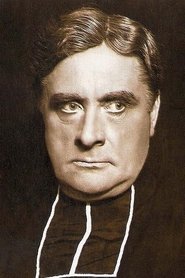
Charles le Bargy
Actor & Director
Born: April 28, 1858 in Lausanne, Switzerland Died: February 1, 1936 Active: 1880s-1936 (theater), 1908-1909 (film) Birth Name: Charles Émile le Bargy
Films
2 films
About Charles le Bargy
Played a pivotal role in the transition from theatrical performance to early cinema. Born into a theatrical family, he began his career on the prestigious stages of Paris, particularly at the Comédie-Française, where he developed a reputation for his powerful dramatic presence and classical training. His transition to film came during the crucial period of cinema's artistic development, where he brought theatrical gravitas to the new medium. Le Bargy is most renowned for his starring role as Henri III in 'The Assassination of the Duke de Guise' (1908), a landmark film that demonstrated cinema's potential for serious historical drama. He also directed 'The Return of Ulysses' (1909), showcasing his versatility behind the camera. His brief but impactful film career (1908-1909) coincided with cinema's emergence as a legitimate art form in France. After his film work, he returned primarily to theater, where he continued to be a respected figure until his death, leaving behind a legacy as one of the first classically trained actors to successfully bridge the gap between stage and screen.
The Craft
On Screen
Le Bargy's acting style was characterized by the grand, theatrical gestures and dramatic intensity typical of 19th-century stage performance, which he successfully adapted for the camera. His approach emphasized facial expression and controlled movement, making his performances particularly effective in silent film where visual storytelling was paramount. He brought classical training and gravitas to his roles, elevating early cinema beyond mere entertainment to artistic expression.
Behind the Camera
As a director, le Bargy maintained the theatrical composition and dramatic pacing of his stage background while embracing the new visual possibilities of cinema. His direction of 'The Return of Ulysses' demonstrated an understanding of cinematic storytelling, using carefully composed tableaux and symbolic visual elements to convey narrative. He focused on historical authenticity and dramatic intensity, helping establish the historical drama as a respectable film genre.
Milestones
- Member of the Comédie-Française from 1887
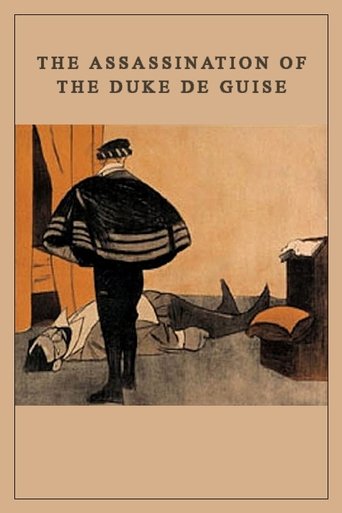
- Starred in 'The Assassination of the Duke de Guise' (1908), one of the first French art films
- Directed 'The Return of Ulysses' (1909), an early adaptation of classical literature
- Pioneered the transition from theatrical acting to cinematic performance
- Worked with Film d'Art company, dedicated to elevating cinema to an art form
Best Known For
Iconic Roles
Must-See Films
Accolades
Won
- Member of the Legion of Honour (Chevalier, later Officier)
- Sociétaire of the Comédie-Française
Special Recognition
- Full member (sociétaire) of the Comédie-Française
- Officier de la Légion d'honneur
- Recognized as a pioneer of French cinema by film historians
Working Relationships
Worked Often With
Studios
Why They Matter
Impact on Culture
Charles le Bargy played a crucial role in legitimizing cinema as an art form in France during its early development. His participation in 'The Assassination of the Duke de Guise' helped demonstrate that film could handle serious historical subjects with the same gravitas as legitimate theater. By bringing his classical training and reputation from the Comédie-Française to the new medium, he helped bridge the cultural gap between 'respectable' theater and 'popular' cinema. His work with the Film d'Art company was instrumental in establishing the artistic potential of cinema and attracting educated, middle-class audiences to movie theaters.
Lasting Legacy
Le Bargy's legacy lies in his role as a transitional figure between 19th-century theatrical tradition and 20th-century cinematic art. While his film career was brief, his performances helped establish standards for dramatic acting in silent film. His work demonstrated that classical training could enhance rather than hinder cinematic performance, influencing subsequent generations of actors. Film historians recognize him as an important pioneer who helped elevate French cinema from simple entertainment to artistic expression, paving the way for more sophisticated narrative films.
Who They Inspired
Charles le Bargy influenced the development of dramatic acting style in early cinema, showing how theatrical techniques could be adapted for the camera. His work with Film d'Art inspired other theatrical actors to consider film work seriously, helping raise the artistic standards of early French cinema. His approach to historical drama influenced the genre's development in French film, establishing conventions that would persist throughout the silent era. The success of his film performances demonstrated the commercial viability of highbrow artistic content in cinema.
Off Screen
Charles le Bargy was born in Lausanne, Switzerland, to French parents, but spent most of his life and career in France. He was deeply embedded in Parisian theatrical circles and maintained a reputation as a serious, dedicated artist throughout his life. His marriage to actress Jeanne Delvair kept him connected to the theatrical world, and the couple often performed together. Le Bargy was known for his professionalism and dedication to the craft of acting, both on stage and in his brief film career.
Education
Trained at the Paris Conservatoire (Conservatoire National Supérieur d'Art Dramatique)
Family
- Jeanne Delvair (married 1895)
Did You Know?
- The Assassination of the Duke de Guise (1908) featured music composed by Camille Saint-Saëns, one of the first original film scores
- Le Bargy was 50 years old when he made his film debut, already an established stage star
- His film career lasted only about a year, but his impact was disproportionate to its length
- The Return of Ulysses (1909) was one of the earliest film adaptations of classical Greek literature
- He was part of the Film d'Art company, founded specifically to make 'art films' for cultured audiences
- His stage active years covered over 40 years at the Comédie-Française
- Le Bargy and his wife Jeanne Delvair were one of early cinema's first power couples
- The Assassination of the Duke de Guise was preserved by the Library of Congress as culturally significant
- His performance style influenced the development of the 'film d'art' movement in France
- He helped establish the convention of using classically trained actors in serious film roles
In Their Own Words
The theater is our temple, but cinema may be its cathedral - a place where art reaches the masses.
Frequently Asked Questions
Who was Charles le Bargy?
French actor and on YTB.my. He is best known for starring in 'The Assassination of the Duke de Guise' (1908) and directing 'The Return of Ulysses' (1909), helping establish cinema as a legitimate art form in France.
What films is Charles le Bargy best known for?
Titles linked here include The Assassination of the Duke de Guise (1908), The Return of Ulysses (1909).
When was Charles le Bargy born and when did he die?
Born April 28, 1858; died February 1, 1936.
What awards did Charles le Bargy win?
Le Bargy was recognized with several prestigious honors including being named a full member (sociétaire) of the Comédie-Française and receiving the Legion of Honour, first as Chevalier and later elevated to Officier. While he didn't receive film awards (as they didn't exist in his time), he is recognized by film historians as a pioneer of French cinema.
What was Charles le Bargy's acting style?
Le Bargy's acting style combined the grand gestures and dramatic intensity of 19th-century theatrical tradition with an adaptation for the new medium of cinema. He emphasized facial expression and controlled movement, bringing classical training and gravitas to his film roles, which helped establish standards for dramatic acting in silent films.
How did Charles le Bargy influence early cinema?
Le Bargy influenced early cinema by helping legitimize it as an art form through his participation in the Film d'Art company. His classical background and reputation attracted educated audiences to theaters, while his performances demonstrated that serious dramatic material could be effectively presented on film, bridging the gap between 'respectable' theater and popular cinema.
What was the significance of 'The Assassination of the Duke de Guise'?
The film was groundbreaking as one of the first French 'art films,' featuring original music by Camille Saint-Saëns and demonstrating cinema's potential for serious historical drama. Le Bargy's performance as Henri III helped establish that classical actors could successfully transition to film, influencing the development of more sophisticated narrative cinema in France.