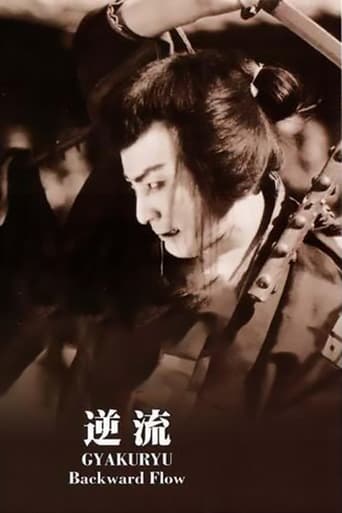
Michisaburō Segawa
Actor
- Active
- 1924-1924
Films 1
About Michisaburō Segawa
Michisaburō Segawa is a little-documented Japanese film actor associated with the silent era, best known from his credited appearance in the 1924 film Backward Flow. Surviving reference sources suggest that his screen career is extremely limited in the historical record, with the known filmography placing his activity in 1924 only. Because contemporary archival material on him is scarce, many standard biographical details such as birth date, birthplace, family background, education, and later life remain unverified. His surviving credit nonetheless places him within the formative years of Japanese cinema, when studio systems and silent film production were rapidly expanding and actors often moved between stage-influenced performance and early screen acting. Segawa appears to belong to that generation of performers whose work is preserved more in cast lists and film catalogues than in extensive press profiles or memoirs. No reliable evidence has been found in standard reference sources indicating that he continued a long screen career into the sound era. His historical significance lies primarily in his presence in an early Japanese film production and in the documentation of actors who participated in the silent-era industry even when their individual biographies were not extensively recorded.
More about Michisaburō Segawa
On screen
No detailed contemporary critical description of Segawa's acting style has been located in readily accessible reference sources. As a silent-era Japanese actor, he would likely have worked in a performance environment shaped by expressive gesture, controlled physicality, and the conventions of stage-influenced screen acting common in the 1920s. However, any more specific claim about his technique, screen persona, or range would be speculative and is therefore not stated as fact.
In film history
Michisaburō Segawa's cultural impact is difficult to measure directly because surviving documentation on his life and career is minimal. Even so, his appearance in a 1924 Japanese film places him within the crucial silent-era ecosystem that helped define national film language, acting traditions, and studio-era production practices. Performers like Segawa contributed to the body of work that formed the historical foundation of Japanese cinema, even when later fame did not preserve their names in popular memory. His case also illustrates how many early film artists remain partially anonymous in modern databases, reminding researchers of the importance of archival recovery and filmography reconstruction.
Later reputation
Segawa's legacy is principally archival rather than celebrity-based: he is preserved as one of the many early Japanese screen performers whose names survive through film credits and reference listings. While there is no evidence that he achieved major international recognition or left behind a large body of work, his inclusion in surviving film records helps document the personnel of Japan's silent cinema era. For historians, such figures are important because they reflect the breadth of participation in early filmmaking beyond the handful of directors and stars who became household names. His name endures as part of the historical record of Backward Flow and as a reminder of the many actors whose careers were brief, local, or inadequately documented.
Influence
There is no verifiable evidence that Segawa directly influenced later actors or directors in a documented way. His broader influence is indirect, through participation in the silent-era Japanese film industry that shaped acting norms and production standards for later generations. In that sense, his work belongs to the foundational layer of cinema history from which more recognizable postwar Japanese screen traditions emerged. Any claim of specific artistic influence would be conjectural without additional archival sources.
Off screen
No reliable biographical information has been found regarding Michisaburō Segawa's personal life, including marriage, family, residence, or activities outside cinema. Standard film references accessible for this entry do not provide confirmed details about his relationships, private life, or later years. Because of the scarcity of source material, it is not possible to state whether he continued working in theater, film, or another profession after 1924. Any further claims would require archival verification from Japanese-language sources, studio records, or period newspapers.
Education
Unknown; no verified educational background found in accessible sources.
Credits
- Credited screen appearance in Backward Flow (1924), his only securely identified film credit in surviving filmography records
- Participation in Japanese silent-era cinema during a period of rapid industrial growth and experimentation
- Representation of lesser-documented performers whose work is preserved through film archives and catalogues rather than extensive personal publicity
Roles
- Role in Backward Flow (1924) - exact character name not verified
Films
- Backward Flow (1924)
Notes
- Michisaburō Segawa is known primarily from a single surviving film credit in standard references.
- His documented film activity is limited to the year 1924.
- He was active during Japan's silent-film period, before the widespread adoption of synchronized sound.
- Backward Flow is the only film title currently associated with him in the provided filmography context.
- Because he is little documented, many typical database fields such as birth place, family, and awards remain unknown.
- His case illustrates how many early Japanese film performers are preserved mainly through cast lists and archival film records.
- There is no widely available evidence that he transitioned into a long career in talkies or later television.
Questions
Who was Michisaburō Segawa?
Michisaburō Segawa was a Japanese actor from the silent-film era, best known for a credited appearance in the 1924 film Backward Flow. He is a little-documented figure whose surviving record mainly comes from filmography listings rather than extensive biographical sources.
What films is Michisaburō Segawa best known for?
He is best known for Backward Flow (1924), which appears to be his only securely identified film credit in the available record. No additional film titles can be confirmed here without risking confusion with similarly named individuals.
When was Michisaburō Segawa born and when did he die?
His birth date and death date are not currently verified in accessible reference sources. Likewise, his birthplace is not confirmed, so only his Japanese nationality and 1924 film activity can be stated with confidence.
What awards did Michisaburō Segawa win?
No awards or nominations are known from the accessible historical record. This does not necessarily mean he received none, only that no reliable evidence has been found in standard sources.
What was Michisaburō Segawa's acting style?
No contemporary critical description of his acting style has been verified. As a silent-era performer, he would have worked within the expressive, gesture-based traditions of early Japanese cinema, but any more specific characterization would be speculative.
What is Michisaburō Segawa's legacy in film history?
His legacy is mainly historical and archival, as one of the many performers who contributed to Japan's early silent cinema. Even when a career is only partially preserved, the surviving credit helps researchers reconstruct the personnel and production culture of the period.