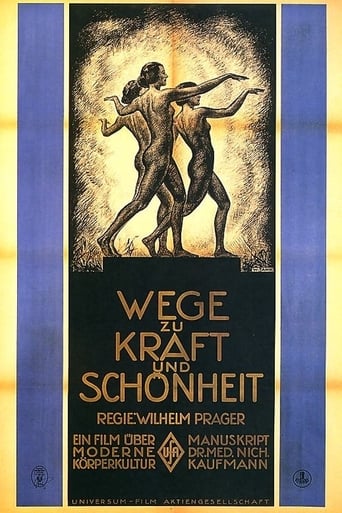
Nicholas Kaufmann
Director
- Active
- 1925-1925
Films directed 1
About Nicholas Kaufmann
Nicholas Kaufmann is an obscure silent-era film director whose known screen credit is the 1925 short film Ways to Strength and Beauty, a title associated with the health-and-culture craze of the Weimar period and the broader fascination with bodily culture in the 1920s. Very little reliable biographical information about him survives in standard film reference sources, and his career appears to have been extremely limited, with no substantial filmography beyond this single known directorial credit. Because of that scarcity, his life outside the film record—his family background, training, later career, and personal history—remains largely undocumented. The surviving evidence suggests that he worked during the silent era and may have been connected to documentary, educational, or issue-oriented filmmaking rather than mainstream commercial features. His name does not appear prominently in the major star and auteur histories of the period, which indicates that he was likely a minor or specialist filmmaker rather than a studio contract director. Nevertheless, his association with Ways to Strength and Beauty places him within an important moment in early cinema when film was being used to shape public ideas about health, modernity, discipline, and the body. In film-history terms, he is best understood as a fragmentary but legitimate figure of the silent period whose contribution survives more in archival traces than in an extensive body of accessible work.
More about Nicholas Kaufmann
Behind the camera
Specific stylistic details are not well documented, but his known work suggests an approach aligned with silent-era informational or cultural short filmmaking rather than character-driven studio melodrama. The title Ways to Strength and Beauty implies an emphasis on visual demonstration, didactic structure, and the presentation of ideals rather than narrative complexity. Directors working in this mode often relied on clear composition, staged demonstration, intertitles, and an explanatory rhythm intended to persuade or instruct the audience. Because no additional confirmed films are readily attributable to him, any fuller assessment of his style would be speculative.
In film history
Nicholas Kaufmann's cultural impact is difficult to measure directly because the surviving record of his career is extremely sparse. Even so, his credited direction of Ways to Strength and Beauty places him within a significant stream of 1920s cinema that treated film as a vehicle for social instruction, physical culture, and ideals of health. This kind of filmmaking reflected wider interwar concerns about modernity, discipline, athleticism, and the disciplined body, themes that were especially visible in European silent cinema. Although he is not a widely recognized name, his work contributes to the broader historical understanding of how early film was used beyond entertainment, especially in shaping attitudes toward the body and lifestyle. His presence in filmography databases also underscores how much silent-era production remains partially documented, with many contributors known only through surviving credits.
Later reputation
Kaufmann's legacy is primarily archival rather than popular: he survives as a named participant in the silent era, linked to a specific filmic project that reflects an important cultural current of the 1920s. For historians, such figures are valuable because they help reconstruct the full ecosystem of early cinema, including the small-scale, instructional, and specialized productions that rarely entered the canon. His name serves as a reminder that film history is not made only by stars and famous auteurs, but also by lesser-known directors whose work participated in contemporary debates about modern life. If more documentation emerges in archives or trade publications, his place in cinema history may become clearer, but at present his significance lies in the survival of his credit itself.
Influence
Because Nicholas Kaufmann's filmography is so limited and poorly documented, direct lines of influence on later directors or filmmakers cannot be firmly established. Indirectly, however, his work belongs to a tradition of visual instruction and body-culture filmmaking that influenced documentary practice, educational shorts, and health-oriented media in later decades. Directors and producers working in informational cinema would have drawn on the same silent-era techniques of demonstration, montage, and persuasive presentation that films like Ways to Strength and Beauty likely employed. His influence is therefore best understood as part of a collective early-cinema movement rather than as the imprint of an individually celebrated auteur.
Off screen
No reliable public record of Nicholas Kaufmann's personal life, marriages, family, or later activities is readily available in standard classic-cinema reference sources. Unlike prominent directors of the silent era, he does not appear to have left a widely documented biographical footprint in mainstream film histories. As a result, details such as spouse, children, residence, education, and later employment remain unverified. His obscurity is typical of many early film workers whose careers were brief, specialized, or preserved only through film credits and archival listings.
Credits
- Directed the silent-era film Ways to Strength and Beauty (1925), his only securely identified screen credit in standard reference data.
- Worked during a period when film was increasingly used for educational, hygienic, and modernist cultural messaging.
- Represents the ranks of lesser-documented early filmmakers whose surviving record is limited to single-title attribution.
- Associated with the 1920s body-culture and health-film movement reflected in Ways to Strength and Beauty.
- Maintains historical interest as a silent-era director whose name survives in archival filmographies despite the scarcity of biographical detail.
Films
- Ways to Strength and Beauty (1925)
Notes
- Nicholas Kaufmann is chiefly remembered today for a single identified directing credit rather than a long film career.
- His known film, Ways to Strength and Beauty (1925), suggests a focus on health, physical culture, or bodily ideals common in the 1920s.
- He appears to have worked in the silent era, before synchronized sound transformed film production and exhibition.
- Standard film reference sources provide very little personal information about him, making him one of the more obscure names in silent-cinema records.
- Because his biographical details are scarce, he is often encountered by researchers only through filmography listings rather than through narrative biographies.
- His surviving credit highlights the importance of archival film databases in preserving the names of otherwise forgotten early filmmakers.
- The title of his best-known work aligns with European and interwar interest in health, exercise, and modern living.
- He is an example of how many silent-era directors specialized in short-form or issue-based films that did not receive lasting mainstream recognition.
Questions
Who was Nicholas Kaufmann?
Nicholas Kaufmann was a silent-era film director known primarily for Ways to Strength and Beauty (1925). He remains an obscure figure in classic cinema, with very limited surviving biographical information.
What films is Nicholas Kaufmann best known for?
He is best known for Ways to Strength and Beauty (1925), which appears to be his only securely identified directing credit in standard film references. No broader confirmed feature film career is readily documented.
When was Nicholas Kaufmann born and when did he die?
His birth and death dates are not currently verified in the available classic-cinema record. Likewise, his birth place and other personal details remain unknown from standard reference sources.
What awards did Nicholas Kaufmann win?
No awards or nominations are documented for Nicholas Kaufmann in the available record. Given the limited evidence of his career, there is no verified record of formal honors.
What was Nicholas Kaufmann's directing style?
His known work suggests a silent-era, likely instructional or documentary-oriented approach rather than a commercial feature style. Ways to Strength and Beauty implies an emphasis on visual demonstration, clarity, and persuasive presentation.
What is Nicholas Kaufmann's legacy in film history?
His legacy is primarily historical and archival: he is one of many early filmmakers whose names survive through a single credit or a small number of records. He is important for understanding the breadth of silent-era production, especially the educational and cultural films of the 1920s.