Herbert M. Dawley
Actor
Born: March 15, 1880 in Chillicothe, Ohio, USA Died: August 15, 1970 Active: 1918-1926 Birth Name: Herbert Moore Dawley
Films
1 film
About Herbert M. Dawley
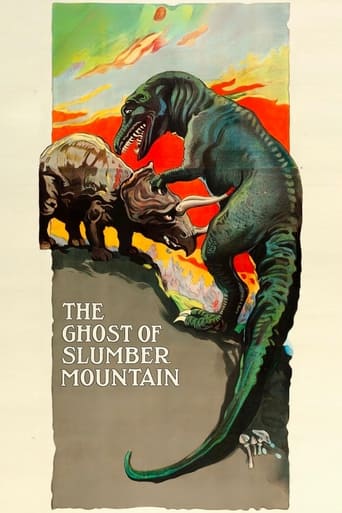
Major Herbert Moore Dawley — multi-talented American artist, filmmaker, and stop-motion animation pioneer whose contributions to early cinema are often overshadowed by his legal disputes with Willis O'Brien. Born in Ohio, Dawley initially pursued a career in the arts and served as a Major in the United States Army during World War I, a title he used professionally for the rest of his life. In 1918, he produced and starred in 'The Ghost of Slumber Mountain,' a landmark film that combined live-action footage with stop-motion prehistoric creatures. While Dawley claimed much of the technical credit, the animation was largely the work of Willis O'Brien, whom Dawley had hired after seeing O'Brien's early shorts. Dawley's career in film was relatively brief but impactful, as he patented several stop-motion techniques that would later become industry standards. Despite his technical ingenuity, his reputation suffered due to his aggressive litigation against other animators, including O'Brien and the creators of 'The Lost World' (1925), claiming they infringed on his patents. In his later years, he moved away from the film industry to focus on sculpture, set design, and community theater in New Jersey.
The Craft
On Screen
Dawley's acting was characteristic of the late silent era, utilizing broad physical gestures and a professorial, authoritative screen presence. In his most famous role as Uncle Jack in 'The Ghost of Slumber Mountain,' he portrayed a storyteller and explorer, serving as the audience's guide into a fantastical prehistoric world. His performance was designed to ground the revolutionary special effects in a relatable, narrative framework.
Milestones
- Produced and starred in 'The Ghost of Slumber Mountain' (1918), the first commercially successful stop-motion dinosaur film.
- Patented a method for articulating stop-motion puppets using metal armatures and rubber skins in 1918.
- Founded Dawley Pictures Corporation to produce educational and entertainment shorts.
- Directed 'Along the Moonbeam Trail' (1920), which further experimented with composite live-action and animation.
- Successfully sued several production companies for patent infringement regarding stop-motion techniques.
- Served as a prominent set designer and director for the Chatham Community Players in New Jersey later in life.
Best Known For
Iconic Roles
Must-See Films
Accolades
Special Recognition
- Recognized by the Academy of Motion Picture Arts and Sciences in historical retrospectives of special effects.
- Inducted into the New Jersey Hall of Fame for his contributions to the arts (local recognition).
Working Relationships
Worked Often With
Studios
Why They Matter
Impact on Culture
Herbert M. Dawley played a pivotal role in the birth of the 'monster movie' genre. By bringing 'The Ghost of Slumber Mountain' to theaters, he proved that there was a massive commercial market for films featuring prehistoric creatures and special effects. His work laid the groundwork for 'The Lost World' (1925) and 'King Kong' (1933). While his legal battles created friction in the industry, his patents forced other filmmakers to innovate and find new ways to achieve cinematic illusions, indirectly pushing the boundaries of visual effects technology.
Lasting Legacy
Dawley's legacy is a complex mix of technical brilliance and professional controversy. He is credited with inventing the use of sheet lead and articulated metal skeletons for animation puppets, a technique that remained the industry standard for decades. Although Willis O'Brien is often hailed as the sole genius of stop-motion, historians now recognize Dawley's essential role in providing the funding, the patents, and the initial platform that allowed stop-motion to evolve from a novelty into a narrative tool.
Who They Inspired
He influenced the trajectory of special effects by securing early patents that defined the mechanics of stop-motion. His success with dinosaur films influenced producers like Cecil B. DeMille to consider the potential of high-concept visual spectacles. Modern animators and special effects artists look back at Dawley's 'The Ghost of Slumber Mountain' as the 'missing link' in the evolution of creature effects.
Off Screen
Dawley — man of diverse interests, often described as a 'Renaissance Man' of the early 20th century. He was a veteran of the Spanish-American War and World War I, holding the rank of Major. He was deeply involved in the arts beyond cinema, specifically in wood carving and sculpture. He spent much of his later life in Chatham, New Jersey, where he was a pillar of the local arts community and lived until the age of 90.
Education
Studied at the Art Students League of New York and received technical training during his military service.
Family
- Edith Dawley (dates unknown)
Did You Know?
- Dawley — professional woodcarver and designed several award-winning parade floats.
- He famously sued the makers of the 1925 film 'The Lost World,' claiming their stop-motion techniques violated his 1918 patents.
- The original cut of 'The Ghost of Slumber Mountain' was roughly 3,000 feet long, but it was edited down to about 1,000 feet for its theatrical release.
- He claimed to have discovered Willis O'Brien working in a San Francisco basement and brought him to the East Coast.
- Dawley appeared as himself in several educational shorts explaining the process of filmmaking.
- He was an expert on prehistoric life and worked closely with paleontologists to ensure his models were as accurate as possible for the 1910s.
- Despite their falling out, Dawley's puppets were used in several other films without his direct involvement.
In Their Own Words
The screen is a canvas where the impossible becomes the inevitable through the marriage of art and mechanics.
I didn't just film dinosaurs; I gave them a second life in the minds of the public.
Frequently Asked Questions
Who was Herbert M. Dawley?
American filmmaker, sculptor, and stop-motion pioneer best known for producing and starring in the 1918 film 'The Ghost of Slumber Mountain.' He was a key figure in early special effects and held several important patents for animation techniques.
What films is Herbert M. Dawley best known for?
Titles linked here include The Ghost of Slumber Mountain (1918), Along the Moonbeam Trail (1920).
When was Herbert M. Dawley born and when did he die?
Born March 15, 1880; died August 15, 1970.
What was the conflict between Dawley and Willis O'Brien?
Dawley hired O'Brien to animate 'The Ghost of Slumber Mountain' but took the primary credit for the work himself. This led to a permanent rift, with Dawley later using his patents to sue O'Brien's future projects, including 'The Lost World.'
What was Herbert M. Dawley's contribution to animation?
Dawley patented the use of metal armatures with flexible coverings for stop-motion puppets. This allowed for more realistic and durable models, a technique that became the standard for the industry for over 60 years.