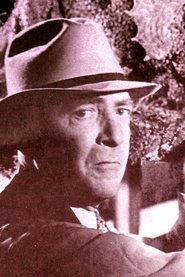

The Ghost of Slumber Mountain
"a dream Uncle Jack looks through a magic telescope owned"
Keys: Space play/pause · ←/→ 10s · F fullscreen · M mute · </> speed
About this film
In a dream Uncle Jack looks through a magic telescope owned by the ghost of a hermit and sees what life was like millions of years ago, including a battle between prehistoric monsters.
Cast & crew
More films like this
More Fantasy films
View all →

More from Willis H. O'Brien
View all →
More about this film
About the production
Release dateNovember 17, 1918
Budget$3,000
Box office$100,000
ProductionHerbert M. Dawley Productions, Cinema Distributing Corporation
Filmed inNew Jersey, USA
The picture was a collaboration between special effects pioneer Willis O'Brien and sculptor Herbert M. Dawley. Originally intended as a three-reel feature film running approximately 40 minutes, it was drastically edited down to a single reel (about 11-12 minutes) by the theater manager Walter Hayes and producer Dawley following its premiere at the Strand Theater. This editing led to a significant rift between O'Brien and Dawley, as Dawley subsequently claimed sole credit for the animation and direction, omitting O'Brien's name from many promotional materials. The production utilized miniature models with metal armatures, a technique O'Brien would later perfect for 'King Kong'.
Themes
The Mystery of the Prehistoric PastDreams vs. RealityMan's Smallness in Geological TimeThe Power of Scientific Observation (via the telescope)
Themes & topics
dinosaurstop-motiontime traveldream sequencetyrannosaurus rextriceratopshermitmagic telescopeprehistoric battle
Historical background
By 1918, Herbert M. Dawley Productions was supplying United States theaters with titles like The Ghost of Slumber Mountain, part of the broader expansion of filmed entertainment into working-class districts and small towns.
Why this film matters
Programmers and historians revisit The Ghost of Slumber Mountain (1918) because its story—in a dream uncle jack looks through a magic telescope owned by the ghost of a hermit and sees what life was like millions of years ago, including a battle between prehistoric monsters—illustrates popular narrative habits and production norms of the period.
Making of
The production was fraught with tension between Willis O'Brien and Herbert M. Dawley. While O'Brien was the primary creative force behind the animation, Dawley provided the funding and the studio space. After the picture became a massive hit, Dawley attempted to patent the stop-motion process O'Brien had developed, leading to a legal battle. O'Brien eventually left the partnership to work with Watterson Rothacker, who had been impressed by the effects in 'Slumber Mountain' and wanted to apply them to a feature-length adaptation of 'The Lost World'. The models were meticulously moved frame-by-frame, with O'Brien often working alone for hours to achieve just a few seconds of footage. The 'breathing' effect on the dinosaurs was achieved using a small football bladder inside the models that was slightly inflated and deflated between frames.
What critics said
English-language trade reviews of The Ghost of Slumber Mountain are limited for 1918. Where notices survive, they stress pacing and photographic clarity; later criticism values the title as archival evidence of studio style.
Did you know?
- marks the first time in cinematic history that live-action actors and stop-motion animated creatures were shown together on screen.
- It is widely considered the cinematic debut of the Tyrannosaurus Rex.
- the picture was so successful that it grossed over 33 times its original budget, making it among the leading profitable films of its era.
- Willis O'Brien played the role of the ghost of 'Mad Dick' the hermit, though he was often uncredited due to his dispute with Dawley.
- The animation was so realistic for 1918 that some audience members reportedly believed the dinosaurs were real animals found in a remote part of the world.
- the picture served as a technical 'trial run' for Willis O'Brien's later masterpiece, 'The Lost World' (1925).
- A controversial deleted scene involved Jack trying to persuade his companion Joe to strip naked and pose as a faun, which some modern historians interpret as having a homoerotic subtext.
- The models used for the dinosaurs were made of clay over wooden and metal skeletons, featuring 'breathing' bladders to simulate life.
- the picture is one of the earliest examples of the 'it was all a dream' trope used to justify fantastical special effects in a realistic setting.
Visual style
The cinematography is notable for its early use of split-screen techniques and double exposure to place actors in the same frame as the miniature models. Willis O'Brien also experimented with camera movement during animation, such as panning the camera while the models were being moved, which helped create a sense of scale and physical space that was unprecedented for the time.
Music
As a silent film, there was no synchronized soundtrack. Original screenings would have been accompanied by a live pianist or organist. Modern restorations often feature new scores, though some viewers have noted that the 'circus-style' music found on some public domain versions clashes with the picture's intended atmosphere.
Famous quotes
Uncle Jack: 'I'll tell you a story of the time I went to Slumber Mountain...'
Intertitle: 'The Ghost of Mad Dick appeared, pointing toward the peak.'
Intertitle: 'Through the magic telescope, the past was revealed!'
Memorable scenes
- The battle between the Tyrannosaurus Rex and the Triceratops, which remains the picture's most famous sequence.
- The T-Rex licking its chops after killing its prey, a small but significant detail of character animation.
- The giant bird (Gastornis) grooming itself and eating a snake, showing O'Brien's interest in naturalistic animal behavior.
- The final chase where the T-Rex appears to break through the 'window' of the past to chase Jack in the present.
What audiences thought
Audiences in 1918 were captivated by the spectacle, leading to sold-out screenings at the Strand Theater in New York. the picture's profitability was immense, as it tapped into the public's growing obsession with prehistoric life. Today, it is primarily viewed by film historians and dinosaur enthusiasts who appreciate its status as the 'ancestor' of modern CGI blockbusters.
Film connections
Influenced by
- The Lost World (Novel by Arthur Conan Doyle)
- Journey to the Center of the Earth (Novel by Jules Verne)
- The paintings of paleo-artist Charles R. Knight
This film influenced
- The Lost World (1925)
- King Kong (1933)
- The Beast from 20,000 Fathoms (1953)
- Jurassic Park (1993)
Film restoration
the picture was long considered partially lost. The original 40-minute version does not exist in its entirety. However, about 19 minutes of the picture have been recovered and restored. In 2012, the Academy Film Archive preserved the remaining footage, and a 2K HD restoration was released by Flicker Alley in 2017.
Where to watch
- YouTube (Public Domain)
- Flicker Alley's 'The Lost World' Blu-ray (as a bonus feature)
- The Dinosaur Museum (Blanding, Utah)