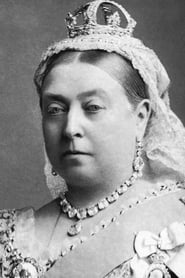
Queen Victoria of the United Kingdom
Actor
- Born
- May 24, 1819, Kensington Palace, London, United Kingdom
- Died
- January 22, 1901
- Active
- 1896-1896
- Birth name
- Alexandrina Victoria
Films 1
About Queen Victoria of the United Kingdom
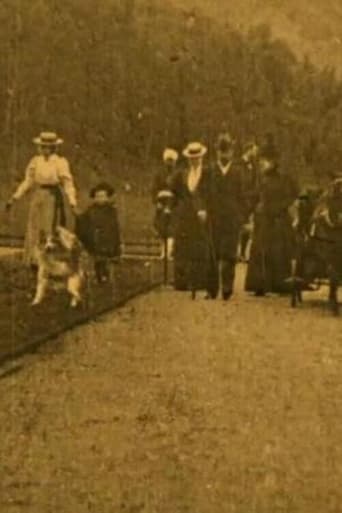
Victoria of the United Kingdom (1819-1901), known historically as Queen Victoria, was the reigning British monarch rather than a professional actor, but she appears as herself in the early film Scenes at Balmoral (1896), an important surviving record from the dawn of cinema. Born Princess Alexandrina Victoria of Kent, she became queen in 1837 and remained on the throne for more than six decades, a period that gave its name to the Victorian Age. Her appearance in motion picture footage is historically significant because it places one of the most famous figures of the nineteenth century in the earliest years of moving-image history, when film was still a novelty and public fascination with royalty made such footage especially valuable. Scenes at Balmoral was not a narrative performance in the modern sense; rather, it documents the Queen in everyday surroundings at Balmoral Castle, where her presence was captured as part of a royal actuality film. As a result, Victoria is not remembered as a film artist, but as a key historical subject whose image became part of cinema's earliest archive. Her cinematic importance lies in the intersection of monarchy, public spectacle, and the emerging film medium, making her a notable figure for film historians interested in the origins of screen nonfiction and royal representation. Because her film appearance was unique and not a career in acting, most personal and artistic categories associated with performers are not applicable in the usual sense.
More about Queen Victoria of the United Kingdom
On screen
Not applicable in the conventional sense, since Victoria was not an actress and did not perform scripted roles. In Scenes at Balmoral, her screen presence is best understood as natural, unposed, and documentary in character, reflecting the observational style of early actuality filmmaking. Her filmed appearance relies on royal dignity, ceremonial presence, and the public interest generated by simply seeing the monarch on screen.
In film history
Queen Victoria's impact on cinema is indirect but historically significant because her appearance in early film helped legitimize motion pictures as a medium capable of capturing world-famous figures and public events. Scenes at Balmoral belongs to the category of actuality filmmaking, where audiences were drawn to the thrill of seeing real people, especially royalty, moving on screen. The fact that a reigning monarch could be filmed and exhibited to the public helped establish cinema as a modern visual record of contemporary life rather than merely a fairground curiosity. In broader culture, Victoria remains one of the most recognizable historical subjects ever filmed, and her image has become inseparable from visual representations of the nineteenth century and the rise of mass media. Her presence in cinema history also illustrates how early film served as both entertainment and political-cultural documentation.
Later reputation
Her lasting legacy in film history is as a landmark historical subject rather than as a performer: she is one of the most famous real-life figures to appear in very early moving images. For historians of silent film and nonfiction cinema, her appearance in Scenes at Balmoral represents the power of film to preserve motion, status, and presence in a new technological age. She also stands as an enduring symbol of the Victorian era, which is continually revisited in screen culture through adaptations, biographies, documentaries, and period dramas. Because she was filmed so early in cinema's development, her image has special archival value and remains of interest to scholars studying the relationship between monarchy, celebrity, and media. Her legacy is therefore twofold: political and cultural in the historical sense, and cinematic as one of the first globally significant public figures captured on film.
Influence
Victoria influenced other screen depictions of monarchy and historical pageantry by becoming an early example of how film could record prestige and public authority. Although she did not influence acting technique as a performer, her filmed image helped shape the visual language of royal representation that later directors and documentarians would draw upon. Her presence in early actuality film also encouraged the public appetite for seeing prominent figures on screen, a tendency that contributed to the development of newsreels, documentaries, and celebrity culture. In that sense, she indirectly influenced the evolution of nonfiction cinema and the notion that film could preserve history as it happened.
Off screen
Queen Victoria was the daughter of Prince Edward, Duke of Kent, and Princess Victoria of Saxe-Coburg-Saalfeld. She married Prince Albert of Saxe-Coburg and Gotha in 1840, and the marriage became one of the defining partnerships of her life and reign; they had nine children, many of whom married into European royal families. After Albert's death in 1861, Victoria entered long mourning and remained deeply identified with him for the rest of her life. Her personal life was intensely public because of her position, and her family relationships had major political and dynastic consequences across Europe. She died in 1901 at Osborne House on the Isle of Wight, ending a reign that had shaped British society, empire, and the modern public image of monarchy.
Education
She was educated privately under the supervision of tutors and governesses, including a structured program later associated with the Kensington System. Her education emphasized languages, history, religion, and the duties of monarchy rather than formal institutional schooling.
Credits
- Appeared as herself in Scenes at Balmoral (1896), one of the notable early royal actuality films
- Remained one of the earliest globally recognized public figures to be filmed during cinema's first years
- Served as the reigning British monarch whose image became central to the cultural identity of the Victorian era
- Her filmed presence at Balmoral contributed to the development of nonfiction and actuality film as a commercial attraction
- Became an enduring historical subject in film, television, and documentary representations long after her death
Roles
- Herself in Scenes at Balmoral (1896)
Films
- Scenes at Balmoral (1896)
Honors
- Namesake of the Victorian era
- Subject of extensive historical commemoration and national memorialization in the United Kingdom
- Royal figure whose early film appearance is preserved in cinema history
Collaborators
- Royal film operators and actuality filmmakers capturing official or ceremonial footage
- Filmmakers documenting Balmoral and other royal settings in the 1890s
Family
- Prince Albert of Saxe-Coburg and Gotha (1840-1861)
Notes
- She was the first British monarch to be known by the name of the era that bore her own name: the Victorian Age.
- Scenes at Balmoral (1896) is historically important because it captured a reigning monarch in the earliest years of cinema.
- Her screen appearance was not an acting role in the modern sense, but an actuality appearance as herself.
- Victoria was the grandmother of many European royals, which earned her the informal nickname 'the grandmother of Europe.'
- She reigned for 63 years and 216 days, making her one of the longest-reigning British monarchs in history.
- Her marriage to Prince Albert was a major part of her public image and personal life.
- After Albert's death, she wore mourning for the rest of her life, which became a defining aspect of her later public persona.
- Her image has been reproduced in countless films, television productions, documentaries, and historical recreations.
- She is one of the few nineteenth-century heads of state to have been filmed during her lifetime.
- Balmoral Castle became strongly associated with her private royal life and country retreat.
Quotes
We are not interested in the possibilities of defeat; they do not exist.
I am very fond of being alone; I like to be by myself a great deal.
It is very natural for a woman to be very fond of a young baby.
Great events make me quiet and calm; it is only trifles that irritate my nerves.
Questions
Who was Queen Victoria of the United Kingdom?
Queen Victoria was the reigning British monarch from 1837 to 1901 and one of the most influential public figures of the nineteenth century. In cinema history, she is notable for appearing as herself in the early actuality film Scenes at Balmoral (1896), making her an important historical presence in the earliest days of motion pictures.
What films is Queen Victoria best known for?
She is best known for Scenes at Balmoral (1896), where she appears as herself. This is not a performance career in the usual sense, but rather a historically significant filmed appearance by a reigning monarch.
When was Queen Victoria born and when did she die?
Victoria was born on May 24, 1819, at Kensington Palace in London, United Kingdom. She died on January 22, 1901, at Osborne House on the Isle of Wight.
What awards did Queen Victoria win?
She did not receive film awards or acting honors, since she was not a professional performer. Her recognition comes from her historical importance as monarch and from the cultural and archival significance of her appearance in early cinema.
What was Queen Victoria's acting style?
Queen Victoria was not an actress, so she had no conventional acting style. In Scenes at Balmoral, her screen presence is documentary and unperformed, reflecting the early actuality style of cinema that captured real people in real settings.
What is Queen Victoria's legacy in film history?
Her legacy in film history is as one of the earliest world-famous public figures filmed during cinema's infancy. Her appearance at Balmoral helped demonstrate that film could preserve real historical presence, which became foundational to nonfiction filmmaking and public fascination with moving images.
Did Queen Victoria work with any directors or studios?
There is no evidence of a normal studio career or recurring collaborators, since her filmed appearance was a one-time actuality subject rather than a professional acting engagement. The film was made by early filmmakers documenting royal life rather than by a studio-system production team in the later Hollywood sense.