1896 · Approximately 1 minute

Also available on: YouTube
Scenes at Balmoral

Scenes at Balmoral

1896 Approximately 1 minute United Kingdom
Royal authority and visibilityThe novelty of cinemaPrivate family life versus public historyDocumentation and historical memoryTechnological modernity in the Victorian era

Plot

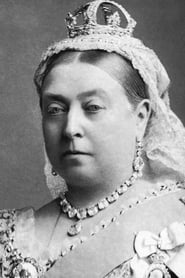
Scenes at Balmoral is a brief actuality film from 1896 that records Queen Victoria at Balmoral Castle with members of her family as they observe the novelty of the cinematograph process. Rather than presenting a staged narrative, the film functions as a dignified moving-picture record of a royal gathering, emphasizing the presence and composure of the Queen and her relatives. The known description suggests that the camera captured the royal party in a real outdoor or semi-outdoor setting, turning a private aristocratic moment into a public visual document. Its primary interest lies in the historic nature of the footage: the film shows one of the most famous figures of the nineteenth century in a contemporary cinematic context, during the earliest years of motion-picture exhibition. As a result, the film is valued less for plot than for its status as an early royal actuality and an important surviving trace of the first generation of cinema.

About the Production

Release Date 1896
Production William Downey
Filmed In Balmoral Castle, Aberdeenshire, Scotland

This film belongs to the earliest phase of cinema, when short actuality subjects were filmed to demonstrate the possibilities of the new medium and to record notable people or places. William Downey is credited as director, and the film is associated with one of the rare occasions on which Queen Victoria was filmed on camera. Because it was made in 1896, surviving production documentation is sparse, and precise technical details such as camera model, crew size, or exact filming circumstances are not well documented in readily available sources. The film’s importance is heightened by the fact that it captures a royal family viewing the cinematograph itself, making it both a record of royalty and a reflexive film about cinema as a novelty.

Historical Background

Scenes at Balmoral was made in 1896, a year when cinema was only just becoming a public attraction in Britain and across Europe. The Lumière Cinématographe had already demonstrated the power of moving images to record everyday life, and British exhibitors were eager to expand the medium beyond urban street scenes and factory departures into socially prestigious subjects. In the late Victorian era, Queen Victoria represented imperial stability, mourning, and continuity; to see her on film would have carried enormous cultural weight. The choice of Balmoral is also significant because the castle was one of the Queen's most personal residences, symbolizing both monarchy and domestic family life. The film therefore sits at the intersection of royal history and early media history, capturing how cinema began to document not just the ordinary world but also the highest symbols of national identity.

Why This Film Matters

The film is culturally significant as an early royal actuality and a rare moving image of Queen Victoria, one of the most important figures of the nineteenth century. It demonstrates how quickly cinema moved from novelty entertainment to a medium capable of preserving historically important personages and events. The title also reflects the fascination that audiences of the period had with visibility itself: seeing the Queen and her family, especially in relation to the new cinematograph process, reinforced the wonder and prestige of motion pictures. For film historians, it is valuable as evidence of how early cinema intersected with monarchy, celebrity, and public curiosity. Even though it is extremely short, the film contributes to the broader history of documentary and actuality filmmaking by showing that the camera was already being used to record high-status social and political subjects.

Making Of

Behind-the-scenes information on Scenes at Balmoral is limited, which is typical for films from 1896. The production appears to have been organized as a filmed royal actuality, likely arranged with access to the Balmoral estate and the participation of Queen Victoria's family. Because the film predates standardized production records, details such as the exact camera setup, number of takes, or whether the Queen actively consented to the filming are not firmly documented in widely accessible sources. William Downey's background in photography suggests that the production may have drawn on still-photographic conventions: framing prominent subjects clearly, emphasizing pose and decorum, and relying on the prestige of the sitters rather than elaborate movement or editing. The most notable aspect of the making of the film is its subject matter itself, since filming the reigning monarch in this period was exceptional and would have required unusual access and discretion.

Visual Style

The cinematography would have been consistent with late-1890s actuality filmmaking: a fixed camera position, a static composition, and minimal or no camera movement. Early films typically relied on long takes from a single viewpoint, allowing viewers to observe the action within the frame much like a live tableau. In a film like this, the framing would have been chosen to clearly present the royal subjects and make their presence legible to spectators. Lighting would have depended on natural daylight, and the image would likely have emphasized clarity over expressive visual effects. The overall style is documentary in the earliest sense of the term, with the camera serving as an observant recorder of a real event or encounter.

Innovations

The film's main technical achievement lies in the early use of motion-picture technology to record a royal subject in an authentic setting. In 1896, capturing recognizable public figures on film was still a relatively new and notable accomplishment, especially when the subjects were members of the British royal family. The film also participates in an early cinematic tendency toward actuality recording, demonstrating that the medium could preserve both people and place. Its historical significance is heightened by the reflexive quality of showing the Queen and her family experiencing the cinematograph process, which links the subject matter to the technology itself.

Music

As a 1896 silent film, Scenes at Balmoral had no synchronized recorded soundtrack. In public exhibition, it would typically have been accompanied by live music, a pianist, or other theatrical accompaniment depending on the venue. Any music would have been improvised or selected by exhibitors rather than specified by the production. No original score is known to survive or be documented for this film.

Memorable Scenes

  • Queen Victoria and members of the royal family appear together at Balmoral Castle as the new cinematograph process records them.
  • The film's central fascination is the quiet act of watching the monarchy being filmed, a moment that turns the camera into part of the event itself.

Did You Know?

  • The film is one of the very few surviving or documented motion pictures featuring Queen Victoria.
  • It was made during the earliest years of commercial cinema, when actualities and short documentary views were among the most common film forms.
  • The subject matter is notable because it shows the royal family engaging with the cinematograph process, making the film self-referential in an early-cinema sense.
  • William Downey is better known as a photographer and photographic entrepreneur, which reflects the close relationship between still photography and early film practice.
  • Balmoral Castle had long been associated with Queen Victoria's private family life, so filming there gave the picture a rare blend of intimacy and official prestige.
  • Because films from 1896 were often only a few seconds to a minute long, this title likely functioned as a short actuality rather than a structured documentary.
  • The title is sometimes grouped with other royal and aristocratic actualities from the late Victorian period, when audiences were fascinated by seeing famous people on screen.
  • The picture has historical value even if little narrative detail survives, since early films frequently circulated as attractions rather than as story-driven works.

What Critics Said

Contemporary critical commentary specific to this exact title is scarce, as many films of 1896 were not reviewed individually in the modern sense. In the context of the time, however, royal actualities were generally regarded as remarkable and attractive because they offered viewers a glimpse of famous people and privileged spaces. Modern scholars and archivists tend to value the film primarily as a historical document and as evidence of the early relationship between cinema and elite society. Its critical reputation today rests more on rarity, provenance, and archival interest than on artistic innovation. As a result, it is usually discussed within histories of early nonfiction film rather than in criticism focused on narrative or performance.

What Audiences Thought

Audience reception is not well documented in surviving records, but films of this kind were typically received with curiosity and excitement. Viewers in the 1890s were often eager to see living public figures and exotic or prestigious locations on screen, and a film involving Queen Victoria would have been especially attention-grabbing. The novelty of seeing the royal family in motion, combined with the fascination surrounding the cinematograph itself, likely made the film a notable attraction wherever it was exhibited. Because early audiences were still adjusting to the cinematic medium, the primary pleasure came from recognition and wonder rather than from plot development. The film's likely reception was therefore tied to its uniqueness as a moving royal portrait.

Film Connections

Influenced By

  • Early actuality films of the Lumière tradition
  • Victorian photographic portraiture
  • Royal photographic records and ceremonial images

This Film Influenced

  • Later royal newsreels and documentary records of the British monarchy
  • Early nonfiction films featuring prominent public figures
  • Historical compilation films using archival royal footage

Film Restoration

Preservation status is not fully documented in widely available sources for this exact title. It is historically important and catalogued in film reference databases, but whether a complete print survives in a specific archive is not reliably confirmed here. As with many early actuality films, the work may survive only in fragmentary form, in duplicated archival holdings, or as a documented title with uncertain material condition.

Themes & Topics

Queen VictoriaBalmoral Castleroyal familycinematographactualitysilent film