
Edison Kinetoscopic Record of a Sneeze
"One pinch of snuff, one immortal sneeze."
Keys: Space play/pause · ←/→ 10s · F fullscreen · M mute · </> speed
About this film
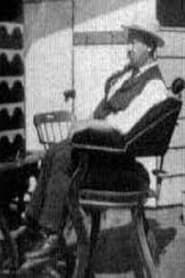
Fred Ott, an assistant at Thomas Edison's laboratory, takes a pinch of snuff and lets out an exaggerated sneeze before the camera. The five-second actuality became the second motion picture copyrighted in the United States and a staple of early Kinetoscope programs.
Cast & crew
More films like this

More Documentary films
View all →
More from William Heise
View all →
More about this film
About the production
Release dateJanuary 7, 1894
ProductionEdison Manufacturing Company
Filmed inBlack Maria Studio, West Orange, New Jersey
Filmed at Edison's Black Maria studio, the world's first motion picture production facility. The studio was designed with a retractable roof to allow natural sunlight in, as electric lighting was insufficient for early film exposure. The film was shot using 35mm film at approximately 16 frames per second. Fred Ott was not an actor but Edison's laboratory assistant, chosen for his expressive face and willingness to perform. The entire production took less than a day to complete, from setup to final capture.
Themes
Human action documentationTechnological innovationScientific observationPerformance and exhibition
Themes & topics
Historical background
Edison's team filmed the gag at the Black Maria studio in January 1894 while testing the Kinetograph for peep-show exhibition.
Why this film matters
Fred Ott's Sneeze survives as proof of how quickly Edison turned laboratory experiments into marketable novelty footage.
Making of
The film was created during the early days of motion picture development at Thomas Edison's laboratory in West Orange, New Jersey. William Heise, Edison's principal cameraman, operated the camera using Edison's Kinetograph camera. The Black Maria studio, where it was filmed, was a cramped, tar-paper covered building that could rotate on tracks to follow the sun's movement throughout the day. Fred Ott, who worked as Edison's assistant, was chosen for the role because of his distinctive appearance and willingness to perform for the camera. The production was part of Edison's strategy to create content for his Kinetoscope viewing machines, which were being installed in penny arcades across major cities. The entire process was experimental, with Edison and his team still determining what kinds of short films would appeal to early audiences.
What critics said
Trade writers marveled at the lifelike motion; archivists now treat the clip as essential pre-feature cinema.
Did you know?
- This was the second motion picture to be copyrighted in United States history, registered on January 9, 1894
- The film is also known as 'Fred Ott's Sneeze' in various historical references
- It was one of the first films exhibited commercially on Edison's Kinetoscope peep-show devices
- The entire film consists of only 71 frames of footage
- Fred Ott received no payment for his performance beyond his regular salary as Edison's assistant
- The film was shot at the Black Maria, Edison's revolutionary studio that could rotate to follow the sun
- represents one of the earliest examples of capturing a specific, brief human action for entertainment
- The copyright registration included both the motion picture and a series of still photographs from the film
- It was part of Edison's initial batch of films designed to demonstrate the commercial potential of motion pictures
- The sneeze was reportedly genuine, induced by actual snuff rather than being faked for the camera
Visual style
The cinematography represents the most basic techniques of early motion picture photography. The camera was stationary, positioned at eye level to capture Fred Ott from the waist up. The lighting was entirely natural, coming through the open roof of the Black Maria studio. The composition is simple and centered, with Ott positioned squarely in the frame. The camera operated at approximately 16 frames per second, which was standard for early Edison films. The black and white imagery shows the limitations of early film stock, with high contrast and limited detail. Despite these technical constraints, the framing successfully captures the entire sneeze action clearly and effectively.
Innovations
represents several important technical achievements in early cinema. It was produced using Edison's Kinetograph camera, one of the first practical motion picture cameras. The film was shot on 35mm celluloid film, which became the industry standard for decades. The successful capture of a rapid, spontaneous action like a sneeze demonstrated the camera's ability to record movement with sufficient clarity. The film's existence as a copyrighted work established legal precedents for motion picture protection. The production process at the Black Maria studio, with its rotating design to maximize natural light, was an innovative solution to the technical challenges of early filmmaking. The film also demonstrated the viability of creating brief, self-contained entertainment pieces for the new medium.
Memorable scenes
- The entire five-second sequence showing Fred Ott taking snuff and sneezing dramatically, captured in a single continuous take that represents one of cinema's first documented human actions.
What audiences thought
Early audiences who viewed the film through Kinetoscope machines reportedly found it fascinating and novel. The ability to see a recorded human action, no matter how simple, was considered miraculous in 1894. The sneeze, with its sudden and dramatic nature, was particularly effective at demonstrating the power of the new medium. Audiences paid approximately 25 cents to view a series of short films, including this one, through individual viewing machines. The film's brief length and clear action made it ideal for repeat viewing, which was common as patrons often watched the same films multiple times to fully appreciate the technology.
Film connections
This film influenced
- Fred Ott Holding a Bird
- The Kiss (1896)
- Sandow (1894)
- Annabelle Serpentine Dance (1894)
Film restoration
The film is preserved and considered to be in excellent condition for its age. It is held by the Library of Congress, the Museum of Modern Art, and other major film archives. The original 35mm negative has been carefully preserved, and high-quality digital copies exist for scholarly and public access. The film is part of the National Film Registry, having been selected for preservation in the United States National Film Registry by the Library of Congress for being 'culturally, historically, or aesthetically significant'.
Where to watch
- Library of Congress website
- Museum of Modern Art Film Collection
- YouTube (official uploads from archives)
- Kino Lorber DVD collections of early Edison films
- British Film Institute online archive
- UCLA Film & Television Archive