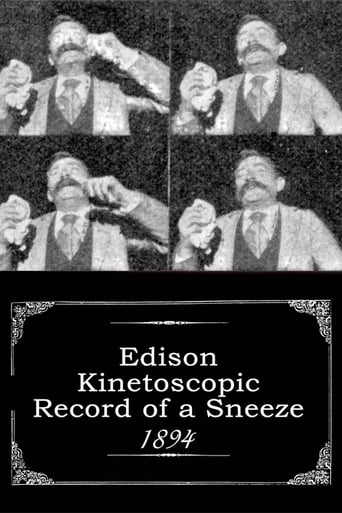

Fred Ott
Actor
Born: 1860 in New Jersey, United States Died: 1936 Active: 1894-1900 Birth Name: Frederick P. Ott
Films
2 films
About Fred Ott
American employee of Thomas Edison's laboratory who became one of the first people ever captured on motion picture film. Working as a mechanic and assistant at Edison's Black Maria studio in West Orange, New Jersey, Ott was selected by William K.L. Dickson, Edison's chief photographer, to appear in experimental films. His most famous appearance was in 'Edison Kinetoscopic Record of a Sneeze' (1894), which became the first copyrighted motion picture in United States history. Ott continued to work at Edison's laboratory throughout the 1890s, participating in various early film experiments that helped establish the foundations of cinema. His role in these films was not that of a professional actor but rather as a willing subject demonstrating the capabilities of Edison's new motion picture technology. Ott's contributions to early cinema were primarily as a technical assistant and test subject rather than as a performer, making him an important but often overlooked figure in film history.
The Craft
On Screen
Not a professional actor; his performances were natural and unstaged, primarily serving as demonstrations of motion picture technology rather than dramatic performances
Milestones
- Starred in the first copyrighted motion picture (1894)
- Worked as mechanic/assistant at Edison's Black Maria studio
- Participated in motion picture experiments
- Appeared in multiple Edison Company test films
- Contributed to the development of early cinema technology
Best Known For
Iconic Roles
Must-See Films
Accolades
Special Recognition
- Recognized as one of the first film subjects in cinema history
- Featured in permanent collections at major film archives
Working Relationships
Worked Often With
Studios
Why They Matter
Impact on Culture
Fred Ott holds a unique place in cinema history as one of the first human subjects captured on motion picture film. His appearance in 'Edison Kinetoscopic Record of a Sneeze' marked a pivotal moment in the development of motion pictures, representing the transition from scientific curiosity to artistic medium. The film became the first motion picture to receive copyright protection in the United States, establishing important legal precedents for the film industry. Ott's unwitting contribution to cinema demonstrated the potential of moving images to capture and preserve human actions, paving the way for the narrative films that would follow. His work with Edison helped establish the technical and artistic foundations of American cinema, making him an essential figure in the birth of the film industry.
Lasting Legacy
Fred Ott's legacy endures through his appearance in what is considered. While he never achieved fame as an actor or director, his contribution to early cinema is celebrated by film historians and preservationists. The films featuring Ott are preserved in the archives of major institutions including the Library of Congress and the Museum of Modern Art. His name appears in countless film history books as an example of the earliest motion picture subjects, and his sneeze remains. Ott represents the anonymous workers and assistants who made early cinema possible, serving as a reminder that film history was built not just by famous directors and stars, but by countless unsung contributors.
Who They Inspired
Fred Ott's influence on cinema was indirect but significant. As one of the first subjects captured on film, he helped demonstrate the commercial and artistic potential of motion pictures. The success of films featuring Ott encouraged further investment in motion picture technology and content development. His natural, unstaged performances in Edison's test films influenced early filmmakers' understanding of how to capture human movement and expression on camera. The technical lessons learned from filming Ott helped refine camera techniques, lighting methods, and film processing procedures that would become standard in the industry. While he never directly mentored other performers, his work provided a template for the kind of naturalistic performance style that would later influence film acting techniques.
Off Screen
Fred Ott lived a relatively private life outside of his work at Edison's laboratory. He was employed as a mechanic and general assistant at the Edison Manufacturing Company, where his willingness to participate in experimental films made him an ideal subject for early motion picture tests. Little is documented about his personal affairs, family life, or activities outside of his work with Edison. His legacy is primarily tied to his accidental role in cinema history rather than any personal notoriety or public recognition during his lifetime.
Education
Limited formal education typical of the period; primarily trained as a mechanic through apprenticeship and practical experience
Family
- Information not available in historical records
Did You Know?
- His sneeze was the first motion picture to receive copyright protection in U.S. History
- The film 'Edison Kinetoscopic Record of a Sneeze' was only 5 seconds long
- Ott worked as a mechanic at Edison's laboratory, not as a professional actor
- The famous sneeze was induced by a pinch of snuff
- His films were shot at Edison's Black Maria studio, the first motion picture production studio
- Ott appeared in at least three Edison films between 1894-1895
- The sneeze film was originally intended as a test for the new motion picture camera
- His full name was Frederick P. Ott, though he was always credited simply as 'Fred Ott'
- The films featuring Ott were among the first to be shown commercially on Edison's Kinetoscope
- Despite his historical importance, very little personal information about Ott survives in historical records
In Their Own Words
No documented quotes - he was not interviewed or recorded speaking in any known sources
Frequently Asked Questions
Who was Fred Ott?
American mechanic and employee of Thomas Edison's laboratory who became one of the first people ever captured on motion picture film. He is best known for appearing in 'Edison Kinetoscopic Record of a Sneeze' (1894), which became the first copyrighted motion picture in U.S. History. Ott was not a professional actor but rather a willing subject for Edison's early motion picture experiments.
What films is Fred Ott best known for?
Titles linked here include Edison Kinetoscopic Record of a Sneeze (1894), Fred Ott Holding a Bird (1894).
When was Fred Ott born and when did he die?
Born 1860; died 1936.
What was Fred Ott's role at Edison's laboratory?
Fred Ott worked as a mechanic and general assistant at Thomas Edison's laboratory and manufacturing company. His primary duties involved maintaining equipment and assisting with various experiments. He became involved in motion picture work due to his willingness to serve as a test subject for Edison's new kinetoscope camera technology.
Why is Fred Ott's sneeze historically significant?
Fred Ott's sneeze is historically significant because the film 'Edison Kinetoscopic Record of a Sneeze' became the first motion picture to receive copyright protection in the United States on January 7, 1894. This established important legal precedents for film copyright and demonstrated the commercial potential of motion pictures. The 5-second film is considered.
Did Fred Ott have a career as an actor?
No, Fred Ott did not have a career as an actor. His appearances in films were purely as a test subject and employee of Edison's laboratory. He was a mechanic by trade who happened to be available and willing to participate in early motion picture experiments. His performances were unstaged and natural, serving primarily to demonstrate the capabilities of Edison's new technology rather than as dramatic performances.