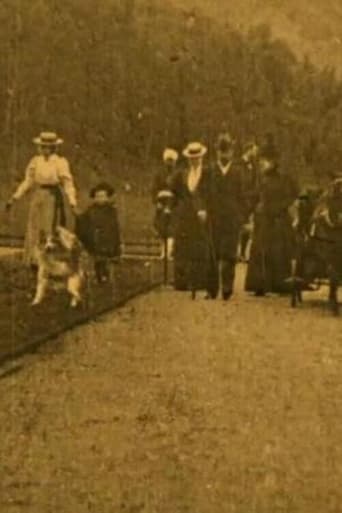
Prince Arthur, Duke of Connaught and Strathearn
Actor
- Born
- May 1, 1850, Windsor, Berkshire, England
- Died
- January 16, 1942
- Active
- 1896-1896
- Birth name
- Arthur William Patrick Albert
Films 1
About Prince Arthur, Duke of Connaught and Strathearn
Prince Arthur, Duke of Connaught and Strathearn, was a member of the British royal family who is associated with the earliest years of motion-picture history chiefly through his appearance in Scenes at Balmoral (1896). Born into the House of Windsor as the third son of Queen Victoria and Prince Albert, he was not a professional actor in the theatrical or cinematic sense, but rather an aristocratic figure who appeared in a filmed record of royal life during cinema's infancy. His screen presence belongs to the era when the moving image was still primarily a novelty and when important public figures were sometimes captured in brief actuality films rather than performed narratives. As a result, his filmography is extremely limited and his place in film history is historical rather than artistic. He spent his life in military, ceremonial, and public service roles, becoming one of the most prominent royal figures of the late Victorian and Edwardian periods. His connection to cinema is valuable because it documents the early use of film as a medium for preserving elite public occasions and royal imagery. He is remembered in film reference works largely because of this brief appearance, which makes him a notable early-screen personality despite not being a career performer.
More about Prince Arthur, Duke of Connaught and Strathearn
On screen
Not applicable in the conventional sense, as he was not a professional actor. His screen appearance was documentary or actuality-based, with a formal, ceremonial presence shaped by his royal status rather than by performance technique.
In film history
Prince Arthur's cultural significance in cinema is indirect but historically important. His appearance in Scenes at Balmoral (1896) places him among the earliest royal personages to be captured on film, helping establish cinema as a medium capable of preserving elite public life and national symbolism. For audiences and historians, this kind of footage demonstrates how film quickly moved beyond novelty to become a visual record of authority, ceremony, and private-pubic royal image-making. Although he was not an entertainer, his presence on screen reflects the broader cultural role of early cinema in representing monarchy, empire, and social hierarchy.
Later reputation
His lasting legacy in film history is that of an early filmed subject rather than a performer with a body of work. Because his screen appearance survives in the historical record as part of one of the earliest royal film subjects, he is frequently cited in discussions of actuality cinema and early motion-picture documentation. Outside cinema, his legacy is much larger as a royal duke, military officer, and Governor General of Canada, but in film history he remains a rare example of a major public figure whose cinematic identity is tied to a single early actuality film. That makes him valuable to historians studying the intersection of monarchy, media, and the birth of cinema.
Influence
He did not influence acting technique or film performance in the way that professional screen actors did. However, his filmed presence helped normalize the idea that important public figures could be recorded for posterity, a concept that became fundamental to newsreels, ceremonial film, and documentary practice. By appearing in an early film associated with royal life, he became part of the visual template later used to present dignitaries, state occasions, and official events on screen.
Off screen
Prince Arthur was the third son of Queen Victoria and Prince Albert, placing him at the center of the British royal family during the nineteenth and early twentieth centuries. He married Princess Louise Margaret of Prussia in 1879, and their marriage connected the British and Prussian royal houses. Their family life was shaped by military postings, vice-regal service, and the obligations of dynastic duty rather than by any entertainment career. He lived through a period of enormous change, from the Victorian era into the age of the moving picture, and his public life was documented in many state and ceremonial contexts.
Education
He received the traditional education of a British prince, including instruction appropriate to a royal and military career. Specific institutional details are less central to his public identity than his military training and royal upbringing.
Credits
- Appeared in the early film Scenes at Balmoral (1896), linking the British royal family to the earliest period of cinema
- Served as a senior member of the British Army and later held major vice-regal and ceremonial roles within the British Empire
- Became Duke of Connaught and Strathearn, a title that made him one of the leading royal figures of his generation
- Held the office of Governor General of Canada from 1911 to 1916, representing the Crown during a significant period of Canadian history
- Participated in numerous public duties that made him a visible figure in imperial and national life
Roles
- Himself in Scenes at Balmoral (1896)
Films
- Scenes at Balmoral (1896)
Honors
- Knight of the Garter
- Knight of the Thistle
- Knight Grand Cross of the Order of the Bath
- Knight Grand Cross of the Royal Victorian Order
- Knight Grand Commander of the Order of the Star of India
- Knight Grand Cross of the Order of St Michael and St George
- King Edward VII's presentation of high royal and military distinctions
- Recognition as a senior royal figure and former Governor General of Canada
Family
- Princess Louise Margaret of Prussia (1879-1917)
Notes
- He was not a professional actor; his screen credit reflects a filmed royal appearance rather than a performance career.
- Scenes at Balmoral (1896) is one of the kinds of early actuality films that often recorded notable people in real settings.
- He was the son of Queen Victoria, making him one of the most prominent royal figures ever to appear in the historical record of early cinema.
- He served as Governor General of Canada, giving him a major constitutional role far beyond his brief film presence.
- His title, Duke of Connaught and Strathearn, became associated with both British and Canadian public life through his service and reputation.
- His connection to film history is notable because it bridges monarchy and the first years of motion pictures.
- He lived long enough to see cinema develop from novelty to an established mass medium.
Questions
Who was Prince Arthur, Duke of Connaught and Strathearn?
He was a British royal prince, the third son of Queen Victoria and Prince Albert, and later a senior military and imperial public figure. In film history, he is notable for appearing in the early actuality film Scenes at Balmoral (1896), making him an early screen personality rather than a professional actor.
What films is Prince Arthur, Duke of Connaught and Strathearn best known for?
He is best known for Scenes at Balmoral (1896). His film presence is extremely limited, and this early film is the key work associated with his name in cinema reference sources.
When was Prince Arthur, Duke of Connaught and Strathearn born and when did he die?
He was born on May 1, 1850, in Windsor, Berkshire, England. He died on January 16, 1942, after a long life spent in royal, military, and ceremonial service.
What awards did Prince Arthur, Duke of Connaught and Strathearn win?
He was not a film performer who received entertainment awards. However, he held numerous prestigious honors and orders, including major British chivalric distinctions such as the Order of the Garter and the Royal Victorian Order.
What was Prince Arthur, Duke of Connaught and Strathearn's acting style?
He did not have a conventional acting style because he was not a professional actor. His screen appearance was an actuality-style royal presence, characterized by formal posture and ceremonial composure rather than dramatic performance.
What is Prince Arthur, Duke of Connaught and Strathearn's legacy in film history?
His legacy in film history is as one of the early royal figures captured on motion picture, showing how cinema quickly became a record of public and ceremonial life. He is important to historians of early film because his appearance illustrates the medium's early relationship with monarchy, authority, and documentary recording.