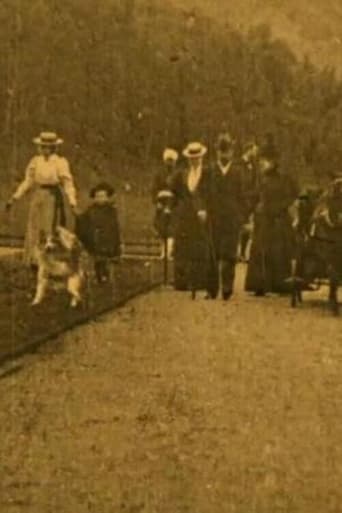
Princess Louise Margaret of Prussia, Duchess of Connaught and Strathearn
Actor
- Born
- March 25, 1860, Potsdam, Kingdom of Prussia, German Confederation
- Died
- March 14, 1925
- Active
- 1896-1896
- Birth name
- Princess Louise Margaret of Prussia
Films 1
About Princess Louise Margaret of Prussia, Duchess of Connaught and Strathearn
Princess Louise Margaret of Prussia, later Duchess of Connaught and Strathearn, was not a professional screen actor in the conventional sense, but she is historically significant as one of the earliest royal figures to appear in motion pictures. Born into the House of Hohenzollern, she became the wife of Prince Arthur, Duke of Connaught and Strathearn, a son of Queen Victoria, and thereby entered the British royal family. Her sole known film appearance is in the short actuality film Scenes at Balmoral (1896), which captured members of the royal household in informal movement and domestic settings during the early years of cinema. Because of the film's documentary nature and the era in which it was made, her 'performance' should be understood as participation in an early filmed royal record rather than acting in a scripted narrative. She remained far better known throughout her life for her dynastic and ceremonial role, charitable associations, and position within the British aristocracy than for any cinematic work. Her presence in one of the earliest surviving royal film subjects gives her a niche place in film history, especially in the study of cinema's relationship to monarchy, publicity, and the documentation of elite life. She died in 1925, long before film history began systematically cataloging such ephemeral appearances, which is why her screen legacy is limited but distinctive.
More about Princess Louise Margaret of Prussia, Duchess of Connaught and Strathearn
On screen
No formal acting style is known, as her only identified film appearance was in an actuality film rather than a scripted production. Her screen presence would have been governed by the conventions of early cinema, which favored simple, natural movement and minimal awareness of the camera. The appearance is historically notable for its authenticity and documentary value rather than for performance technique.
In film history
Princess Louise Margaret's cultural impact lies less in conventional film stardom and more in the early intersection between cinema and royalty. Her appearance in Scenes at Balmoral (1896) places her among the first generation of aristocratic subjects whose movements were preserved by motion pictures, helping establish film as a medium capable of documenting not only performers and public events but also elite private life. For historians of early cinema, such footage is important because it demonstrates how quickly the new medium was used to record symbolic institutions like the monarchy. Her image also contributes to the broader visual memory of the British royal family at a moment when public fascination with the monarchy was being reshaped by photography and film. In that sense, her legacy is tied to the early legitimization of film as a historical record and a tool of royal representation.
Later reputation
Her lasting legacy in film history is highly specialized but significant: she is remembered as one of the earliest royal women to be filmed in a surviving motion picture. Unlike professional actors whose fame rests on roles and performances, her importance comes from her status and the rarity of early footage featuring a senior royal figure. This gives her a durable place in archives and scholarly discussions of actuality films, early royal cinema, and the visual culture of monarchy. Her appearance helps illustrate how cinema moved rapidly from novelty entertainment to a means of recording social power and ceremonial identity. In film history databases, she occupies an unusual category where aristocratic presence itself becomes cinematic evidence.
Influence
She did not influence later actors or directors in the usual artistic sense, but her filmed presence influenced the historical record of how royalty was represented on screen. Early actuality films involving royal subjects helped shape expectations for newsreels, documentary records, and ceremonial filming. Her appearance contributed indirectly to the tradition of filming public figures in ways that emphasized dignity, authenticity, and institutional continuity. For later filmmakers and archivists, such footage became an important source for understanding both early cinema and the visual politics of monarchy.
Off screen
Princess Louise Margaret was born into Prussian royalty as the daughter of Prince Frederick Charles of Prussia and Princess Maria Anna of Anhalt-Dessau. She married Prince Arthur, Duke of Connaught and Strathearn, in 1879, becoming a senior member of the British royal family and taking part in the ceremonial and philanthropic life associated with the Victorian court. Through her marriage she became closely linked to Queen Victoria's descendants and spent much of her adult life in Britain. Her life was shaped by dynastic duty, court protocol, and public service rather than by professional entertainment work. She had a family role within one of Europe's most prominent royal houses and is remembered in historical accounts as an important consort, mother, and royal presence.
Education
Her education followed the pattern of a 19th-century German princess and was conducted privately under tutors and court supervision rather than at a public institution. Detailed academic records are not commonly emphasized in standard film or entertainment references.
Credits
- Appeared in Scenes at Balmoral (1896), one of the earliest film records associated with the British royal family
- Became Duchess of Connaught and Strathearn through marriage to Prince Arthur, Duke of Connaught and Strathearn
- Served as a prominent member of the British royal family during the late Victorian and Edwardian eras
- Was part of the cultural transition from courtly portraiture and still photography to motion-picture documentation
- Represents an early example of royalty being captured on film for public and historical record
Roles
- Self in Scenes at Balmoral (1896)
Films
- Scenes at Balmoral (1896)
Honors
- Duchess of Connaught and Strathearn
- Member of the British royal family by marriage
- Historical figure featured in one of the earliest royal actuality films
Family
- Prince Arthur, Duke of Connaught and Strathearn (1879-1900)
Notes
- She was born a princess of Prussia and later became a British duchess by marriage.
- Her only known film appearance is in an actuality film rather than a scripted narrative.
- Scenes at Balmoral (1896) is historically important as one of the early films associated with the British royal family.
- She was the daughter of Prince Frederick Charles of Prussia, a notable Prussian military and royal figure.
- She was married to Prince Arthur, Duke of Connaught and Strathearn, one of Queen Victoria's sons.
- Her children became part of the extended European royal network of the late 19th and early 20th centuries.
- Because her film appearance was so early, it predates the era when most film performers were professionally identified as actors.
- Her screen credit reflects archival historical identification rather than a conventional acting career.
Questions
Who was Princess Louise Margaret of Prussia, Duchess of Connaught and Strathearn?
She was a German-born princess who became a member of the British royal family through her marriage to Prince Arthur, Duke of Connaught and Strathearn. In film history, she is notable for appearing in the early actuality film Scenes at Balmoral (1896), making her one of the earliest royal figures captured on motion picture.
What films is Princess Louise Margaret of Prussia, Duchess of Connaught and Strathearn best known for?
She is best known for Scenes at Balmoral (1896), a short actuality film associated with the British royal family. This is her only known screen appearance and is historically important more as a royal film record than as a performance.
When was Princess Louise Margaret of Prussia, Duchess of Connaught and Strathearn born and when did she die?
She was born on March 25, 1860, in Potsdam, in the Kingdom of Prussia. She died on March 14, 1925, after a life spent primarily in royal and ceremonial service.
What awards did Princess Louise Margaret of Prussia, Duchess of Connaught and Strathearn win?
No film awards or entertainment-industry honors are known for her, since she was not a professional actress. Her recognition comes from her royal status and her historical significance as an early filmed subject.
What was Princess Louise Margaret of Prussia, Duchess of Connaught and Strathearn's acting style?
She did not have a documented acting style, because her only known film appearance was in an actuality film rather than a scripted production. Her significance lies in being filmed as herself during the earliest years of cinema.
What is Princess Louise Margaret of Prussia, Duchess of Connaught and Strathearn's legacy in film history?
Her legacy is that of a historically important filmed royal subject rather than a conventional screen performer. She helped represent the early use of film to preserve and publicize aristocratic and monarchical life.