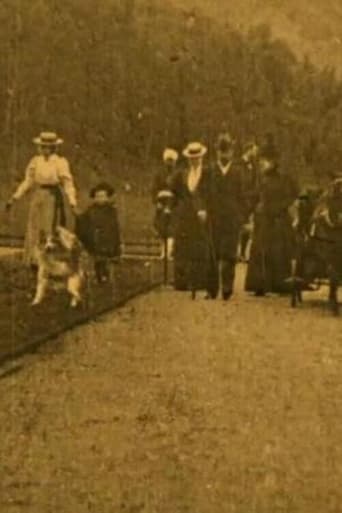

Queen Victoria Eugenia
Actor
- Born
- October 24, 1887, Balmoral Castle, Aberdeenshire, Scotland, United Kingdom
- Died
- April 15, 1969
- Active
- 1896-1896
- Birth name
- Victoria Eugenie Julia Ena of Battenberg
Films 1
About Queen Victoria Eugenia
Queen Victoria Eugenia of Spain, more commonly known in English-language sources as Victoria Eugenie of Battenberg, was not a professional actor but a reigning monarch who appeared in an early actuality film. Born into the British royal family and later becoming Queen consort of Spain through her marriage to King Alfonso XIII, she occupied a highly visible public role during the transition from the 19th to the 20th century. Her credited screen appearance in Scenes at Balmoral (1896) belongs to the very earliest years of cinema, when the camera often recorded members of royalty, political leaders, and public ceremonies as documentary subjects rather than performers in the modern sense. Because of this, she is remembered in film history not for a body of acting work, but as one of the notable aristocratic figures captured on film during cinema's infancy. Her life was otherwise defined by court duties, diplomacy, family life, and her position within the royal households of Britain and Spain. She became a significant historical figure in her own right through her marriage, her role as queen, and her visibility in European public life. Any filmography attached to her should be understood as a single early appearance rather than a conventional screen career.
More about Queen Victoria Eugenia
On screen
Not applicable in the usual theatrical sense; her screen appearance was as a filmed royal subject in an early actuality setting rather than as a trained or credited performer. In the context of 1890s cinema, her presence would have been formal, observational, and ceremonial, reflecting the documentary nature of the era. There is no evidence of a developed acting technique or recurring screen persona.
In film history
Victoria Eugenie's importance to cinema lies in the early relationship between film and public life. Her appearance in Scenes at Balmoral reflects how the camera quickly became a tool for recording royal presence, ceremonial culture, and the visibility of power at the end of the 19th century. As a queen consort filmed in an actuality context, she represents the overlap between monarchy, mass media, and the emerging moving-image industry. For historians of early film, such appearances are valuable not because they are performances in the modern sense, but because they show how cinema from its beginning was used to document figures of prestige and national interest. Her image contributes to the historical record of how royalty was presented to audiences at a time when moving pictures were still a novelty. She is therefore a minor but noteworthy figure in the story of early non-fiction film and screen history.
Later reputation
Her lasting legacy in film history is tied almost entirely to her status as one of the early royal figures preserved on film rather than to a performance career. Scenes at Balmoral places her among the first generation of people whose likenesses were recorded by motion-picture technology, giving her a small but real place in the origins of cinema. Beyond film, her broader historical legacy is as Queen consort of Spain and as a dynastic link between the British and Spanish royal houses. In cinema scholarship, she is a reminder that early film history includes not only actors and directors, but also public figures whose filmed appearances helped define the medium's documentary possibilities. Her presence in the archival record gives historians a window into the social function of early moving images. As such, she remains more significant as a historical subject than as an actor in the conventional sense.
Influence
Victoria Eugenia did not influence acting style or filmmaking in the way professional screen artists did, but her filmed appearance helped demonstrate the cultural importance of recording royalty and ceremony. Early actuality films depended on the public fascination with recognizable figures, and royal subjects such as hers validated film as a medium capable of preserving contemporary history. Her image contributed indirectly to the development of newsreel, documentary, and ceremonial filming practices. In that sense, she belongs to the lineage of public figures whose visibility helped shape the audience's expectation that cinema could capture real people and real events. Her influence is therefore historical and symbolic rather than artistic.
Off screen
Victoria Eugenie was born into the House of Battenberg, a morganatic branch connected to the British royal family through her mother, Princess Beatrice, the youngest daughter of Queen Victoria. She married King Alfonso XIII of Spain in 1906, becoming Queen consort of Spain and assuming an important ceremonial and dynastic role in Spanish royal life. Her marriage linked the British and Spanish royal houses, but her life at court was also marked by the political tensions and upheavals that affected Spain in the early 20th century. She was the mother of several children, and her family life remained central to her identity as a royal figure. After the monarchy was abolished and political circumstances changed, she lived much of her later life outside Spain and died in Lausanne, Switzerland.
Education
Educated privately in accordance with royal and aristocratic custom; detailed formal schooling records are not commonly emphasized in standard film references.
Credits
- Appeared in the early actuality film Scenes at Balmoral (1896), one of the very early royal screen appearances in cinema history
- Became Queen consort of Spain through her marriage to King Alfonso XIII in 1906
- Was a prominent royal figure in Spain during the first decades of the 20th century
- Served as a high-profile public and ceremonial presence in both British and Spanish royal history
- Is historically notable as a member of European royalty captured during the cinema's earliest documentary phase
Roles
- Queen Victoria Eugenia in Scenes at Balmoral
Films
- Scenes at Balmoral (1896)
Honors
- Queen consort of Spain
- Member of the British royal family by birth
- Historical figure featured in one of cinema's earliest royal actuality films
Collaborators
- No known film collaborators; her early screen appearance was part of an actuality recording rather than a sustained film career
Family
- King Alfonso XIII of Spain (1906-1941)
Notes
- She was born at Balmoral Castle, the same location associated with the title of her only known film credit, Scenes at Balmoral (1896).
- She was a granddaughter of Queen Victoria through her mother, Princess Beatrice.
- Her marriage to Alfonso XIII made her Queen consort of Spain in 1906.
- Her early screen appearance belongs to the actuality tradition, when films often recorded notable people rather than staged stories.
- She is one of the rare royal figures to be listed in film databases because of a single early motion-picture appearance.
- She was commonly called Ena in family and court circles.
- Her life bridged the Victorian era, the rise of cinema, and the turbulent political transformations of early 20th-century Europe.
Questions
Who was Queen Victoria Eugenia?
Queen Victoria Eugenia, better known as Victoria Eugenie of Battenberg, was a British-born royal who became Queen consort of Spain through her marriage to King Alfonso XIII. In film history, she is notable for appearing in the early actuality film Scenes at Balmoral (1896), which makes her a very early screen figure rather than a traditional actor.
What films is Queen Victoria Eugenia best known for?
She is best known for Scenes at Balmoral (1896), an early actuality film connected to the documentary recording of royalty. There is no evidence of a broader film career; her screen presence appears to have been limited to this one early appearance.
When was Queen Victoria Eugenia born and when did she die?
She was born on October 24, 1887, at Balmoral Castle in Aberdeenshire, Scotland. She died on April 15, 1969, in Lausanne, Switzerland.
What awards did Queen Victoria Eugenia win?
She is not known to have won film awards, since she was not a professional actor. Her recognition is historical and royal rather than cinematic, including her status as Queen consort of Spain and her place in early film history.
What was Queen Victoria Eugenia's acting style?
She did not have an acting style in the professional sense. Her screen appearance was part of an early actuality film, so she was filmed as a real-life royal figure rather than performing a scripted role.
What is Queen Victoria Eugenia's legacy in film history?
Her legacy in film history is that of an early royal subject captured by the moving image during cinema's formative years. She demonstrates how early film served not only entertainment purposes but also documentary and ceremonial ones, preserving public figures for posterity.