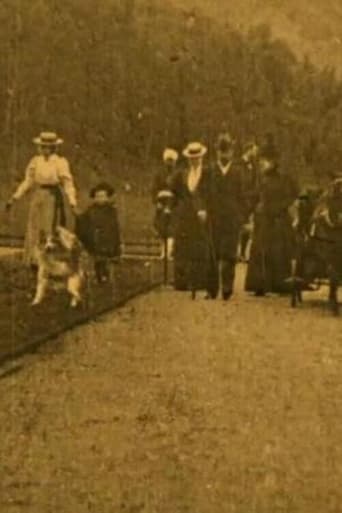
William Downey
Director
- Active
- 1896-1896
Films directed 1
About William Downey
William Downey was an early cinema director active in the first years of motion-picture production, best known for the short film Scenes at Balmoral (1896). He belongs to the earliest phase of film history, when cinema was still closely tied to actuality filmmaking, single-shot views, and photographic record-keeping rather than fully developed narrative storytelling. Because so little documentation survives for many filmmakers of this era, his personal background, training, and later life are not well recorded in major reference sources. His surviving credit places him among the pioneers who helped define what film could capture, especially outdoor and location-based scenes that emphasized movement, place, and the novelty of the moving image itself. Downey's work is representative of the very beginnings of British and European film production, when directors were often also camera operators, producers, or exhibitors, and individual authorship was rarely as clearly documented as it would be in later decades. Though his filmography appears very small in surviving records, his contribution is historically significant as part of the foundation of silent cinema. He is remembered primarily through archival filmography and catalog references rather than through a large body of surviving films or a widely documented personal biography.
More about William Downey
Behind the camera
William Downey's directing style can only be inferred from the historical context of his surviving credit. Films of 1896 were typically brief, single-shot, and observational, often emphasizing real locations, staged movement, or recorded events rather than complex narrative construction. Scenes at Balmoral suggests a location-oriented approach, likely focusing on scenery, royal or public environment, and the spectacle of filmed reality. Directors of this period generally worked with a practical, economical method centered on framing, timing, and capturing clear visual information for early audiences. If Downey followed the norms of his time, his style would have been concise, documentary-like, and oriented toward novelty and visual immediacy rather than character-driven storytelling.
In film history
William Downey's cultural impact lies in his place among the earliest filmmakers whose work helped move cinema from a novelty attraction toward a recognized visual medium. Even when individual lives are obscure, pioneers like Downey contributed to the development of screen language by experimenting with short-form actuality, location shooting, and the practical demands of early film production. Scenes at Balmoral fits the pattern of late-1890s cinema that fascinated audiences by presenting real places and recognizable settings on screen, reinforcing film's value as both entertainment and visual record. His work also reflects the historical importance of early directors whose credits survive unevenly, reminding modern viewers that cinema history was built not only by famous auteurs but also by many lesser-documented craftsmen and innovators. In this sense, Downey is culturally significant as part of the foundational generation of filmmakers who established the possibilities later expanded by silent-era and sound-era directors.
Later reputation
Downey's legacy is primarily archival and historical rather than popular or commercial. He stands as a representative figure of the earliest generation of film directors, a period in which many contributors were not yet celebrated individually but were essential to the formation of motion pictures as an art and industry. The survival of his name in filmographies ensures that he remains part of the documented origins of cinema, especially for scholars studying the transition from photographed actuality to narrative filmmaking. His legacy is inseparable from the broader story of 1890s cinema: short, experimental, and rooted in the excitement of seeing moving images on screen for the first time. For researchers and database users, his credit is valuable evidence of the breadth of early film production and the many names that helped build the medium before Hollywood's classical era.
Influence
Because so little biographical information survives, William Downey's direct influence on later filmmakers cannot be traced in the same way as more famous directors. His importance is mainly as part of the early pool of pioneers whose work contributed to the conventions later filmmakers inherited: location shooting, concise visual storytelling, and the presentation of real-world scenes. Directors working in the silent era benefited from the technical and expressive groundwork laid by these earliest film-makers, even when individual names were not widely remembered. Downey's surviving credit places him within that foundational lineage, and his work belongs to the historical preconditions that made later cinematic innovation possible.
Off screen
No reliable public information has been widely preserved about William Downey's personal life, including marriages, children, or family background. This is common for many film pioneers of the 1890s, whose work predated the star system and the later studio-era publicity apparatus that documented personal histories in detail. Available reference materials emphasize his film credit rather than biographical facts, so any fuller account of his private life would require archival research beyond standard film databases. At present, no well-established details of his education, residence, or later career are consistently documented in mainstream sources.
Credits
- Directed Scenes at Balmoral (1896), a very early film associated with the formative period of motion-picture history
- Worked during the infancy of cinema, when filmmakers were establishing the basic grammar of the medium
- Represents one of the many early screen pioneers whose work is known primarily through filmographic records and archival references
- Contributed to location-based, actuality-style filmmaking characteristic of the mid-1890s
- His surviving credit places him among the earliest identifiable directors in the history of British/European film production
Films
- Scenes at Balmoral (1896)
Notes
- William Downey is associated with one of the very earliest surviving periods of cinema, 1896, when the medium was still new to audiences.
- His best-known surviving credit, Scenes at Balmoral, suggests an interest in real locations rather than studio-bound storytelling.
- He is a classic example of an early film pioneer whose name survives more clearly than detailed biographical facts.
- Many filmmakers of his era worked without the extensive press coverage that later defined the silent and studio eras, which is why personal details about him are scarce.
- His filmography appears extremely short in surviving records, but that is common for many 1890s pioneers because documentation was incomplete and many films are lost.
- The title Scenes at Balmoral links his work to a place associated with the British royal family, indicating the kind of public-interest or scenic subject matter often favored in early cinema.
- Like many directors of the first years of film, he likely worked in a highly collaborative and technically practical environment where roles were less specialized than in later decades.
- His name appears in historical film databases as part of the foundational record of early motion pictures, making him relevant to scholars of pre-1900 cinema.
Questions
Who was William Downey?
William Downey was an early film director active in 1896 and best known for directing Scenes at Balmoral. He belongs to the pioneering period of cinema, when filmmakers were creating some of the first motion pictures ever shown to audiences. Because surviving documentation is limited, most of what is known about him comes from filmographic records rather than a detailed personal biography.
What films is William Downey best known for?
He is primarily known for Scenes at Balmoral (1896). This surviving credit places him among the earliest directors in film history. No additional widely documented films are consistently associated with him in standard reference material.
When was William Downey born and when did he die?
His birth and death dates are not reliably documented in the available mainstream reference sources. Many early cinema figures, especially those active in the 1890s, have incomplete biographical records. As a result, his exact dates and places of birth and death remain unknown in commonly cited databases.
What awards did William Downey win?
No awards or nominations are known for William Downey. Formal award systems did not yet exist in the earliest years of cinema, and his era predates the major industry honors that later became standard. His significance is historical rather than award-based.
What was William Downey's directing style?
His directing style can be inferred only from the conventions of 1896 filmmaking. Directors of that period typically made short, single-shot films focused on location, movement, and visual novelty rather than complex narrative. Scenes at Balmoral suggests a practical, observational style consistent with early actuality cinema.
What is William Downey's legacy in film history?
His legacy lies in his role as part of the earliest generation of filmmakers who helped establish cinema as a medium. Even with scant biographical detail, his credited work is valuable to historians because it documents the very beginning of screen production. He is remembered as a small but real part of the foundation on which later silent-era and studio-era filmmaking was built.