Enoch J. Rector
Director
Born: September 9, 1863 in Parkersburg, West Virginia, United States Died: 1937 Active: 1894-1897
Films
1 film
About Enoch J. Rector
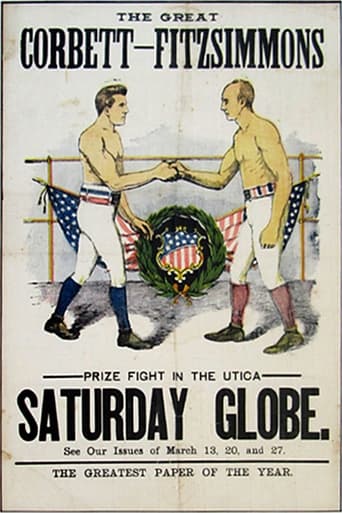
Played a pivotal role in early cinema history during the late 1890s. Working initially with Thomas Edison's film company, Rector developed crucial technical innovations that would shape the future of motion pictures. His most significant achievement came in 1897 when he directed 'The Corbett-Fitzsimmons Fight,' a documentary that captured the historic boxing match between James J. Corbett and Bob Fitzsimmons. This film, running over 100 minutes, is widely considered the first feature-length motion picture ever produced and demonstrated cinema's potential for long-form entertainment. Rector also invented the 'Latham loop,' a critical technical advancement that allowed film to be fed through projectors continuously without breaking, enabling longer films to be shown. Despite his monumental contributions to early cinema, Rector mysteriously vanished from the film industry after this project, leaving behind a legacy of technical innovation and one of cinema's earliest masterpieces.
The Craft
Behind the Camera
documentary approach with innovative use of multiple cameras to capture sporting events from various angles, emphasizing realism and spectacle in early cinema
Milestones
- Invented the Latham loop, a crucial film projection technology
- Directed 'The Corbett-Fitzsimmons Fight' (1897), considered the first feature-length film
- Worked with Thomas Edison's film company
- Pioneered documentary-style filmmaking with sports coverage
- Demonstrated commercial viability of long-form motion pictures
Best Known For
Must-See Films
Accolades
Special Recognition
- Recognized as pioneer of feature-length cinema
- Credited with crucial technical innovations in early film projection
Working Relationships
Worked Often With
Studios
Why They Matter
Impact on Culture
Enoch J. Rector's work fundamentally changed the course of cinema history by proving that feature-length films could be both technically feasible and commercially successful. 'The Corbett-Fitzsimmons Fight' demonstrated that audiences would sit through films longer than the typical one-reel format of the era, paving the way for narrative feature films that would dominate cinema in the following decades. His technical innovation of the Latham loop solved one of the biggest challenges in early film projection, allowing for longer continuous shows and making the movie theater experience we know today possible. Rector's approach to documenting sporting events also established conventions that would influence sports broadcasting and documentary filmmaking for generations to come.
Lasting Legacy
Enoch J. Rector's legacy lies in his dual contribution as both a technical innovator and a filmmaker who helped establish the feature-length film as cinema's dominant form. The Latham loop remained standard in film projection technology for over a century, and his groundbreaking fight film demonstrated the commercial and artistic potential of long-form cinema. While his name is not as well-known as other early cinema pioneers, film historians recognize Rector as a crucial figure who helped bridge the gap between short novelty films and the narrative features that would define the art form. His work represents a pivotal moment when cinema evolved from a technological curiosity into a legitimate entertainment medium capable of telling extended stories and capturing significant events.
Who They Inspired
Rector's technical innovations directly influenced the development of cinema technology, enabling longer films and more sophisticated projection systems. His successful feature-length documentary inspired other early filmmakers to experiment with longer formats, accelerating the transition from short subjects to feature films. The multi-camera techniques he employed for the fight film influenced early sports coverage and documentary filmmaking approaches. While he didn't directly mentor many filmmakers due to his brief career, his work set precedents that countless directors and cinematographers would follow in the emerging film industry.
Off Screen
Very little is known about Enoch J. Rector's personal life, as he was a private individual who largely disappeared from public view after his brief but impactful career in early cinema. His mysterious departure from the film industry has been the subject of speculation among film historians, with some suggesting he may have been pushed out by larger companies or simply chose to pursue other interests. Despite his significant contributions to cinema technology and early filmmaking, Rector lived much of his life in obscurity after 1897.
Did You Know?
- The Corbett-Fitzsimmons Fight was over 100 minutes long and required 11,000 feet of film
- Rector used three cameras to film the fight from different angles, a revolutionary technique for the time
- The fight film was so successful it reportedly earned over $100,000, a massive sum for 1897
- Rector's Latham loop was actually invented by the Latham family but Rector helped perfect and implement it
- The film was banned in several cities due to concerns about showing violence on screen
- Rector disappeared from the film industry completely after 1897, making him one of cinema's great mysteries
- The original film was considered lost for decades before portions were rediscovered
- Rector's work predated other early feature films by several years
- He was originally hired to document the fight for the Kinetoscope but decided to make it a theatrical presentation instead
- The success of the fight film led to a boom in boxing films in the late 1890s
Frequently Asked Questions
Who was Enoch J. Rector?
American filmmaker and technical innovator in early cinema who directed 'The Corbett-Fitzsimmons Fight' (1897), considered the first feature-length film, and invented crucial projection technology including the Latham loop.
What films is Enoch J. Rector best known for?
Titles linked here include The Corbett-Fitzsimmons Fight (1897).
When was Enoch J. Rector born and when did he die?
Born September 9, 1863; died 1937.
What awards did Enoch J. Rector win?
Rector did not receive formal awards during his lifetime, as he worked in the earliest days of cinema before award systems existed, though he is now recognized as a figure in film history.
What was Enoch J. Rector's directing style?
Rector's directing style was innovative and documentary-focused, employing multiple cameras to capture sporting events from various angles and emphasizing realism and spectacle in early cinema.
What technical innovations did Enoch J. Rector contribute to cinema?
Rector's most significant technical contribution was helping perfect the Latham loop, a crucial device that allowed continuous film projection and made feature-length films technically possible.
Why did Enoch J. Rector disappear from the film industry?
The exact reason for Rector's disappearance from cinema after 1897 remains unknown, though historians speculate it may have involved business disputes, being pushed out by larger companies, or personal choice to pursue other interests.