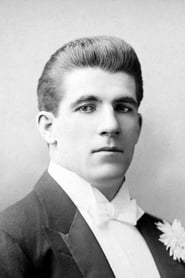
The Corbett-Fitzsimmons Fight
"Ninety minutes of ringside history"
Keys: Space play/pause · ←/→ 10s · F fullscreen · M mute · </> speed
About this film
Enoch Rector filmed the entire heavyweight championship bout between James J. Corbett and Bob Fitzsimmons on March 17, 1897, using three 63mm cameras to produce over ninety minutes of ring action. The result is often cited as the first feature-length fight film and a landmark in sports documentary.
Cast & crew
More films like this
More Documentary films
View all →


More about this film
About the production
Release dateMay 22, 1897 (premiere in New York City)
BudgetApproximately $100,000 (equivalent to over $3 million today), making it among the costliest film productions of its era
Box officeExtremely successful, grossing over $750,000 in its initial theatrical run (equivalent to over $23 million today), making it among the leading profitable films of the 1890s
ProductionVeriscope Company, E.J. Rector's Cinematograph Company
Filmed inCarson City, Nevada, The Olympic Club, Carson City
The production required revolutionary technical innovations including a custom 63mm film format (wider than standard 35mm), three synchronized cameras positioned side by side to capture the entire ring, and specialized lighting equipment. The filming faced significant challenges including the need to conceal cameras from the audience, maintaining focus on fast-moving boxers, and the physical limitations of early film cameras which could only hold short film reels. The production team had to develop new methods for changing film magazines during the fight without missing crucial action.
Themes
Sports competitionTechnological innovationAmerican entertainment cultureThe transition from Victorian to modern AmericaThe commercialization of sports
Themes & topics
boxingchampionshipknockoutsports documentaryfeature filmhistoric eventfightcompetitionathleticsprizefighting
Historical background
The Corbett-Fitzsimmons Fight screened widely in 1897 as prizefighting crossed into legitimate entertainment despite moral opposition.
Why this film matters
Fight films created a lucrative early genre and forced debates over cinema's role in sensational violence.
Making of
Enoch J. Rector, a former Edison employee, formed the Veriscope Company specifically to produce the production. He invested heavily in developing new technology, including custom cameras that could use wider film stock. The production required a massive crew of technicians and assistants to operate the three cameras and change film magazines during the fight. To avoid disrupting the live event, cameras were hidden behind screens and operated remotely. The filming process was so complex that Rector had to develop new methods for synchronizing the cameras and ensuring consistent exposure across all three machines. The production faced numerous technical challenges including the need for artificial lighting (as indoor arenas were poorly lit), the limitations of early film emulsions, and the physical constraints of hiding bulky equipment from the live audience of 12,000 spectators.
What critics said
Crowds paid premium prices; historians treat the Rector film as a technical and commercial milestone.
Did you know?
- This is widely considered the first feature-length film in cinema history, running over 90 minutes at a time when most films were under one minute
- The film used a proprietary 63mm film format called 'Veriscope' which created an aspect ratio of approximately 1.75:1, much wider than standard formats of the era
- Three cameras were used simultaneously, each capturing a different portion of the boxing ring, allowing for comprehensive coverage of the fight
- The film was so successful that it spawned numerous imitations and established boxing films as a popular genre in early cinema
- James J. Corbett received $25,000 for appearing in the film, while Bob Fitzsimmons received $15,000 - enormous sums for 1897
- The Nevada State Legislature passed a special law specifically to allow this fight to be filmed, as prizefighting was illegal in most states
- The film's success led to a legal battle when Thomas Edison sued Rector for patent infringement, claiming rights to the filming process
- Only about 25% of the original footage survives today, with the complete version considered one of cinema's great lost films
- The film was shown in vaudeville theaters across America and was often the main attraction, with tickets costing as much as $1.00 (equivalent to over $30 today)
- The fight itself was controversial because Fitzsimmons' knockout punch was delivered while Corbett was on the ropes, which some considered illegal under boxing rules of the time
Awards & recognition
- National Film Registry selection (1997) - for its historical and cultural significance
Visual style
The film employed revolutionary cinematographic techniques for its time. The use of three synchronized cameras positioned side by side created a panoramic view of the boxing ring, allowing viewers to see the entire fight space. The 63mm film format provided exceptional image quality and detail, far superior to standard 35mm film of the era. The cameras were positioned to capture different angles of the action, anticipating modern multi-camera sports coverage. The filmmakers developed special techniques for maintaining focus on the fast-moving boxers and for compensating for the limited sensitivity of early film stocks. The wide aspect ratio of approximately 1.75:1 was unprecedented and created a more immersive viewing experience than the nearly square format of most contemporary films.
Innovations
The film pioneered numerous technical innovations including the first use of a wide-screen format in cinema, the first feature-length production, and the first use of multiple synchronized cameras for comprehensive event coverage. The custom 63mm film format provided unprecedented image quality and resolution. The production developed new camera mechanisms capable of longer continuous takes and better focus control. The film also featured innovative editing techniques, combining footage from three different cameras to create a coherent narrative of the fight. These technical achievements established many principles that would become standard in both documentary and narrative filmmaking.
Music
As a silent film, it had no recorded soundtrack. However, during theatrical presentations, it was often accompanied by live music, typically a pianist or small orchestra. Some venues employed sound effects artists who would create boxing noises using coconut shells for footwork and leather straps for punch sounds. The film was sometimes presented with a lecturer who would provide commentary and explain boxing techniques to the audience. In larger theaters, special musical compositions were commissioned to accompany the film, with different themes for each boxer and dramatic music for the knockout sequence.
Famous quotes
The greatest moving picture ever produced - The New York Times (1897)
A perfect reproduction of especially memorable contests in the history of the ring - The Sporting Life (1897)
The Veriscope brings the fight to every town in America - Enoch J. Rector, promotional material
Memorable scenes
- The knockout sequence in round 14, where Fitzsimmons delivers a devastating body shot followed by a finishing blow to Corbett's head, captured from multiple angles and showing the champion's dramatic collapse
- The opening sequences showing both fighters entering the ring and receiving their instructions from the referee, providing rare documentary footage of 19th-century boxing rituals
- The middle rounds where Corbett's defensive skills are on display, showing his scientific approach to boxing versus Fitzsimmons' aggressive style
What audiences thought
The film was a phenomenal commercial success, playing to sold-out audiences across America for months. Audiences were fascinated by the ability to witness a major sporting event without being present, and many attended multiple screenings to study the boxers' techniques. The film attracted both boxing enthusiasts and curious general audiences, helping to legitimize cinema as a respectable form of entertainment. Contemporary accounts describe audiences cheering and reacting as if they were watching the fight live. The film's popularity extended beyond urban centers to smaller towns, where it was often presented as a major cultural event. Despite its high ticket prices, the film consistently outperformed other entertainment options and established cinema as a medium capable of attracting middle-class audiences.
Film connections
Influenced by
- Edison Kinetoscope films
- Early actuality films
- Photographic documentation of sporting events
- Vaudeville entertainment traditions
This film influenced
- Jeffries-Sharkey Fight (1899)
- The Great Train Robbery (1903)
- Early newsreels
- Modern sports documentaries
- Multi-camera sports broadcasts
Film restoration
Only approximately 22 minutes of the original 100+ minute film survives today. The surviving footage is preserved in the collection of the Library of Congress and has been restored using digital technology. The incomplete nature of the surviving material makes it one of cinema's most significant lost films. The Library of Congress selected it for the National Film Registry in 1997 to ensure its preservation. Various archives hold fragments of the film, but no complete version exists. The surviving footage has been digitized and made available for scholarly study and occasional theatrical screenings.
Where to watch
- Library of Congress National Screening Room
- Museum of Modern Art (MoMA) film collection
- UCLA Film & Television Archive
- Various film festival screenings of the restored footage
- Academic institutions with film studies programs