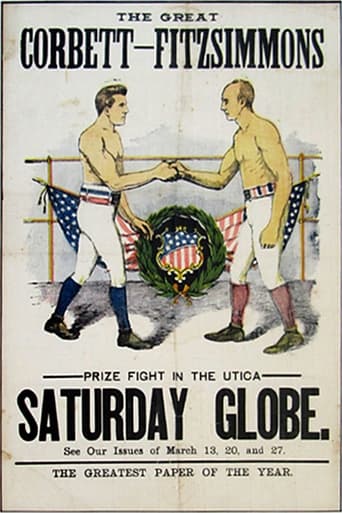
Bob Fitzsimmons
Actor
Born: May 26, 1863 in Helston, Cornwall, England Died: October 22, 1917 Active: 1897-1897 (film appearances) Birth Name: Robert James Fitzsimmons
Films
1 film
About Bob Fitzsimmons
Made an indelible mark on both sports and early cinema history. Born in England and raised in New Zealand, he developed his boxing skills while working in his father's blacksmith shop, developing the powerful physique that would later define his fighting style. Fitzsimmons rose to international prominence by becoming the first three-division world champion in boxing history, capturing titles at middleweight, light heavyweight, and heavyweight. His most famous moment came on March 17, 1897, when he defeated James J. Corbett for the heavyweight championship in Carson City, Nevada - a fight that was filmed and distributed as 'The Corbett-Fitzsimmons Fight,' making it one of cinema's earliest feature-length productions. This film was revolutionary for its time, running over 100 minutes and featuring actual footage of the championship bout. Fitzsimmons was known for his scientific approach to boxing, exceptional defensive skills, and devastating counter-punching ability, particularly his famous 'solar plexus punch.' After his boxing career waned, he continued to participate in exhibitions and maintained his celebrity status until his death from pneumonia in 1917. His legacy lives on both as a boxing pioneer and as an unwitting contributor to the development of motion pictures.
The Craft
On Screen
Not applicable - Fitzsimmons was not an actor but appeared in documentary footage of actual boxing matches. His on-screen presence was that of a genuine athlete competing in real sporting events, with no theatrical elements involved.
Milestones
- First three-division world champion in boxing history
- Subject of one of earliest feature-length films (1897)
- World Middleweight Champion (1891-1894)
- World Heavyweight Champion (1897-1899)
- World Light Heavyweight Champion (1903-1905)
- Pioneered scientific boxing techniques
- Developed the famous solar plexus punch
Best Known For
Iconic Roles
Must-See Films
Accolades
Won
- International Boxing Hall of Fame (1990, inducted posthumously)
- World Boxing Hall of Fame
- Ring Magazine Hall of Fame
Special Recognition
- Inducted into the International Boxing Hall of Fame (1990)
- Recognized as one of the greatest pound-for-pound boxers of all time
- Featured in boxing history documentaries
- Subject of historical sports literature
Working Relationships
Worked Often With
Studios
Why They Matter
Impact on Culture
Bob Fitzsimmons' impact on early cinema was accidental but profound. 'The Corbett-Fitzsimmons Fight' was not only a sporting document but a technological marvel of its time, demonstrating the commercial viability of feature-length films. The production used innovative camera techniques and was one of the first films to be promoted as a major cinematic event, drawing massive audiences worldwide. Fitzsimmons became one of the first sports stars to achieve celebrity status through motion pictures, paving the way for future athlete-actors. The film's success helped establish boxing as a popular subject for early cinema and demonstrated how real-life events could be packaged as entertainment. His appearance in this groundbreaking film represents an important intersection of sports history and the birth of commercial cinema, showing how athletic competition could drive technological innovation in filmmaking.
Lasting Legacy
Bob Fitzsimmons' legacy in film history is unique as he represents the bridge between Victorian-era sporting culture and the dawn of cinema. While primarily remembered as a boxing pioneer, his participation in one of the earliest feature-length films ensures his place in cinematic history. 'The Corbett-Fitzsimmons Fight' remains historically significant as one of the first sports documentaries and an early example of how motion pictures could preserve and popularize athletic achievements. Fitzsimmons' boxing innovations, particularly his scientific approach and the development of the solar plexus punch, influenced fighting techniques for generations. His story exemplifies how early cinema captured and preserved sporting moments that might otherwise have been lost to history, creating a template for future sports broadcasting and documentary filmmaking. The film's commercial success also demonstrated the public's appetite for longer-form content, influencing the development of narrative cinema.
Who They Inspired
Fitzsimmons influenced both boxing and early cinema in distinct ways. In boxing, his scientific approach to the sport, emphasizing technique over brute strength, inspired future generations of fighters to study the art of boxing more methodically. His success as a smaller man defeating larger opponents proved that skill and strategy could overcome physical disadvantages. In cinema, while he was not directly involved in filmmaking, his participation in 'The Corbett-Fitzsimmons Fight' demonstrated the commercial potential of sports films and helped establish the template for sports documentaries. The film's success influenced early filmmakers to explore real-life events as subjects for motion pictures, contributing to the development of documentary and non-fiction cinema. His celebrity status, enhanced by the film, also helped establish the concept of sports stars as entertainment personalities who could transcend their athletic achievements.
Off Screen
Bob Fitzsimmons married four times throughout his life. His first wife was Rose, who died in childbirth. He later married Julia, who died in 1910. His third marriage was to May, which ended in divorce. His final marriage was to Marie, who was with him until his death. Fitzsimmons had several children, though exact numbers vary in historical records. He was known for his distinctive appearance, with a bald head and prominent mustache, which became his trademark. Despite his success, Fitzsimmons faced financial difficulties later in life and continued fighting well past his prime to support his family.
Education
Limited formal education; primarily trained in blacksmithing with his father and self-taught in boxing
Family
- Rose (?-1888)
- Julia (1890-1910)
- May (1911-1913)
- Marie (1914-1917)
Did You Know?
- At 5'11" and only 167 pounds, Fitzsimmons was unusually small for a heavyweight champion
- He worked as a blacksmith in his youth, which helped develop his famous punching power
- The 'Fitzsimmons solar plexus punch' that knocked out Corbett became legendary in boxing
- He was the first boxer to win titles in three different weight divisions
- Despite being bald, he never wore headgear in the ring
- He continued fighting professionally until age 54
- The film of his championship fight was over 100 minutes long, making it one of the earliest feature films
- He was known for his distinctive fighting stance and exceptional defensive skills
- His championship fight film was a box office sensation, earning millions in 1890s currency
- He was nicknamed 'Ruby Robert' for his red hair in his youth
- He fought in the bare-knuckle era and transitioned to gloved boxing
- His brother, Jarrett Fitzsimmons, was also a professional boxer
In Their Own Words
The bigger they are, the harder they fall
Science and skill can always overcome brute strength
A good punch is worth more than a thousand words
The solar plexus is the key to victory
Boxing is not about fighting, it's about hitting and not getting hit
Frequently Asked Questions
Who was Bob Fitzsimmons?
Legendary professional boxer who became the first three-division world champion in boxing history and the subject of one of cinema's earliest feature-length films, 'The Corbett-Fitzsimmons Fight' (1897).
What films is Bob Fitzsimmons best known for?
Titles linked here include The Corbett-Fitzsimmons Fight (1897).
When was Bob Fitzsimmons born and when did he die?
Born May 26, 1863; died October 22, 1917.
What awards did Bob Fitzsimmons win?
Bob Fitzsimmons was posthumously inducted into the International Boxing Hall of Fame in 1990, the World Boxing Hall of Fame, and the Ring Magazine Hall of Fame, recognizing his status as one of boxing's greatest champions.
What was Bob Fitzsimmons' boxing style?
Fitzsimmons was known for his scientific approach to boxing, exceptional defensive skills, and devastating counter-punching ability, particularly his famous solar plexus punch that could knock out much larger opponents.
How did Bob Fitzsimmons influence early cinema?
Fitzsimmons' championship fight was filmed and distributed as one of the earliest feature-length movies, demonstrating the commercial viability of longer films and establishing boxing as a popular subject for early cinema.
What made Bob Fitzsimmons unique as a boxer?
Fitzsimmons was unique for being unusually small for a heavyweight yet defeating much larger opponents through superior technique, and for being the first boxer to win world titles in three different weight divisions.