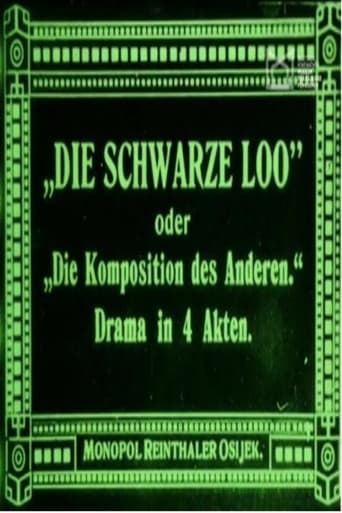
Max Mack
Director
- Active
- 1917-1917
Films directed 1
About Max Mack
Max Mack was a German film director, writer, and actor who emerged during the formative years of European cinema and became best known for his work in the silent era. He was active in film by the mid-1910s, and his credited directing work includes the 1917 feature Die schwarze Loo, placing him among the early practitioners who helped shape narrative filmmaking in Germany before the rise of Expressionism and the studio system. Mack worked in a period when German cinema was rapidly professionalizing, and directors often moved between directing, screenwriting, and acting, which appears to have been true in his career as well. Available records on his life are limited, but he is remembered as part of the generation of filmmakers who contributed to the development of pre-Weimar popular cinema. His surviving filmography is comparatively sparse in modern reference sources, which makes him less widely known than many contemporaries, yet he remains a documented figure in silent-era film history. Because of the fragmentary nature of the historical record, many personal details about his private life, education, and later career are not well established in readily available sources. His importance lies primarily in his place within early German cinema rather than in a large body of internationally famous surviving films.
More about Max Mack
Behind the camera
Specific descriptions of Max Mack's directing style are difficult to verify because relatively few of his films and critical assessments are widely documented today. As a silent-era German director working in the 1910s, his approach would have been shaped by the conventions of early narrative cinema, including stage-influenced blocking, visual clarity, and reliance on expressive imagery rather than dialogue. His surviving documentation suggests a craftsman working within the commercial silent-film system rather than a flamboyant auteur associated with a clearly defined school. Without a larger surviving body of work or contemporary critical commentary, any more precise stylistic characterization would be speculative.
In film history
Max Mack's cultural impact is best understood as part of the broader foundation of German silent cinema rather than through a large number of internationally famous surviving titles. Directors like Mack participated in the transition from short subjects and early feature experiments to a more mature national cinema that would later produce major artistic movements and globally influential filmmakers. Even when individual titles are obscure today, such filmmakers contributed to the industrial and stylistic groundwork that made the later prestige of Weimar cinema possible. His work stands as evidence of the many skilled professionals whose contributions are essential to film history even when their names are not as familiar to modern audiences.
Later reputation
Max Mack's legacy lies in his presence within the historical record of early German filmmaking and in the documentation of Die schwarze Loo as part of the silent-era repertoire. He is one of many directors whose careers illuminate the breadth of production during the 1910s, a decade when German studios were building the creative and technical infrastructure that would support later international achievements. Although he does not appear to have left behind a widely celebrated canon of surviving works, his recorded film credit ensures his place in scholarly catalogs of silent cinema. For historians, figures such as Mack are important because they help map the development of film culture beyond the handful of canonical masters most often discussed.
Influence
There is no clearly documented evidence of a large direct influence on later famous directors, but Max Mack participated in the professional ecosystem that trained audiences and filmmakers for the visual storytelling language of the silent era. By working in German cinema during its formative years, he contributed to the collective body of technique and production practice that later directors could build upon. His influence is therefore indirect and historical, embedded in the early commercial and artistic development of German film rather than in a traceable lineage of protégés or a signature movement.
Off screen
Little reliably documented information survives about Max Mack's personal life in commonly accessible film references. His marriages, family background, children, and later years are not well established in standard sources, and no widely cited biographical profile appears to preserve these details. This is not unusual for many silent-era filmmakers whose careers were recorded in trade papers and production notices but whose private lives were not thoroughly documented. As a result, his biography is known primarily through film credits rather than through detailed archival memoirs or published interviews.
Credits
- Directed the silent film Die schwarze Loo in 1917, the best-documented title associated with his career
- Worked during the crucial expansion of German cinema in the World War I era, when feature filmmaking was becoming more established
- Represents the generation of early filmmakers who helped define narrative conventions before the German Expressionist peak of the 1920s
- Associated with silent-era filmmaking in Germany, a period of rapid artistic and industrial growth
- Credited in historical film references as a director, and in some sources also as a writer and actor
Films
- Die schwarze Loo (1917)
Notes
- Max Mack is chiefly remembered today for a single surviving biographical credit rather than for a widely circulated body of films.
- His known directing credit, Die schwarze Loo, dates from 1917, placing him squarely in the World War I-era German film industry.
- Available reference sources often list him simply as a German director, and some also identify him as a writer and actor.
- Because he worked in the silent era, much of his career documentation comes from filmographies rather than detailed interviews or memoirs.
- He is one of many early filmmakers whose historical significance is greater than their present-day name recognition.
- No widely cited awards or honors are associated with his career in the standard reference material currently available.
- His surviving reputation is a reminder of how much early cinema history remains incomplete or fragmentary.
- He should not be confused with later or similarly named individuals in other fields; the classic-cinema figure is the German silent-era director.
Questions
Who was Max Mack?
Max Mack was a German silent-era film director best known for directing Die schwarze Loo (1917). He was active during the formative years of German cinema and is remembered as part of the early generation of filmmakers who helped establish narrative feature production.
What films is Max Mack best known for?
His best-known and best-documented film credit is Die schwarze Loo (1917). Beyond that title, the historical record available in standard references is limited, so his wider filmography is not as widely preserved or discussed.
When was Max Mack born and when did he die?
Reliable publicly accessible sources commonly used for film history do not consistently provide verified birth and death details for Max Mack. As a result, his exact birth and death dates are not confidently established here.
What awards did Max Mack win?
No major awards or formal honors are widely documented for Max Mack in the standard reference material available for silent-era film personnel. His historical importance comes from his work as an early German director rather than from a record of awards.
What was Max Mack's directing style?
A precise stylistic profile is difficult to reconstruct because few of his films and critical analyses are readily available today. As a silent-era German director, he would have worked within the early conventions of visual storytelling, emphasizing clear staging, physical expression, and narrative legibility.
What is Max Mack's legacy in film history?
His legacy is tied to the development of early German cinema and the silent-film industry in the 1910s. Even though he is not among the most famous names of the era, his recorded work helps document the breadth of talent that shaped the foundation of later German film culture.