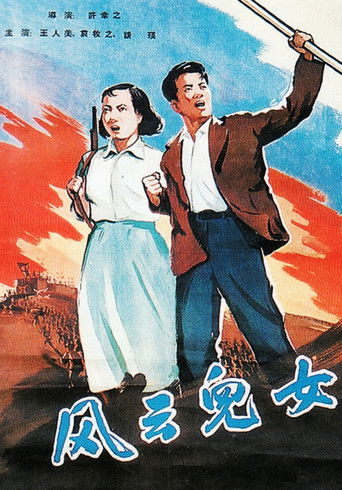

Renmei Wang
Actor
Born: December 24, 1914 in Changsha, Hunan Province, China Died: April 12, 1987 Active: 1931-1950s (peak period 1934-1937)
Films
3 films

About Renmei Wang
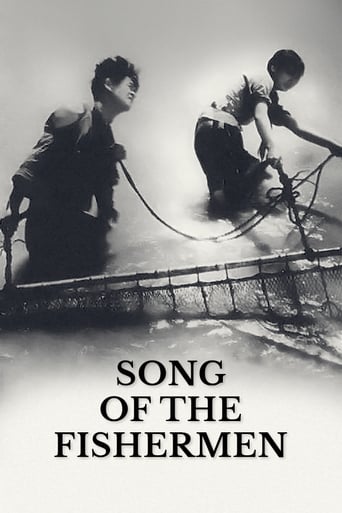
Renmei Wang was actresses of China's Golden Age of Cinema during the 1930s, emerging as a star during a transformative period in Chinese film history. Born in Hunan Province in 1914, she began her career as a performer in Shanghai's vibrant entertainment scene before transitioning to cinema. Her breakthrough role came in Cai Chusheng's 'Song of the Fishermen' (1934), which became the first Chinese film to win an international award and established her as a major star. Wang was renowned for her naturalistic acting style and ability to portray strong, independent female characters during an era of social upheaval in China. She was part of the prestigious 'Four Great Dan' (四大名旦) of Chinese cinema, alongside other actresses of her generation. Throughout the 1930s, she appeared in numerous socially conscious films that addressed themes of poverty, resistance, and national identity. Her career was interrupted by the Second Sino-Japanese War, but she continued to act in films that supported the Chinese resistance effort. After 1949, she adapted to the new film industry in the People's Republic of China, though her most work remains from the pre-war period.
The Craft
On Screen
Wang Renmei was known for her naturalistic and emotionally authentic acting style, which broke away from the theatrical traditions prevalent in early Chinese cinema. She brought a subtle realism to her performances, using nuanced facial expressions and body language to convey complex emotions. Her screen presence was characterized by a combination of vulnerability and strength, allowing her to portray both suffering and resilience in her characters. Wang had a particular talent for depicting working-class women with dignity and depth, making her characters relatable to audiences during China's period of social transformation.
Milestones
- Breakthrough role in 'Song of the Fishermen' (1934) which won international acclaim
- Recognized as one of the 'Four Great Dan' of Chinese cinema
- Starred in 'Children of Troubled Times' (1935) which featured the anthem that became China's national song
- Leading actress in Lianhua Film Studio's most important productions
- Pioneered naturalistic acting style in Chinese cinema
Best Known For
Iconic Roles
Must-See Films
Accolades
Won
- International Award at Moscow International Film Festival for 'Song of the Fishermen' (1935)
Nominated
- Recognition as one of China's greatest film actresses of the 1930s
Special Recognition
- Inducted into the Chinese Film Hall of Fame
- Recognized as one of the 'Four Great Dan' of Chinese cinema
- Featured in retrospectives of classic Chinese cinema internationally
Working Relationships
Worked Often With
Studios
Why They Matter
Impact on Culture
Renmei Wang played a crucial role in establishing Chinese cinema as a serious art form capable of competing internationally. Her performance in 'Song of the Fishermen' helped demonstrate that Chinese films could achieve both artistic excellence and international recognition. As one of the 'Four Great Dan,' she helped define the golden age of Shanghai cinema and set standards for acting excellence that influenced generations of Chinese performers. Her portrayal of strong, resilient female characters during a period of national crisis provided important role models for Chinese women and helped shape popular conceptions of female virtue and strength. Wang's work contributed to the development of a distinctly Chinese cinematic language that blended traditional aesthetics with modern storytelling techniques.
Lasting Legacy
Renmei Wang's legacy endures as one of the figures of Chinese cinema who helped establish the art form during its formative years. Her films continue to be studied by film scholars and screened in retrospectives of classic Chinese cinema around the world. She is remembered not only for her artistic achievements but also for her role in creating a national cinema that could speak to Chinese audiences during a period of tremendous social and political change. Her naturalistic acting style influenced subsequent generations of Chinese actors and helped move Chinese cinema away from theatrical traditions toward greater realism. Wang remains an important cultural figure in China's film history, symbolizing the golden age of Shanghai cinema and the artistic achievements possible even during times of national crisis.
Who They Inspired
Wang Renmei influenced Chinese cinema through her naturalistic acting style, which broke from the theatrical traditions of early Chinese film. Her success in international film festivals demonstrated that Chinese cinema could compete globally, inspiring confidence in Chinese filmmakers. Her portrayals of strong, independent female characters provided new models for women's representation in Chinese media. Younger actresses emulated her techniques and approach to character development, helping to professionalize acting as a craft in Chinese cinema. Her work with socially conscious directors helped establish the tradition of using cinema as a medium for social commentary in China.
Off Screen
Wang Renmei's personal life was marked by both professional success and personal challenges. She married fellow actor Jin Yan in 1934,. The couple divorced in 1945 after more than a decade of marriage. During the Cultural Revolution, like many artists of her generation, Wang faced persecution and was forced to leave the film industry for a period. She spent her later years in relative obscurity but was rediscovered and celebrated in the 1980s as interest in classic Chinese cinema was revived. She passed away in 1987, leaving behind a legacy as one of China's most important early film actresses.
Education
Trained in traditional Chinese performing arts before entering cinema; received formal acting training in Shanghai's film studios
Family
- Jin Yan (1934-1945)
Did You Know?
- 'Song of the Fishermen' was the first Chinese film to win an international award at the Moscow International Film Festival in 1935
- She was part of the legendary 'Four Great Dan' (四大名旦) of Chinese cinema, along with Ruan Lingyu, Hu Die, and Zhou Xuan
- Her husband Jin Yan was originally Korean but became one of China's most beloved actors
- During the Cultural Revolution, she was persecuted and forced to work as a cleaner
- Her films were often censored or banned during various political periods in China's history
- She began her career as a performer in Chinese opera before transitioning to cinema
- Her natural acting style was considered revolutionary at a time when theatrical performance was the norm
- Many of her films have been lost due to war and political upheaval, making surviving prints extremely valuable
- She was discovered by film director Cai Chusheng while performing in Shanghai
- Her performances often featured themes of social justice and national resistance
In Their Own Words
Acting is not about showing emotion, but about letting the audience feel the truth of the character's experience
In difficult times, cinema must give people hope and strength
The greatest reward for an actor is not fame, but knowing your performance touched someone's heart
Frequently Asked Questions
Who was Renmei Wang?
Renmei Wang was. She was part of the prestigious 'Four Great Dan' of Chinese cinema and achieved international recognition for her performance in 'Song of the Fishermen' (1934).
What films is Renmei Wang best known for?
Titles linked here include Song of the Fishermen (1934), Children of Troubled Times (1935).
When was Renmei Wang born and when did she die?
Born December 24, 1914; died April 12, 1987.
What awards did Renmei Wang win?
Her most significant award was the international prize won by 'Song of the Fishermen' at the Moscow International Film Festival in 1935, making it the first Chinese film to receive such recognition. She was also honored as one of the 'Four Great Dan' of Chinese cinema and has been inducted into the Chinese Film Hall of Fame.
What was Renmei Wang's acting style?
Wang was known for her naturalistic and emotionally authentic acting style, which broke away from the theatrical traditions prevalent in early Chinese cinema. She used subtle expressions and body language to convey complex emotions, particularly excelling at portraying working-class women with dignity and depth during China's period of social transformation.